
Reviewed · GERMANY
Goslar: Führung durch die Kaiserpfalz
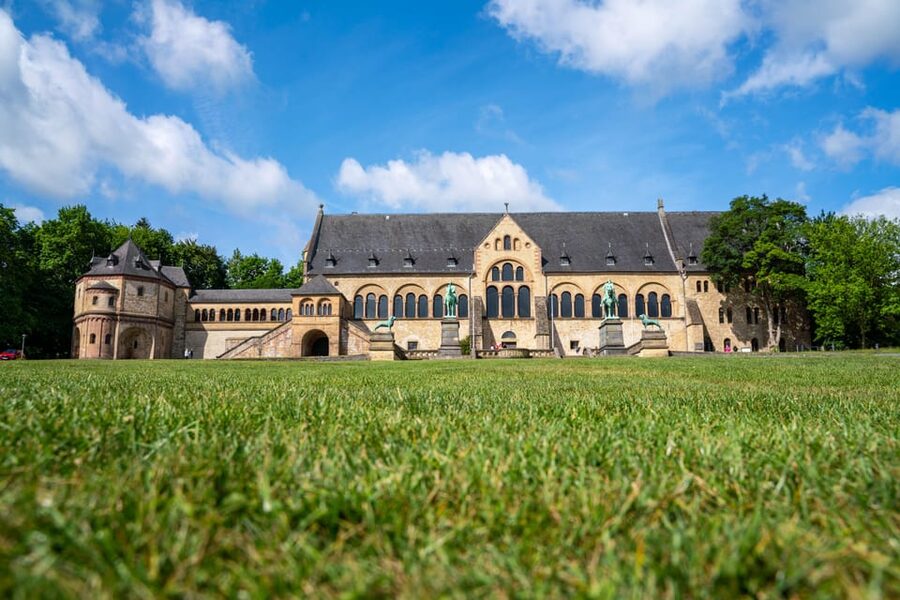
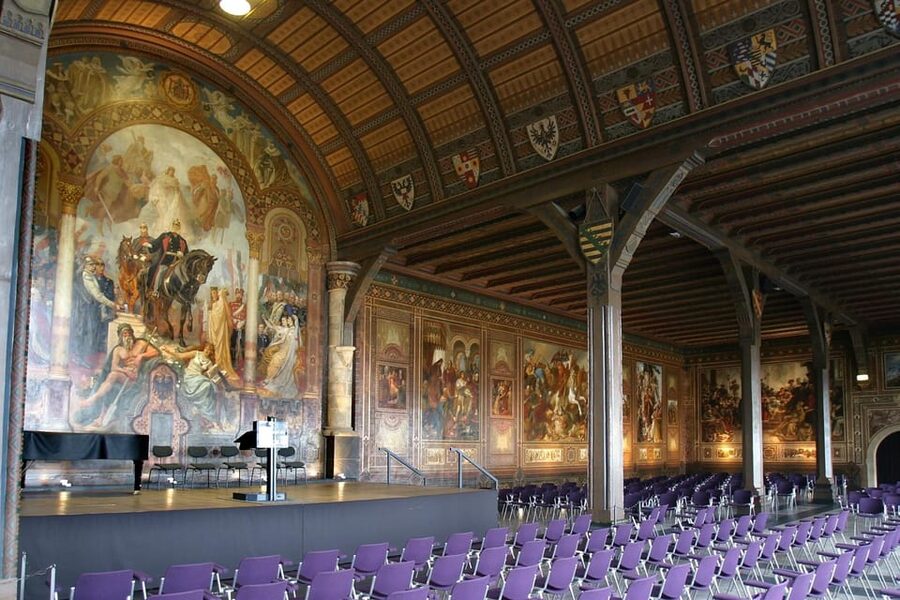
The most striking part of Goslar’s Imperial Palace is the great hall, where historical paintings cover the walls from floor to ceiling. The pictures by art professor Hermann Wislicenus turn a large medieval room into a sweeping visual account of imperial power, and a guide helps you make sense of what you are seeing.
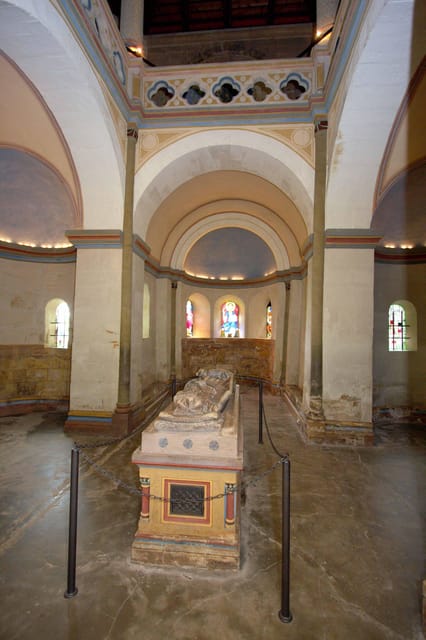
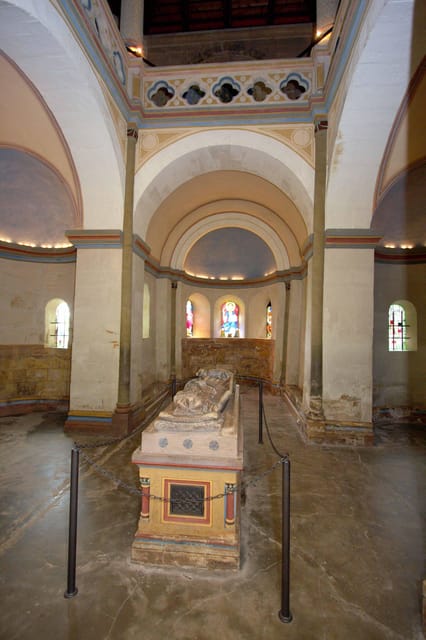
I like the short old-town introduction before the palace, and I like the chance to visit the St. Ulrich Chapel, where the high grave of Emperor Henry III marks the place where his heart still rests. The main drawback is simple: the tour is conducted in German, so you will get much less from it without a good command of the language.
In This Review
- Key points at a glance
- Entering Goslar’s Imperial Palace from the Atrium
- The great hall and Hermann Wislicenus’s wall paintings
- St. Ulrich Chapel and the heart of Henry III
- The imperial throne and the Winter Hall vaults
- What the UNESCO connection adds
- How the guide shapes the visit
- Is $16 a fair price for 90 minutes?
- Who should book the Kaiserpfalz tour?
- My verdict on Goslar’s Imperial Palace tour
- FAQ
- Where does the tour meet?
- How long does the Imperial Palace tour last?
- What does the tour include?
- Is the old town part of the experience?
- What language is the tour conducted in?
- Is the tour wheelchair accessible?
- Are pets allowed?
- What can you see in the great hall?
- What is in St. Ulrich Chapel?
- What is the price?
- Can you cancel the booking?
- Can you reserve without paying immediately?
Key points at a glance
- Full-wall paintings in the great hall: Hermann Wislicenus’s historical scenes fill the room and give the palace its biggest visual impact.
- Henry III’s heart in St. Ulrich Chapel: The chapel contains the emperor’s high grave and a deeply personal link to medieval royal history.
- Part of Goslar’s 1992 UNESCO World Heritage title: The palace is one piece of a larger protected historic setting.
- A compact 90-minute visit: You get a focused introduction without giving up an entire day.
- German-speaking live guide: Recent feedback highlights an engaging, lively approach that can work well for families.
- Vaults and imperial furnishings: The Winter Hall exhibition and the throne’s armrests add smaller details after the grand main rooms.
Entering Goslar’s Imperial Palace from the Atrium
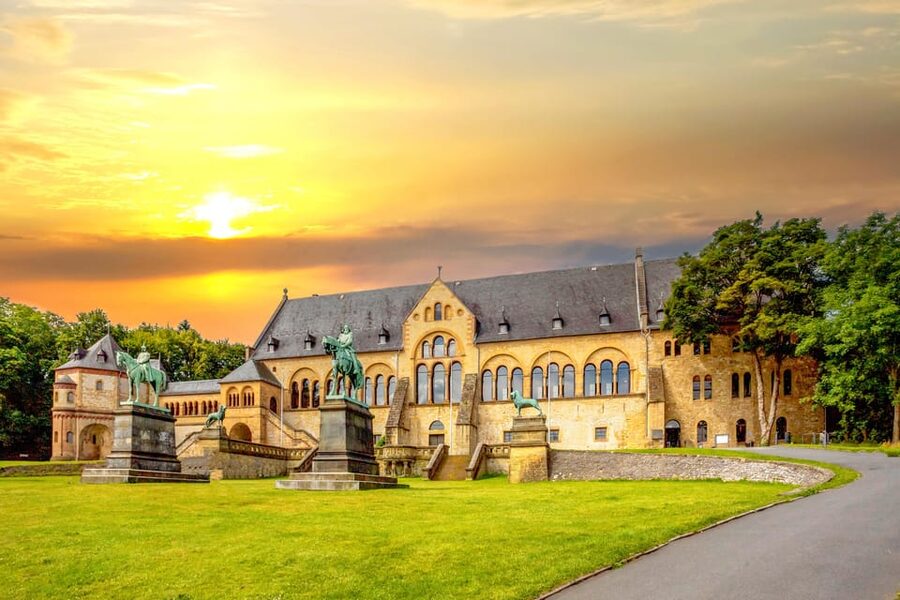
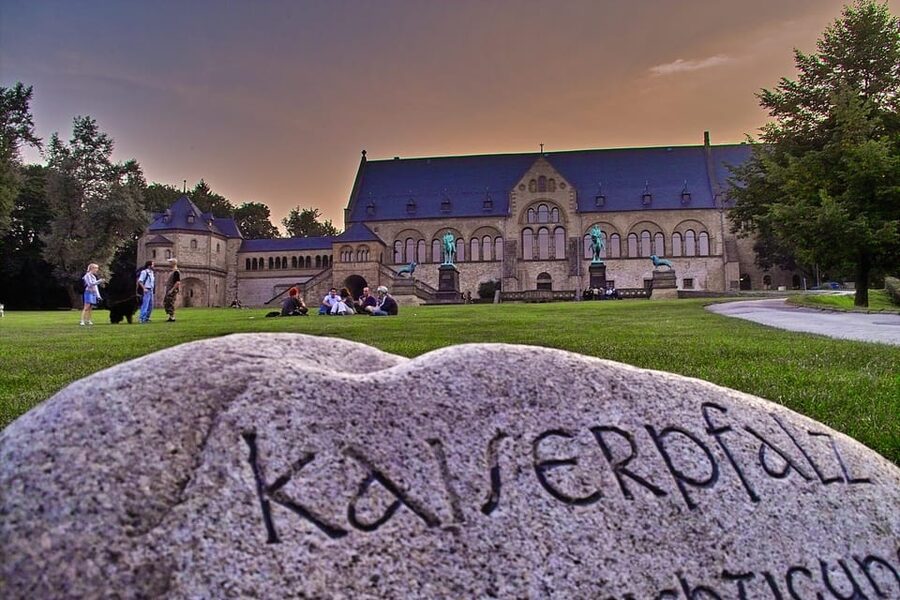
Your meeting point is in front of the Atrium. From there, the experience begins with a short walk through Goslar’s old town before you enter the Kaiserpfalz, or Imperial Palace.
That opening matters. The palace does not feel like an isolated museum dropped into a modern city. The old-town setting prepares you for Goslar as a whole, a place shaped by medieval power and imperial presence. You get a little context before the indoor portion begins, rather than walking straight into a grand room with no idea why it matters.
The route is also easy to fit into a day of sightseeing. At 1.5 hours, it is long enough to explain the main rooms and objects, but short enough to leave time for more of Goslar. I would schedule it early in your visit if you want the rest of the day to make better sense, or later if you prefer to explore the old town first and then connect what you have seen with the palace.
The exact starting time depends on availability. The tour is led in German, and no other language is listed. That is the main practical issue to consider before booking. If you understand German, the live guide adds tone, emphasis, and answers to the dry facts on a wall label. If you do not, the visual parts still have appeal, but much of the explanation will pass you by.
Other Germany days worth putting on the list:
- Berlin: Reichstag, Dome and Government District Guided Tour
★ 4.7 · 18,288 reviews - Berlin: 1-Hour City Tour by Boat with Guaranteed Seating
★ 4.3 · 16,993 reviews - Hamburg: Sex and Crime in St. Pauli Tour for Ages 18+
★ 4.7 · 15,447 reviews
The great hall and Hermann Wislicenus’s wall paintings
The great hall is the visual centerpiece. Its historical paintings fill every wall surface, creating a room that feels designed for spectacle rather than quiet study.
The paintings were created by Hermann Wislicenus, an art professor, and they present historical subjects on a large scale. You will not simply see a few framed works hung in a long room. The walls themselves become the display, with the painted scenes shaping your view from almost every angle.
This is where the guide’s role becomes especially useful. Large historical pictures can be hard to read without some help. A lively explanation can point out the people, events, and ideas behind the scenes, turning a wall of color and movement into a story you can follow.
The main strength here is atmosphere. The room gives you a clear sense of how rulers wanted power to look: grand, formal, and tied to major events. The possible weakness is that visitors who prefer original medieval objects over later historical art may find the paintings more impressive than intimate. They are a major part of the palace experience, but they are not the same thing as standing before a perfectly preserved medieval interior.
Recent feedback places strong emphasis on the guide’s delivery. The tour has been described as lively, interesting, and easy to follow, with even children finding it enjoyable. That is worth noting because a room full of historic images can lose younger visitors quickly if the explanation becomes a list of names and dates. A good German speaker should get the most from this part.
St. Ulrich Chapel and the heart of Henry III
The St. Ulrich Chapel provides a sharper, more personal contrast to the showy great hall. Here you see the high grave of Emperor Henry III, including the grave slab beneath which the emperor’s heart still rests.
That detail gives the chapel unusual emotional weight. A tomb is already a direct link to an individual, but the fact that Henry III’s heart is kept beneath the slab makes the connection more concrete. It is one of those small details that can stay with you after the larger paintings and formal rooms begin to blur together.
The chapel is also important because it brings the visit back to the religious side of medieval rule. The Imperial Palace was not only a place for ceremony and political display. Sacred space was part of the royal world, and the chapel helps show how closely imperial authority and religious practice were connected.
Do not expect the chapel to provide the same visual scale as the great hall. Its value is in the object and the story. I would listen closely here, since the significance of Henry III’s grave is easy to miss if you treat the room as just another stop on the route.
The supplied details do not identify the individual guide, so I cannot tell you to request a particular person. What is clear is that the best part of this stop will be the explanation around the grave, not just the chance to look at it. If your interest is medieval rulers, burial customs, or the personal side of royal history, this is likely to be one of the most memorable moments.
The imperial throne and the Winter Hall vaults
The tour also includes the armrests of the imperial throne, referred to as the throne seat or Kaiserstuhl. These details are smaller than the great hall murals, but they help move the visit from broad historical storytelling to physical objects.
A throne is easy to picture as a single grand chair. Looking at its armrests gives you a more grounded sense of the object itself and the ceremony attached to it. The details may not take long, but they help show how imperial status was expressed through furniture, position, and controlled public display.
The vaulted rooms of the Winter Hall contain an extensive exhibition. This section should appeal to you if you like a little more evidence after the theatrical impact of the paintings. The great hall tells its story through large images. The Winter Hall adds another layer through objects and displays arranged in the palace’s lower, vaulted spaces.
The wording of the experience does not list each item in the exhibition, so you should not arrive expecting a specific artifact that has not been promised. Think of it as a broader palace collection rather than a single must-see object. The variety is useful, especially if you want more than one grand room and a chapel.
The sequence also gives the 90-minute tour a sensible rhythm. You begin with the old town, move into the largest and most dramatic room, visit the chapel, then finish with throne details and the Winter Hall exhibition. That mix keeps the visit from relying on paintings alone.
Same city, a completely different kind of day:
- Hamburg: 1.5-Hour Harbor and Speicherstadt Day Cruise
★ 4.6 · 14,200 reviews - From Munich: Neuschwanstein & Linderhof Castle Full-Day Trip
★ 4.5 · 12,494 reviews - Dresden: Semperoper Tickets and Guided Tour
★ 4.7 · 12,102 reviews - Berlin: Boat Tour Along the River Spree
★ 4.4 · 11,252 reviews
What the UNESCO connection adds
Goslar’s Imperial Palace forms part of the UNESCO World Heritage title awarded in 1992. That does not mean every moment of the tour will feel equally important, but it gives the building a wider setting and helps explain why it deserves a place on a Goslar itinerary.
For you, the practical value of the UNESCO connection is context. The palace is not merely a handsome historic building to inspect for half an hour. It belongs to a protected group of sites recognized for their cultural importance. The short walk through the old town helps make that broader setting visible.
Still, do not book the tour only for the UNESCO label. The label itself will not explain the paintings, the chapel, or the throne. The value comes from seeing those parts together and hearing how they relate to Goslar’s past.
I especially like that the experience combines architecture, art, religion, and royal ceremony. You are not asked to care about only one kind of history. If the paintings do not catch you, Henry III’s grave may. If the chapel feels too solemn, the large hall or Winter Hall exhibition may hold your attention.
How the guide shapes the visit
The tour has a live German-speaking guide rather than a self-guided interior visit. That means the quality of the explanation matters as much as the rooms themselves.
The most praised qualities are clear: the guide is described as competent, engaged, informative, entertaining, and lively. The strongest signal is that children were able to enjoy the experience too. That suggests the presentation is not limited to stiff dates and formal titles, though your own experience will depend on the guide assigned that day.
You should expect history to be presented in German throughout. No English, French, or other language option is provided in the information available for this activity. If you are comfortable in German, you can ask questions and follow the story as it develops. If you are not, consider this a visual visit with spoken context you may only partly understand.
The guide also helps with scale. Standing in the great hall, it is easy to spend your time simply looking up at the murals. A good explanation tells you where to focus and why a certain figure or scene matters. In the chapel, it can explain the importance of the grave. In the Winter Hall, it can give the exhibition a clear thread.
Is $16 a fair price for 90 minutes?
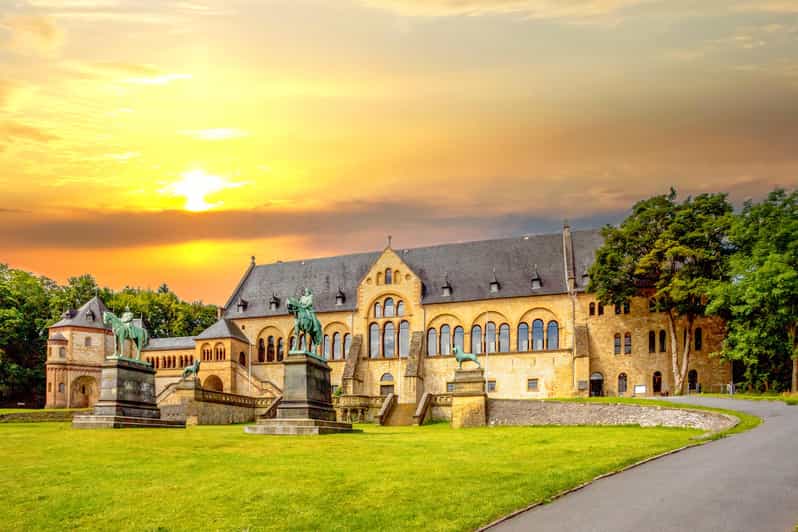
At $16 per person, the price is reasonable if you want an explained visit rather than a quick look inside. You are paying for 90 minutes, a live guide, and access to the Imperial Palace interior, including the great hall, St. Ulrich Chapel, the throne details, and the Winter Hall exhibition.
The value is strongest for first-time visitors to Goslar. You get a clear route and a connected story, instead of trying to work out the building’s purpose room by room. The short old-town walk is another small benefit because it links the palace to its surroundings.
The price is less attractive if you speak little or no German and plan to rely only on what you can see. The grand paintings and architecture still offer something, but the tour’s main added service is the spoken interpretation. In that case, you should compare the cost with how much of the guide’s explanation you can follow.
The free cancellation option, available up to 24 hours before the start, reduces the risk if your Goslar plans are uncertain. You can also reserve now and pay later, which helps if you are building a multi-stop trip and do not want to pay for every activity at once.
Who should book the Kaiserpfalz tour?
I would recommend this tour to you if you enjoy royal history, historic art, religious buildings, or guided visits that connect several subjects in one compact route. Families may also find it a good choice if the children understand German, since the presentation has been described as lively enough to hold their attention.
It suits a short stay in Goslar particularly well. You do not need to give up a full morning or afternoon, and the palace provides a strong central experience around which you can plan more old-town time.
German speakers will get the full benefit. Visitors with only basic German should think carefully. The visual impact is real, but the tour is not advertised as multilingual, and the explanations are central to understanding what you are seeing.
The experience is wheelchair accessible, which makes it a practical choice for visitors who need accessible arrangements. Pets are not allowed, although assistance dogs are permitted.
My verdict on Goslar’s Imperial Palace tour
Book it if you want the Imperial Palace explained by a lively German guide rather than viewed as a silent sequence of rooms. The Wislicenus paintings give you the grand spectacle, while Henry III’s heart tomb supplies the personal detail that makes the visit more than an architectural stop.
Skip it if you cannot follow German and mainly want a self-guided museum visit. For everyone else, $16 is a fair price for a focused 90-minute introduction to one of Goslar’s most important historic sites, with enough variety to keep the experience moving.
FAQ
Where does the tour meet?
The meeting point is in front of the Atrium.
How long does the Imperial Palace tour last?
The tour lasts 1.5 hours.
What does the tour include?
It includes an interior tour of the Imperial Palace.
Is the old town part of the experience?
The visit begins with a short walk through Goslar’s old town before entering the Imperial Palace.
What language is the tour conducted in?
The live tour guide speaks German. German is the only language listed for the experience.
Is the tour wheelchair accessible?
Yes, the activity is wheelchair accessible.
Are pets allowed?
Pets are not allowed. Assistance dogs are permitted.
What can you see in the great hall?
You can see historical paintings by art professor Hermann Wislicenus covering all the wall surfaces in the great hall.
What is in St. Ulrich Chapel?
St. Ulrich Chapel contains the high grave of Emperor Henry III. His heart still rests beneath the grave slab.
What is the price?
The price is $16 per person.
Can you cancel the booking?
Yes. You can cancel up to 24 hours in advance for a full refund.
Can you reserve without paying immediately?
Yes. The reserve-now, pay-later option lets you hold a place without paying at the time of booking.
Just added around Germany
- e-Scavenger hunt Aachen: Explore the city at your own pace★ 4.0 · 13 reviews
- Private photo tour in Cologne★ 5.0 · 9 reviews
- Private walking tour of Cologne’s old town★ 5.0 · 28 reviews
- Roman Cologne: A Self-Guided Audio Tour★ 4.0 · 15 reviews
- Public brewhouse tour in English★ 5.0 · 94 reviews
- Köln Night PubCrawl: 4 Venues, Welcome Shots + Club Entry★ 3.5 · 4 reviews
- Kölsch and Brewhouse Tour (18 and up)★ 5.0 · 5 reviews
- Private-Group Bike Tour of Cologne with Guide★ 5.0 · 20 reviews