
Reviewed · CHRISTMAS
Dresden with a touch of Xmas: English small group tour
Dresden’s Christmas markets are more than stalls selling ornaments and hot wine. This two-hour English walk links them to the city’s grand Baroque buildings, its wartime destruction, and its careful rebuilding. You finish at Striezelmarkt, one of Germany’s oldest Christmas markets, with time to explore on your own.
I like the route through the Zwinger and the chance to see several markets before reaching the main one. I also like the local-food advice, especially the help choosing Glühwein and Saxon treats. The main drawback is winter weather: cobbles can turn slippery, and a few people may find it hard to hear the guide when the group spreads out.
In This Review
- Key points to know before booking
- Why this Dresden Christmas walk works
- Starting beside the Elbe at Schlossplatz
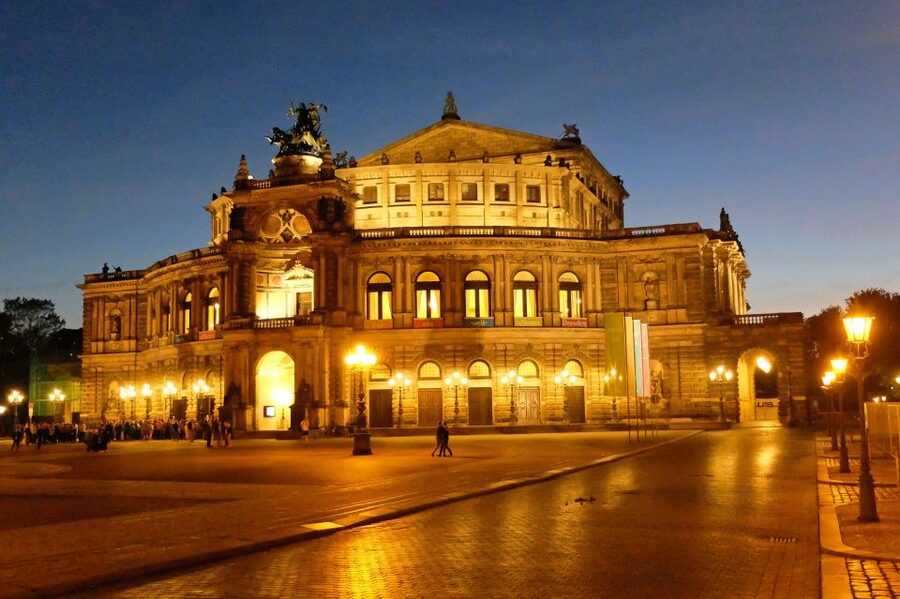
- Theaterplatz and the opera-house setting
- Inside the Baroque Zwinger
- The Royal Palace and its Renaissance courtyard
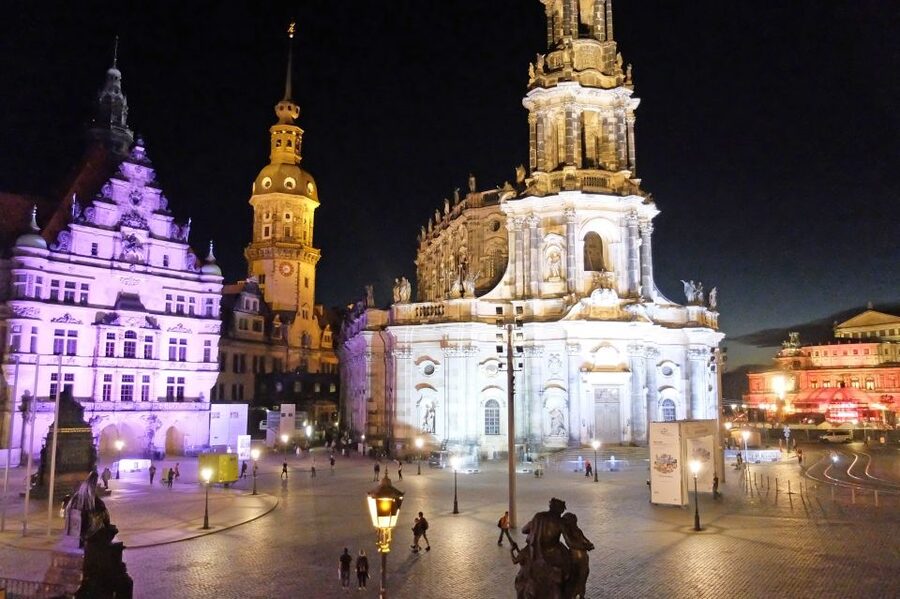
- The cathedral and Dresden’s religious story
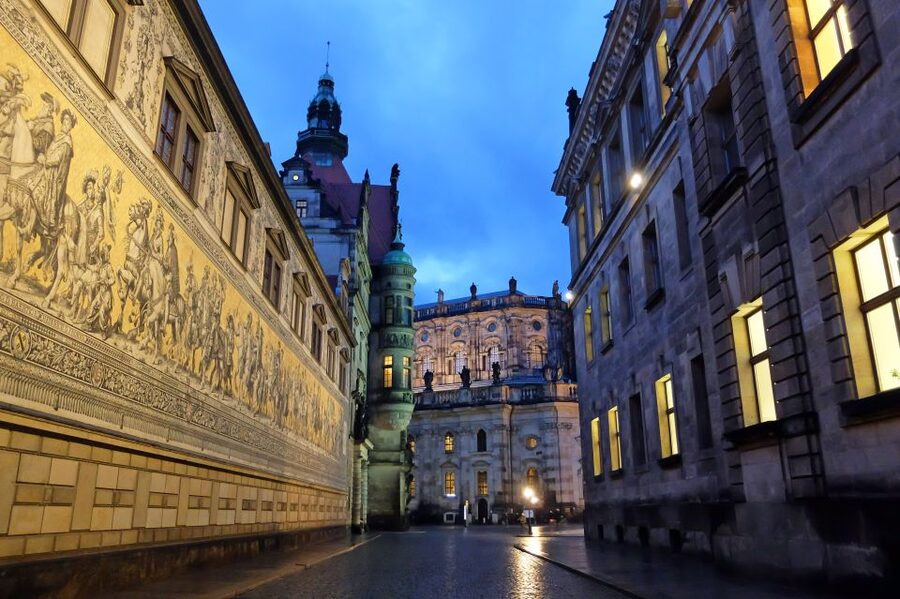
- The Fürstenzug porcelain mural
- Neumarkt and a smaller Christmas market
- A medieval market at the Royal Stables
- Ending at Striezelmarkt
- Dresden’s wartime story and rebuilding
- What the $25 price gives you
- The guide style and small-group feel
- Who should book this walk?
- Practical details for a smooth visit
- Should you book Dresden with a touch of Xmas?
- FAQ
- How long is the Dresden Christmas walking tour?
- What language is the tour conducted in?
- Where does the tour begin?
- Where does the tour finish?
- Are food, drinks, or Glühwein included?
- What should I wear and bring?
- Can I cancel the booking?
Key points to know before booking
- A city walk tied to Christmas markets: You see small markets at Neumarkt and the Royal Stables before ending at Striezelmarkt.
- A strong historical arc: The guide connects medieval Dresden, the Renaissance, Baroque court life, Second World War bombing, and postwar rebuilding.
- Local English-speaking guides: Doris and Laura Park are among the guides praised for clear storytelling, humor, and personal attention.
- Mostly outdoor sightseeing: The sights are viewed from outside, with a possible look into the Royal Palace courtyard if it is open.
- A two-hour introduction: The route works well as a first look at central Dresden, but it does not include museum entries or a long market stop.
- Good winter planning matters: Wear warm layers and shoes with firm grip on Dresden’s cobbled streets.
Why this Dresden Christmas walk works

Dresden can seem almost too grand for a walking tour. Its center is packed with palaces, churches, opera buildings, long processional walls, and broad squares. A good guide gives those façades a sequence and a reason.
That is the useful part of this experience. You do not simply look at a church, then a palace, then a market stall. You follow the city’s rise from a small fishing and trading settlement to a cultural capital, then hear how the center was destroyed during the Second World War and rebuilt afterward.
The Christmas setting adds warmth to a serious story. Market stalls, lights, mulled wine, and seasonal food make the walk feel less like a lecture. At the same time, Dresden’s past is not brushed aside for holiday cheer.
The tour is led in English by local, licensed guides from See My Dresden. Doris has been praised for humor, clear English, and her ability to answer questions. Laura Park is noted for adjusting the route to suit the group and for connecting the sights to people’s interests. Those details matter because this tour depends heavily on the guide. The buildings provide the setting, but the explanation provides the value.
A few more Dresden trips to weigh up
- Dresden: Festive Christmas Concert in the Zwinger
★ 5.0 · 26 reviews - Dresden: Christmas Sightseeing Tour with a ‘Pflaumentoffel’
★ 4.5 · 13 reviews - Original Munich Christmas Market Tour with Festive Wine and Food
★ 5.0 · 85 reviews
Starting beside the Elbe at Schlossplatz
Meet at Schlossplatz, at the base of the statue of Friedrich August I, near the River Elbe and the foot of Augustus Bridge. On Google Maps, the location appears as Denkmal Friedrich August dem Gerechten.
Arrive ten minutes early. This is not a place where you want to arrive at the official start time and then begin searching around the square. The guide usually arrives shortly before the tour, and the group cannot wait for late arrivals.
The opening location gives you a useful first view of Dresden. From here, the route moves into the historic center, where the city’s monumental buildings are close enough to understand on foot. The Elbe setting also helps explain Dresden’s importance as a place of trade and power.
You will be outside from the start, so winter clothing is not optional. Wear shoes with good grip. Snow and ice can make the cobbled streets slippery, and comfortable footwear will make the difference between enjoying the walk and thinking about your feet.
Theaterplatz and the opera-house setting
The route continues toward Theaterplatz, one of Dresden’s grandest public spaces. The square is surrounded by major buildings, including one of Europe’s beautiful opera houses.
This is a good early stop because it shows how Dresden’s rulers shaped the city as a place of court culture. You hear how the city changed through the Renaissance and Baroque periods, when architecture, music, ceremony, and political power were closely linked.
The tour focuses on exteriors, so you are not buying an opera ticket or touring the interiors. That keeps the walk moving, but it also means you should not expect detailed indoor visits. If you want to see collections or interiors afterward, plan a separate visit.
The guide’s storytelling is especially useful here. Without context, a grand square can become a blur of ornate façades. With the story attached, you have a better sense of why these buildings were placed together and what kind of city Dresden’s rulers wanted to create.
Inside the Baroque Zwinger
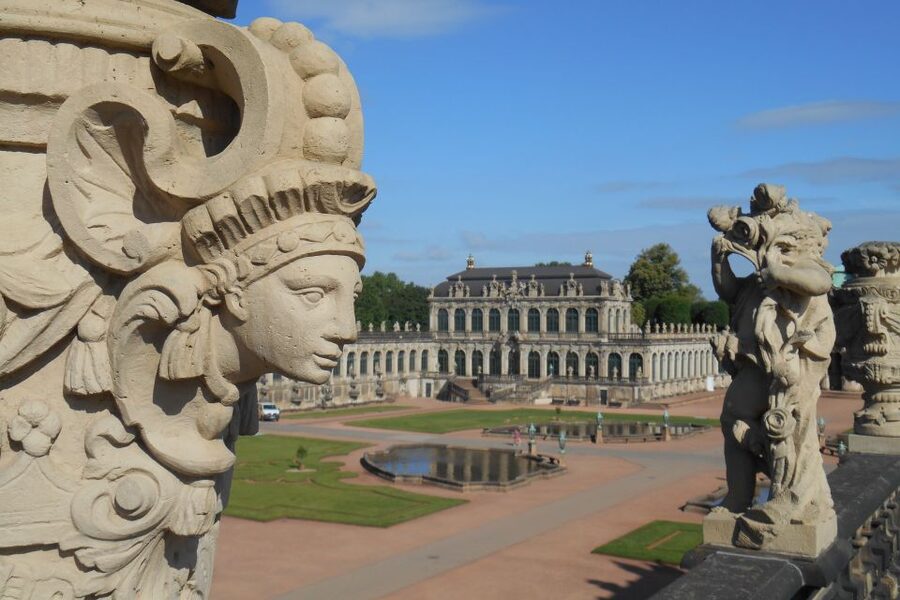
The Zwinger is one of the walk’s most rewarding stops. You enter its public areas and hear about the celebrations and parties once held there.
The setting is theatrical, with courtyards and Baroque decoration arranged to impress. Even if you know little about Dresden’s court, the Zwinger makes the city’s ambition easy to see. It was not built as a modest civic space. It was designed for display, ceremony, and pleasure.
The guide can help you look beyond the ornament. Ask about how the space was used, who attended the court festivities, and how the building fits into Dresden’s larger story. The supplied tour details specifically encourage questions, and that is worth taking seriously. A curious group can get more from this stop than a group that simply follows the route in silence.
Because the tour is only two hours, the Zwinger visit is a look at the public areas rather than a full museum experience. The buildings and courtyards are the focus. Entry tickets are not included, and the tour does not promise access to every interior.
Same city, a completely different kind of day:
- Dresden: Semperoper Tickets and Guided Tour
★ 4.7 · 12,102 reviews - Dresden: The Original Night Watchman Tour in Lantern Light
★ 4.6 · 6,653 reviews - Dresden: Semperoper and Old Town Tour
★ 4.8 · 5,735 reviews - Dresden: River Sightseeing Boat Cruise
★ 4.3 · 5,323 reviews
The Royal Palace and its Renaissance courtyard
The route then reaches the Royal Palace. If it is open, your guide may take you through its large courtyard, decorated with Sgraffito, a rare Renaissance technique in which layers of plaster are scratched to reveal contrasting designs.
This is one of the more unusual details on the tour. It gives you something specific to look for rather than a general instruction to admire the architecture. Look closely at the wall decoration and ask the guide how the technique works.
Access depends on whether the palace is open. That condition is important. Treat the courtyard as a possible extra, not a guaranteed indoor stop. The rest of the route remains useful even if you only see the palace from outside.
The palace also helps bridge Dresden’s different periods. The city is not simply Baroque, and the guide’s medieval and Renaissance sections give you a fuller picture of how the center developed over time.
The cathedral and Dresden’s religious story
The walk winds around the Catholic Cathedral, a building that reflects Dresden’s complicated religious past. This is a valuable pause in a city often presented mainly through royal architecture and Christmas tradition.
The cathedral helps show that Dresden’s story includes religious tension and change, not just art and court life. Your guide explains the setting from outside, so expect historical interpretation rather than a formal church visit.
This part of the route is also a reminder that Dresden’s monuments are close together but not identical in purpose. A palace, an opera house, a Catholic cathedral, and a Protestant church each tell a different piece of the city’s story.
The Fürstenzug porcelain mural
One of the most distinctive sights is the Fürstenzug, a roughly 100-meter-long procession made from hand-made porcelain.
It is an easy place to slow down and study details. The long mural presents rulers in a formal procession, turning a wall into a record of Saxony’s dynastic past. Your guide can help you understand who is represented and why the work matters.
This stop is especially good for people who enjoy details that are easy to miss when walking alone. Without a guide, you might notice the size and material but miss the political purpose and the connection to Saxony’s rulers.
The mural also provides a change of pace. After the open squares and large Baroque courtyards, you focus on a long, carefully arranged surface. It is one of the route’s best photo stops, though winter light and groups on the pavement can affect how long you can linger.
Neumarkt and a smaller Christmas market
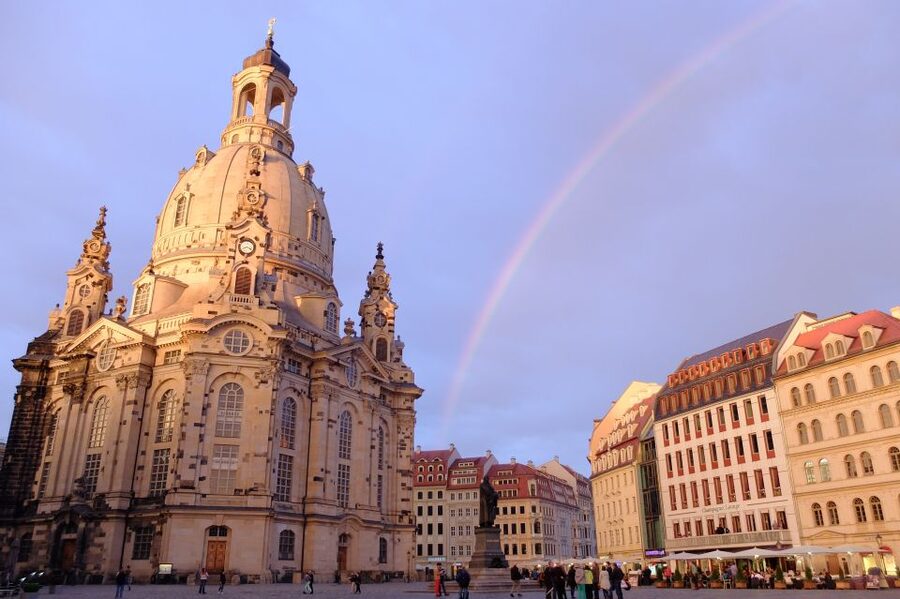
At Neumarkt, the Church of Our Lady provides one of the tour’s central visual moments. The square also holds a small Christmas market, giving you an early taste of Dresden’s Advent atmosphere.
This is where the tour’s combination of city history and seasonal browsing works particularly well. You learn about the church and square, then see how the same public space functions during the Christmas season.
The smaller market is not treated as the final event. You get a quick look, some orientation, and likely a few ideas for what to eat or drink later. That is useful because it lets you compare the atmosphere of different markets instead of spending the entire tour at one crowded location.
The Church of Our Lady also connects to Dresden’s wartime story and rebuilding. The guide explains how the center was damaged and how important the rebuilding effort became. The result is not just a pretty church in a decorated square. It is part of the city’s account of loss, memory, and recovery.
A medieval market at the Royal Stables

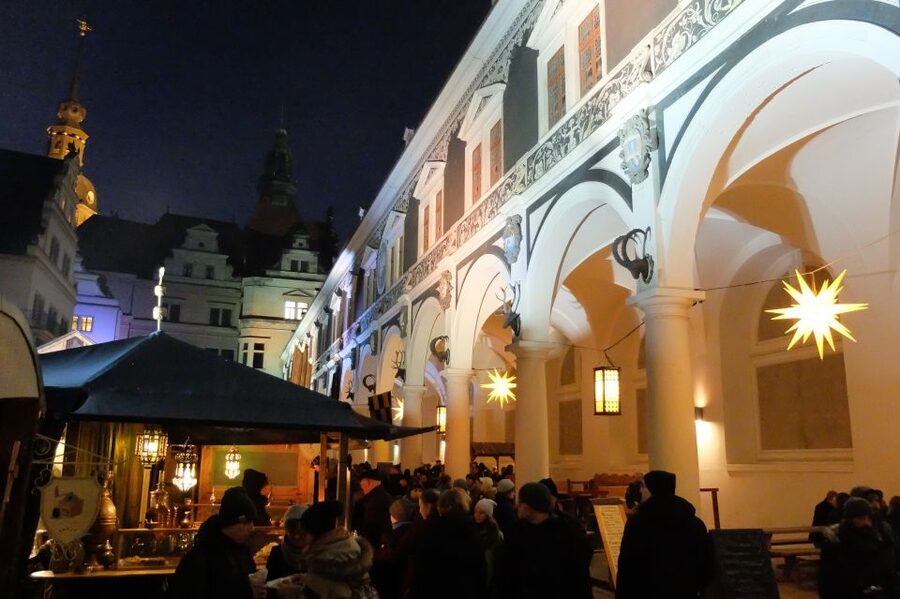
Along the way, the route takes a quick look at the medieval-themed Christmas market in the Royal Stables.
This market offers a different mood from the larger Striezelmarkt. The medieval theme gives the walk some variety, and the Royal Stables setting adds another layer to the former court district.
The visit is brief, so do not expect a long shopping break here. Its value is mainly visual and atmospheric. You get another example of how Dresden uses historic spaces for seasonal events, and you can decide if you want to return later.
One practical tip came from the route planning itself: if the medieval market charges an entrance fee after 3 p.m., an earlier visit can save you 5 euros. A guide may adjust the order to take advantage of that timing, so the exact sequence can change in the group’s interest.
Ending at Striezelmarkt
The final stop is Striezelmarkt, known as one of Germany’s oldest Christmas markets. The tour ends here rather than requiring you to return to the starting point, although the stated activity information also identifies the meeting point as the end location, so confirm the precise route when booking.
Striezelmarkt is the place to continue at your own pace. After two hours of guided orientation, you can browse stalls, look for gifts, and decide how much time to spend eating and drinking. The guide gives advice on local delicacies, Saxon food, and wine, then points you toward Glühwein.
Food and drinks are not included. That is worth remembering when comparing the $25 price with longer tours that include tastings. Here, you pay for the walking guide and the historical explanation, then choose and buy what interests you.
I like this arrangement. You are not rushed through a fixed tasting menu, and you are not stuck waiting while someone else finishes a drink. The tradeoff is that your total spending will rise if you sample several market foods or wines.
Dresden’s wartime story and rebuilding
The Second World War section gives the tour its emotional weight. Dresden’s center was heavily damaged by fire-bombing, and the route explains what happened to the city and its citizens.
The important point is balance. The tour does not present Dresden only as a beautiful Baroque capital, nor only as a destroyed city. It follows the changes across centuries and explains how the historic center was rebuilt and how collections were restored.
That context makes the surviving and reconstructed buildings easier to read. You see why the Church of Our Lady, the palace district, and the wider center matter so much to Dresden today.
The guide’s role is crucial here. This subject can become either a list of dates or a clear account of how ordinary people and public buildings were affected. The strongest guides on this tour are praised for storytelling and for answering questions, so use the opportunity to ask for clarification if you want more detail.
What the $25 price gives you
At $25 per person, this is a reasonably priced introduction to central Dresden, especially if you want a guide rather than a self-guided walk. You get two hours with a local licensed guide, an English explanation of the main monuments, Christmas-market orientation, and a final stop where you can continue independently.
The price does not include palace or museum entry, food, drinks, or transport. That keeps the cost simple, but you should budget separately for anything you buy at the markets.
The value is strongest for a first visit. You can cover a lot of central Dresden quickly, learn which buildings deserve a second look, and finish in a place where you can stay for the rest of the afternoon or evening.
It is less useful if you already know Dresden well or mainly want time to shop. The route has a firm two-hour structure, and the market stops are part of a historical walk, not a dedicated food tour.
The guide style and small-group feel
The company describes this as a small-group walking tour, which is a good format for Dresden’s tight historic center. A smaller group makes it easier to ask questions and keep moving through courtyards and market areas.
The guide quality appears to be a major strength. Doris is described as humorous, clear, and happy to answer questions. Laura Park is especially good at personalizing the experience and changing the order when that helps the group.
There is one practical weakness to watch for. A guide can sometimes turn away while speaking, making it hard for people at the back to hear. Stay near the guide and move into a position with a clear view of the speaker. This matters more outdoors, where winter wind and market noise can compete with the explanation.
Who should book this walk?
I would choose this tour if you want:
- A compact introduction to Dresden’s historic center
- An English-speaking local guide
- Christmas markets placed in historical context
- A mix of Baroque architecture, religious history, wartime history, and rebuilt landmarks
- Advice on local food, wine, and Glühwein
- A flexible ending that lets you remain at Striezelmarkt
It suits couples, solo visitors, and families with older children who can manage two hours of walking in cold weather. It is also a smart first-day activity because it helps you get oriented before returning to the palace, churches, or museums on your own.
You may want another option if you need step-free access, indoor warmth, or detailed visits inside the monuments. The supplied details do not promise accessible facilities, indoor entry, or transport, so contact the provider before booking if those points are important to you.
Practical details for a smooth visit
The tour runs for two hours, with starting times shown according to availability. It operates in all weather once bookings have been accepted. Wear warm clothing, bring comfortable shoes with firm soles, and allow extra time to find the statue at Schlossplatz.
Cancellation is free up to 24 hours before the tour for a full refund. You can also reserve now and pay later, which helps if your Dresden plans are still shifting.
The tour is in English only. All listed sights are viewed from outside, except for the possible Royal Palace courtyard visit if the palace is open. No transport is provided, so plan to reach Schlossplatz independently.
Should you book Dresden with a touch of Xmas?
Book it if you want Dresden’s Christmas atmosphere with a clear explanation of the city behind the decorations. The route packs major sights into two hours, and the combination of the Zwinger, Fürstenzug, Neumarkt, medieval market, and Striezelmarkt gives you a useful first look at the center.
The best reason to choose it is the guide-led storytelling. Doris, Laura Park, and the other local guides are expected to do more than identify buildings. They explain how Dresden grew, suffered, and rebuilt, while still leaving you time to enjoy the markets afterward.
Skip it if your priority is indoor sightseeing, a food tasting, or an unhurried shopping session. For $25, though, it offers solid value for a winter city orientation, provided you dress for the cold and stay close enough to hear the guide.
FAQ
How long is the Dresden Christmas walking tour?
The tour lasts two hours. Starting times depend on availability.
What language is the tour conducted in?
The live tour guide conducts the walk in English.
Where does the tour begin?
It begins at the base of the statue of Friedrich August I on Schlossplatz, near the River Elbe and the foot of Augustus Bridge. Google Maps lists it as Denkmal Friedrich August dem Gerechten.
Where does the tour finish?
The tour ends at Striezelmarkt, where you can remain and explore the Christmas market at your own pace. The stated meeting information also lists the meeting point as the end location, so confirm the exact route when booking.
Are food, drinks, or Glühwein included?
No. Food and drinks are not included. The guide provides advice about local delicacies, wine, and Glühwein, but you purchase anything you want separately.
What should I wear and bring?
Wear warm clothing and comfortable shoes with good grip. Dresden’s streets are cobbled and may become slippery in snow or cold weather.
Can I cancel the booking?
Yes. You can cancel up to 24 hours in advance for a full refund. Reserve now and pay later is also available.
Just added around Dresden
- Test Drive Electric Vehicles from the VW brand (ID. model)★ 4.8 · 190 reviews
- SRF CoBi | City Tour by ConferenceBike★ 4.7 · 38 reviews
- Dresden: Scavenger Hunt to Elbe River & Castles★ 4.7 · 15 reviews
- Dresden: Bike Rental – City Bike with Option Children Seat★ 4.5 · 13 reviews
- Moritzburg: Scavenger Hunt Self-Guided Walking Tour★ 4.8 · 12 reviews
- Historical tour of the old town including a Saxon dinner★ 4.7 · 23 reviews
- Climb the mountains together with goats★ 4.8 · 8 reviews
- From Prague: Day trip to Dresden★ 4.3 · 4 reviews
Christmas, compared.
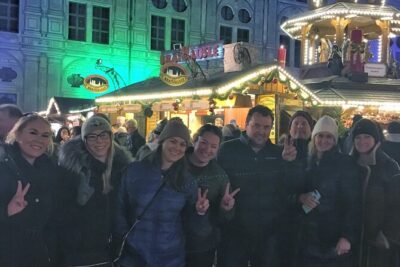
Original Munich Christmas Market Tour with Festive Wine and Food
Read our review →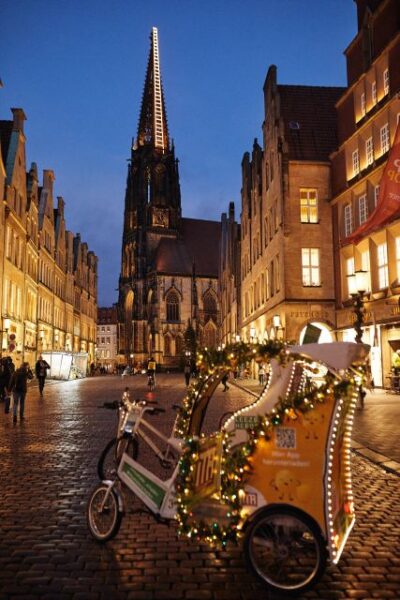
Private Christmas Tour in Münster including Glühwein
Read our review →
Munich Christmas Market Food Tour with Tastings
Read our review →

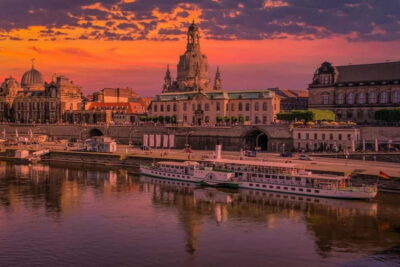
From Prague: Dresden Christmas markets and old town tour
Read our review →
Browse the lists this tour appears in