
Reviewed · SEGWAY TOURS
Dortmund Soccer Segway Tour
Dortmund’s football story began not at its famous stadium, but at Borsigplatz, where the club was founded in 1909. This two-hour Segway route connects that origin point with Signal Iduna Park, Rote Erde Stadium, the Goldsaal, and places tied to the club’s early supporters.
I like the small group of up to eight, which gives your guide room to help beginners. I also like the audio receiver, since you can hear the guide while riding instead of stopping every few minutes. The main consideration is simple: this is a German-language tour, and you must weigh between 45 and 118 kilograms and be at least 14 years old.
- Borsigplatz traces the club’s founding story from 1909.
- Signal Iduna Park and Rote Erde Stadium provide the big stadium contrast.
- The route includes Franz Jacobi’s grave at Southwest Cemetery.
- Audio headsets help you follow the guide while moving.
- Small groups are limited to eight people.
- Beginner riders receive a safety briefing and hands-on help.
In This Review
- Dortmund Football Beyond the Stadium
- Starting at the U and Crossing Westpark
- Southwest Cemetery and Franz Jacobi
- Strobelallee and Dortmund’s Two Stadiums
- The Goldsaal and the Club’s Local Story
- Borsigplatz, Where the Story Begins
- Why the Small Group Matters
- Is $93 a Fair Price for Two Hours?
- Who Should Book This Dortmund Tour?
- Practical Details Before You Ride
- Should You Book the Dortmund Soccer Segway Tour?
- FAQ
- Where does the Dortmund Soccer Segway Tour meet?
- How long does the tour last?
- What language is the live tour guide?
- How many people can join the tour?
- What football locations does the route visit?
- What is special about Borsigplatz?
- Is the tour suitable for beginners?
- What are the age and weight requirements?
- What is included, and what should I bring?
Dortmund Football Beyond the Stadium
This is not just a quick photo stop outside Borussia Dortmund’s home ground. The route links several places that explain how the club grew from a local foundation into one of Germany’s best-known football institutions.
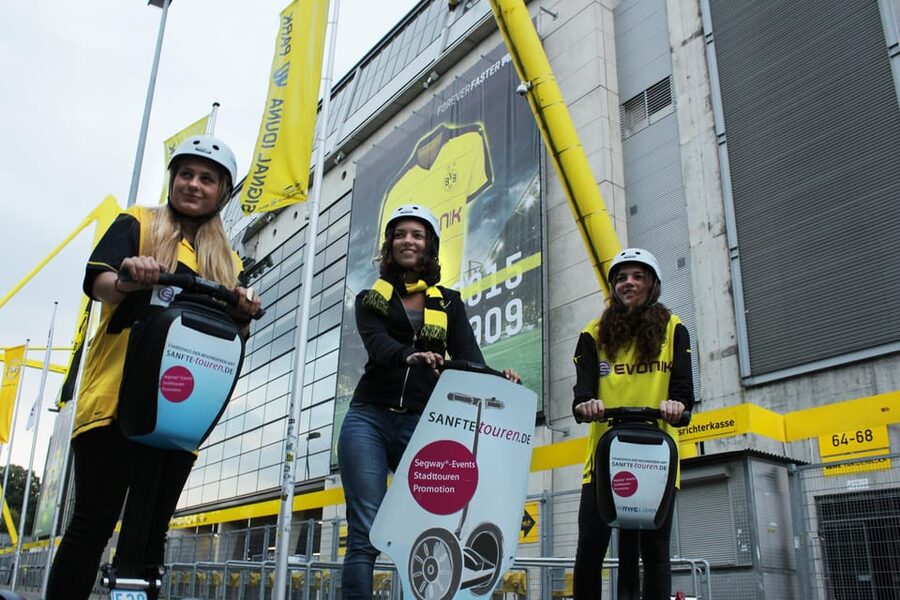
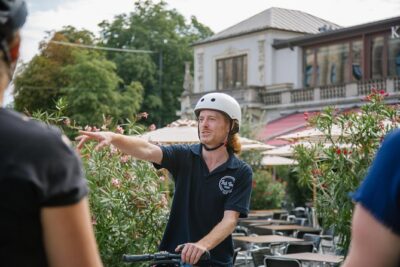
You begin at the meeting point on Im Defdahl 12, 44141 Dortmund. After the safety briefing, you put on a helmet, safety vest, and audio receiver. The guide then gives you time to get used to the Segway before the route gets more interesting.
That beginner support matters. Daniel is described as enthusiastic and good at explaining the city, while Wolfgang has been praised for a clear introduction and a friendly, helpful manner. Stefan has also led the route and is noted for combining football information with broader facts about Dortmund. Guides can change, but the pattern is clear: the guide is an active part of the experience, not just someone leading from the front.
The Segway itself gives you more range than a walking tour without turning the outing into a long endurance test. You cover parks, streets, cemeteries, stadium grounds, and historic city points in two hours. You still need comfortable shoes, and you should expect to pay attention to the route rather than simply coast along.
Starting at the U and Crossing Westpark
The tour starts at the U, Dortmund’s well-known former brewery tower and cultural landmark. The route then crosses Westpark and continues along Lindemannstraße toward Sonnenstraße.
Westpark gives the opening stretch a calmer feel. It is a useful place to get comfortable with the Segway, especially if this is your first ride. Several riders have taken the tour as complete beginners, and the introduction is designed to make the controls manageable before the route reaches more demanding sections.
The audio receiver is useful here. Instead of gathering around the guide to hear every detail, you can listen while moving in a line. That keeps the ride flowing, though you should still focus on steering, other people, and changes in the path.
At Sonnenstraße, the guide points out Restaurant Zur Sonne. This location is connected with the foundation of the fan and promotion department, giving you a glimpse of the organizational side of Dortmund football. It is a small detail, but that is part of the route’s appeal. You are not only seeing famous football buildings. You are also visiting the places and institutions that helped build the club’s local following.
More segway tours in Germany:
- Dresden: Segway Tour Along the Elbe and Old Town
★ 4.9 · 392 reviews - Heidelberg: Philosophers’ Walk Guided Segway Tour
★ 4.8 · 322 reviews - Munich: City Highlights Guided Segway Tour
★ 4.6 · 266 reviews
Southwest Cemetery and Franz Jacobi
The route continues to Southwest Cemetery, where Franz Jacobi has rested since 2013. Jacobi was the club’s founder, so this stop adds a personal note to a story that can otherwise become a parade of stadium names and dates.
A cemetery stop may not suit everyone looking for a nonstop sports outing, but I think it gives the tour some balance. Football clubs are made by people, and a visit connected with Jacobi brings the story back to its beginnings.
Your guide supplies the context, and this is where the German-language format matters most. If you understand German, you can expect the spoken explanations to carry much of the tour’s value. If you do not, the places will still be visible, but the historical detail will be harder to follow. There is no indication that an English-language guide is offered, so you should treat German as an essential booking point rather than a minor detail.
The route’s pace also helps here. You are not asked to spend a long period at one indoor exhibit. The stop forms part of a moving circuit, with the guide explaining why the location matters before you continue.
Strobelallee and Dortmund’s Two Stadiums
From the cemetery, the Segways continue along Strobelallee toward the stadium area. This is the section most football fans will anticipate, but the route gives you more than a single look at Signal Iduna Park.
Signal Iduna Park is Dortmund’s major football venue and the natural headline stop. You can expect the guide to connect the stadium with the club’s wider story, rather than treating it as an isolated building. The tour also visits Rote Erde Stadium, giving you a useful comparison between the current home of major football and an older stadium with a different role in Dortmund’s sporting identity.
Seeing both grounds in one short route is good value for anyone who wants stadium context without booking a full matchday program. You are not paying only for a stadium exterior and a photograph. The guide links the two venues with the club’s development and the city around them.
Still, keep your expectations in check. The supplied details do not promise an interior stadium tour, dressing-room access, museum entry, or a match. The experience is a guided Segway circuit around historical places. If you want to walk through the stands or see behind the scenes, you will need to check for a separate stadium experience.
The stadium section also shows why the audio system helps. Your guide can explain the sites while the group moves between them, then pause when a point needs more attention. In a group capped at eight, it should be easier to stay together and ask for help on trickier stretches.
The Goldsaal and the Club’s Local Story
The Goldsaal is another named stop on the route. Its importance is tied to Dortmund’s football history, and your guide provides the explanation that turns a place name into part of the larger story.
This is the sort of stop that can pass unnoticed if you explore Dortmund on your own. The main stadium is easy to find. Smaller historical places need a guide who knows how they fit together. That is where the route earns its keep.
I would pay attention to the links between the Goldsaal, Restaurant Zur Sonne, the founder’s resting place, and Borsigplatz. Taken one by one, they are separate locations. Taken together, they tell a more useful story about how football grew through local people, supporters, meeting points, and institutions.
Because the tour lasts only two hours, the explanations cannot cover every part of Dortmund football. You get a focused route rather than a full club archive. That is a strength if you want an active introduction, but a limitation if you already know the club’s history and want specialist detail.
Same city, a completely different kind of day:
- Berlin: Reichstag, Dome and Government District Guided Tour
★ 4.7 · 18,288 reviews - Berlin: 1-Hour City Tour by Boat with Guaranteed Seating
★ 4.3 · 16,993 reviews - Hamburg: Sex and Crime in St. Pauli Tour for Ages 18+
★ 4.7 · 15,447 reviews - Hamburg: 1.5-Hour Harbor and Speicherstadt Day Cruise
★ 4.6 · 14,200 reviews
Borsigplatz, Where the Story Begins
The route heads north to Borsigplatz, the founding place of Dortmund’s football club. This is the most important historical stop for understanding the tour’s theme.
Modern football culture often draws attention to huge arenas, packed fixtures, and famous players. Borsigplatz offers a different starting point. It anchors the club in a particular Dortmund neighborhood and shows that the story began in a local setting long before the modern stadium era.
The nearby Trinity Church is also included. Its presence adds a city and community layer to the stop. You are not simply looking at football infrastructure. You are seeing the setting around the club’s earliest roots.
For me, this is the part that makes the route more than a novelty Segway ride. The machine makes the outing fun, but Borsigplatz gives it a clear purpose. You finish with a better sense of where the club came from, not just where it plays now.
The northbound ride also gives the itinerary a natural shape. You start with a brief introduction, pass through places linked to supporters and the founder, reach the stadium area, and finish at the club’s origin point. That progression makes the two hours feel planned rather than random.
Why the Small Group Matters
The group limit is eight people. That is a useful size for a Segway tour because the guide can watch the riders, keep the formation together, and offer help when someone is still learning.
First-time riders have found the initial instruction clear, and guides have helped with difficult sections of the route. You should not assume that every part of the ride is effortless. Segways require balance, steering, and attention, especially when the surface or path becomes less straightforward.
The safety equipment is included: helmet, safety vest, and audio headset. Comfortable shoes are the only stated item you need to bring. I would wear shoes with a firm sole and clothing that lets you move easily, though the activity information does not set a dress code.
The minimum age is 14. This makes the tour better suited to adult groups, older teenagers, football supporters, and couples than to families with young children. Anyone under 14 cannot participate, and the maximum weight is 118 kilograms, or 260 pounds. The lower limit of 45 kilograms, or 99 pounds, also applies to every rider.
Is $93 a Fair Price for Two Hours?
At $93 per person, this is not the cheapest way to see Dortmund. You are paying for the Segway, safety equipment, a guide, the audio system, and a small group rather than simply walking between public sights.
The price makes the most sense if you value the combination of active transport and local football history. In two hours, you cover several spread-out places that would take more effort on foot. You also get a guide to connect the stops, which is the key part of the value.
The cost is harder to justify if you only want a quick view of Signal Iduna Park. The tour does not promise match tickets, stadium entry, or an interior visit. For that purpose, a different stadium-focused activity may suit you better.
The free cancellation policy also reduces some booking risk. You can cancel up to 24 hours in advance for a full refund, and the reserve-now, pay-later option lets you hold a place without paying at once. Those terms are practical if your Dortmund plans are still shifting.
Who Should Book This Dortmund Tour?
I would recommend it most strongly to football fans who want the city context behind Borussia Dortmund, not only a stadium photograph. It also suits visitors who enjoy seeing a city by an unusual form of transport and who are happy to listen to a guide while riding.
It is a good fit for first-time Segway riders, provided you meet the age and weight requirements. The instruction, small group, and guide assistance help reduce the worry that you need prior experience.
You should think twice if you do not understand German. The live guide language is German, and the audio receiver supports hearing the guide clearly but does not translate the commentary. You should also choose another activity if you are under 14, outside the stated weight range, or uncomfortable riding a Segway.
The route is also less suitable for anyone seeking a deep specialist football lecture. You receive football history along with information about Dortmund, but the experience is built around movement, stops, and a broad story.
Practical Details Before You Ride
Allow time to reach the meeting point at Im Defdahl 12, 44141 Dortmund. The activity lasts two hours, and starting times vary, so you need to check availability for the date you want.
The tour includes a helmet and headset. A safety vest is also used during the opening preparation. Bring comfortable shoes, listen closely to the briefing, and tell the guide if you need help with the controls or a difficult section.
The experience is offered in a small group of no more than eight people. That is especially helpful if your party includes mixed levels of Segway experience. You can expect to ride with a local guide, but the specific guide may vary. Past tours have been led by Daniel, Wolfgang, and Stefan, each praised for clear instruction, good city explanations, and a relaxed attitude.
The overall tone is active but not extreme. The route includes parks, streets, cemetery paths, and stadium areas, so you should be ready for changing surroundings rather than one smooth, fixed track.
Should You Book the Dortmund Soccer Segway Tour?
Book it if you want Dortmund football history with wheels under you. The strongest parts are the small group, beginner-friendly briefing, German-speaking local guide, and route linking Borsigplatz with the stadiums and founder-related sites.
Skip it if you need English commentary, stadium interiors, or a tour suitable for children under 14. At $93, the experience is best value for someone who cares about the story behind the club and wants an active way to cover several parts of Dortmund in two hours.
FAQ
Where does the Dortmund Soccer Segway Tour meet?
The meeting point is Im Defdahl 12, 44141 Dortmund.
How long does the tour last?
The tour lasts two hours. Starting times vary, so you need to check availability for your preferred date.
What language is the live tour guide?
The live tour guide speaks German. The audio receiver helps you hear the guide clearly while riding.
How many people can join the tour?
The activity is limited to a small group of eight participants.
What football locations does the route visit?
The route includes Signal Iduna Park, Rote Erde Stadium, the Goldsaal, Borsigplatz, and Trinity Church. It also passes Restaurant Zur Sonne and Southwest Cemetery.
What is special about Borsigplatz?
Borsigplatz is described as the founding place of Dortmund’s football club in 1909.
Is the tour suitable for beginners?
Yes. You receive a safety briefing and instruction before riding, and guides provide help on difficult sections. Previous first-time riders have completed the activity.
What are the age and weight requirements?
All participants must be at least 14 years old and weigh between 45 and 118 kilograms, or 99 and 260 pounds.
What is included, and what should I bring?
A helmet and headset are included, and a safety vest is used for the ride. Bring comfortable shoes.
Just added around Germany
- Aachen old town tour – GERMAN (public)★ 5.0 · 24 reviews
- Aachen Private Walking Tour With A Professional Guide★ 5.0 · 11 reviews
- Cologne Highlights: Exclusive Private Tour★ 5.0 · 5 reviews
- Bremen Private Walking Tour With A Professional Guide★ 5.0 · 7 reviews
- Private Walking Tour through the Fascinating Bremen’s City Center★ 5.0 · 5 reviews
- Explore Cologne’s best Street Art Quarter★ 4.5 · 4 reviews
- Bremen Exploration Private Game and City Tour on your Phone★ 4.5 · 7 reviews
- e-Scavenger hunt Bremen: Explore the city at your own pace★ 4.0 · 24 reviews
Segway Tours, compared.
Heidelberg & Neckar Valley: Segway Tour – 360 Degrees
Read our review →
Munich 3-Hour Segway Tour: Nazi Munich & Royal Architecture
Read our review →
Browse the lists this tour appears in