
Reviewed · HAMBURG TOURS
Die Kiez-Kapitän Hamburger Stadtführung & Speicherstadt Tour
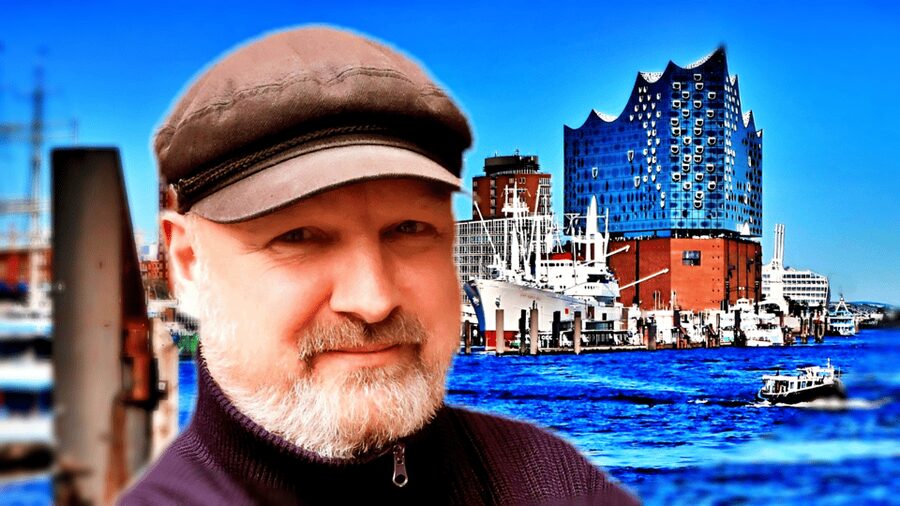
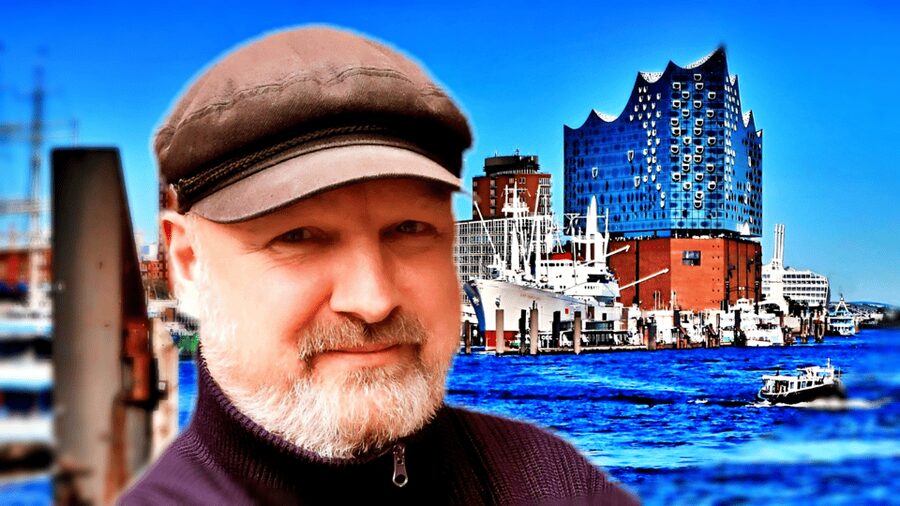
Hamburg’s story unfolds especially well on this route, from the waterfront at the Alster to the brick warehouses of Speicherstadt and the glassy Elbphilharmonie. I like the mix of major sights and smaller details, including the Great Fire of 1842, the 1962 flood, a poodle on a roof, and the city’s long connection with ships and sailors. I also like that guide Jens Hartmann brings a personal, humorous style to the history.
The main consideration is language: this is a German-language tour, so you’ll get the most from it if you understand German. Two hours is enough for a strong introduction, but the route covers a lot, and a small group can sometimes run longer when questions and stories keep flowing.
In This Review
- Key points to know before you book
- Why this route gives you a useful first look at Hamburg
- Jungfernstieg and the Alster: Hamburg’s calm center
- Town Hall and the business of a Hanseatic city
- Trostbrücke and Laeiszhof: small places, useful connections
- St. Nikolai Memorial and the city’s hardest chapters
- Deichstrasse: old Hamburg beside the canals
- Speicherstadt: red brick, canals, and organized trade
- HafenCity and the modern edge of the old port
- Elbphilharmonie: the dramatic finish
- How much value do you get for $18?
- Who will get the most from this walk?
- Booking details worth knowing
- Should you book the Kiez-Kapitän tour?
- FAQ
- Where does the tour start?
- Where does the tour finish?
- How long does the tour last?
- What language is the tour conducted in?
- Is a visit to the Elbphilharmonie included?
- Is the tour wheelchair accessible?
Key points to know before you book
- From Jungfernstieg to the Elbphilharmonie: The route links Hamburg’s lakefront, historic center, warehouse district, HafenCity, and concert hall.
- A history walk with plenty of character: Expect stories about the 1842 fire, the 1962 flood, wartime destruction, shipping, and even a rooftop poodle.
- Important Hamburg landmarks: You’ll pass the Town Hall, Chamber of Commerce, Trostbrücke, St. Nikolai Memorial, Deichstrasse, and Speicherstadt.
- Jens Hartmann leads with humor: His style suits people who prefer lively explanations over a dry list of dates.
- Good value at $18: The price is modest for a two-hour guided introduction to several of central Hamburg’s key areas.
- The Elbphilharmonie visit is not included: You finish near the concert hall, and the Plaza requires a separate visit.
Why this route gives you a useful first look at Hamburg
Hamburg can feel spread out at first. The Alster, old merchant center, harbor, Speicherstadt, HafenCity, and Elbphilharmonie each have a different mood. This tour ties them together in one walk, helping you understand how the city grew from a Hanseatic trading center into a major port and modern cultural city.
The starting point is Jungfernstieg 58, directly beside the water at the landing area for the Alster boats. This is a practical place to begin. It sits near S and U-Bahn exits and several bus lines, so you can reach it without a long transfer across the city.
I like the way the tour begins with the Alster. The lake gives you a clear sense of Hamburg’s setting before the route moves into denser streets and historic buildings. It also makes a pleasant contrast with the industrial and maritime character you’ll see later along the Elbe.
The walk is scheduled for two hours. That is a sensible length for a first orientation, especially if you have only a day or two in Hamburg. It is long enough to connect many sights, but not so long that the history becomes a full-day commitment.
Other Hamburg days worth putting on the list:
- Hamburg: Sex and Crime in St. Pauli Tour for Ages 18+
★ 4.7 · 15,447 reviews - Hamburg: 1.5-Hour Harbor and Speicherstadt Day Cruise
★ 4.6 · 14,200 reviews - Hamburg: 90-Minute Evening Lights Harbor Cruise
★ 4.5 · 7,728 reviews
Jungfernstieg and the Alster: Hamburg’s calm center
At the Alster, you begin with one of Hamburg’s best-known public spaces. The area connects shopping streets, transport links, the waterfront, and the historic center. Your guide uses this opening to place Hamburg on the map and introduce the city’s development over roughly 1,200 years.
The Alster is not just a pretty starting view. It helps explain the difference between Hamburg’s inland city center and its port districts farther west and south. You’ll soon move from open water and grand civic buildings toward narrow streets, old bridges, canals, warehouses, and new construction.
The tour is guided in German, and that matters here. Historical explanations often move quickly, especially when the guide links one event to another. If German is comfortable for you, the storytelling format should make the city easier to remember than a simple sightseeing circuit.
Town Hall and the business of a Hanseatic city
The Hamburg Town Hall is one of the route’s major stops. Here, the focus shifts from the Alster’s public waterfront to the political and commercial center of the city.
You’ll also visit the Hamburg Chamber of Commerce. That stop adds useful context because Hamburg’s identity was shaped by trade as much as by government. The city’s Hanseatic past was built on merchants, shipping routes, finance, and agreements between trading towns.
The nearby Patriotic Society of 1765 continues that civic theme. Together, these stops help you see Hamburg as a city run not only from palaces or royal courts, but also through merchant institutions and civic organizations.
I like this part of the route because it gives the grand buildings a purpose. You are not only looking at facades. You are hearing how Hamburg’s commercial power and civic life developed around them.
Trostbrücke and Laeiszhof: small places, useful connections
Trostbrücke and Laeiszhof are less familiar names than the Town Hall or Elbphilharmonie, but they are important to the shape of the walk. These stops keep the tour from becoming a checklist of only the most famous attractions.
Trostbrücke helps connect the old city with the areas shaped by trade and waterways. Laeiszhof adds another link to Hamburg’s merchant and shipping story. Details like these are especially useful if you want to understand how the city’s center once worked, rather than simply photograph its biggest buildings.
This is also where a local guide can add more value than a self-guided route. The printed facts about Hamburg are easy to find. The challenge is knowing how to connect a bridge, a courtyard, a merchant building, and a port district into one story. Jens Hartmann’s approach is described as humorous and detailed, with plenty of room for questions when the group is small.
Same city, a completely different kind of day:
- Hamburg: 2-Hour XXL Port of Hamburg Cruise Tour
★ 4.7 · 6,979 reviews - Hamburg: Line A Sightseeing Hop-On Hop-Off Bus Tour
★ 4.6 · 6,958 reviews - Hamburg: Elbphilharmonie Plaza Guided Tour
★ 4.7 · 5,882 reviews - Hamburg: Hamburg Dungeon Admission Ticket
★ 4.7 · 5,745 reviews
St. Nikolai Memorial and the city’s hardest chapters
The St. Nikolai Memorial brings the tour into darker territory. The site recalls the destruction of Hamburg during the Second World War and offers a clear reminder that the city’s old center was heavily damaged.
This stop gives important balance to the grand architecture. Hamburg is often presented through its waterfront, shopping streets, and modern concert hall, but its past also includes war, destruction, and rebuilding. A good city tour should make room for both the attractive and difficult parts of a place.
The guide also discusses the Great Hamburg Fire of 1842. That disaster reshaped large sections of the city and helps explain why Hamburg contains such a mix of older structures, rebuilt areas, and later urban planning.
You’ll also hear about the Great Hamburg Flood of 1962. This is a particularly useful story for understanding Hamburg’s relationship with water. The city’s prosperity depends on its waterways, yet those same waters have brought serious danger.
The history is not presented as a string of isolated disasters. The fire, flood, wartime destruction, and port development all show how Hamburg has repeatedly had to rebuild and adapt.
Deichstrasse: old Hamburg beside the canals
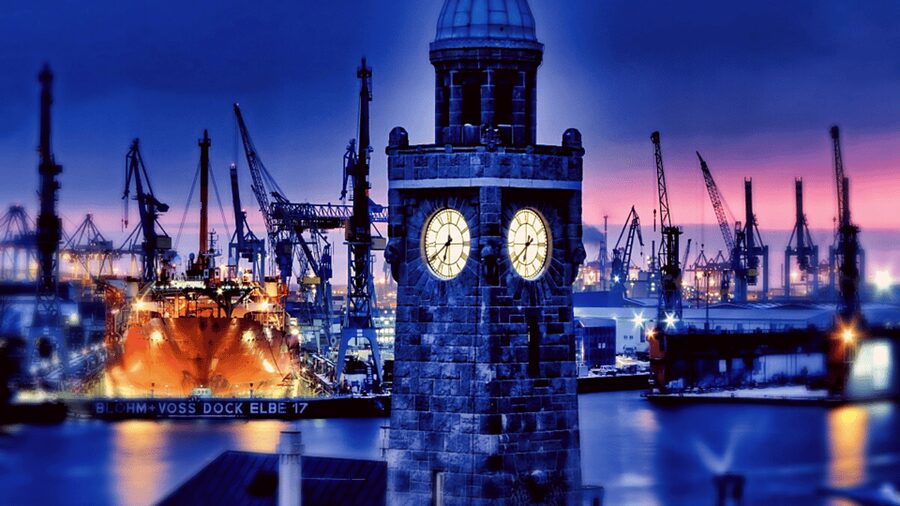
Deichstrasse offers one of the most atmospheric historic sections on the route. It brings you closer to the older character of Hamburg, with buildings and waterways that help you picture the city before its newer port districts took shape.
This part is valuable because it prepares you for Speicherstadt. You can see how Hamburg’s older streets and canal-side trade areas connect to the later warehouse system.
I would pay attention here to the relationship between the buildings and the water. Hamburg’s canals were practical working routes, not only scenic features. The city’s architecture makes more sense when you remember that goods, merchants, and ships shaped the streets.
The route does not treat history as something trapped in a museum. It places the past directly beside present-day streets, businesses, and public spaces. That makes the walk useful for your own exploring after the tour.
Speicherstadt: red brick, canals, and organized trade
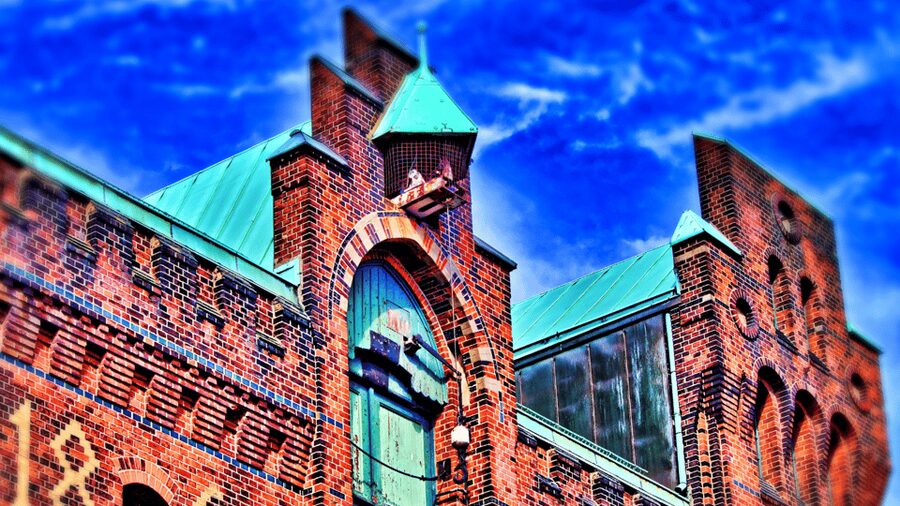
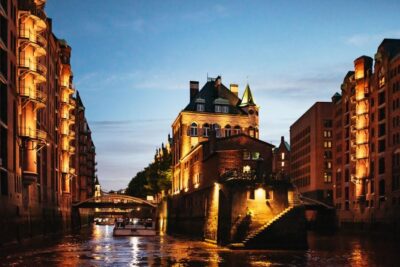
Speicherstadt is the visual centerpiece of the middle part of the tour. Its red-brick warehouses and canals create one of Hamburg’s most recognizable city views, and the district is recognized as a UNESCO World Heritage Site.
The guide explains the history of this warehouse district and its place along the Elbe. The brick construction is more than a backdrop for photographs. The buildings were designed for storage and trade, reflecting Hamburg’s role as a port city and commercial gateway.
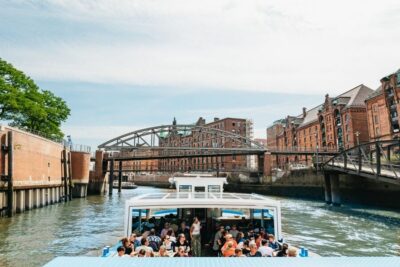
The best way to appreciate Speicherstadt is to look at both scale and detail. The long warehouse blocks show the size of Hamburg’s trading system, while the canals and bridges reveal how closely the district was tied to waterborne transport.
This stop also provides a useful pause in the historical story. Earlier, you heard about civic buildings, merchants, fire, flood, and war. In Speicherstadt, those threads come together in a district built around the movement and storage of goods.
The drawback is that a short tour can only introduce Speicherstadt. You will not have time to explore every lane, attraction, or museum in the district. Treat the stop as an orientation, then return later if the brick warehouses appeal to you.
HafenCity and the modern edge of the old port
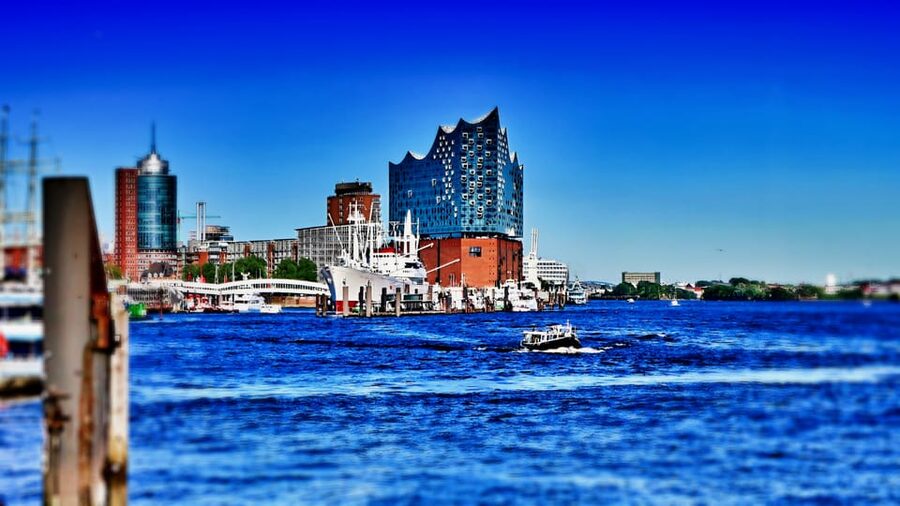
From Speicherstadt, the route continues into HafenCity. This newer district shows Hamburg changing again, with modern architecture replacing or reworking former port spaces.
The contrast is sharp. Speicherstadt is defined by brick, canals, and historic trade. HafenCity presents a newer vision of urban Hamburg, with contemporary buildings and public spaces connected to the Elbe.
That change is one of the strongest reasons to choose this particular route. You do not see the old city and modern architecture on separate excursions. You move between them on foot, making the differences easy to understand.
The guide also covers Hamburg’s seafaring identity, including the old and new port and cultural references reaching from the harbor to Hans Albers. That adds a human side to the city’s maritime story. Shipping is not only an economic subject here. It is part of Hamburg’s music, public image, work, and local character.
Elbphilharmonie: the dramatic finish

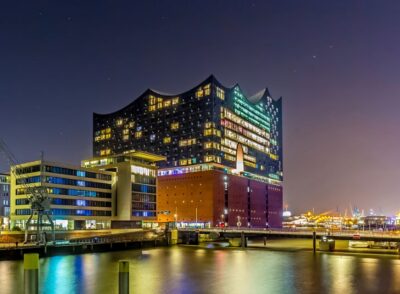
The tour ends at Am Sandtorkai 68, near the Elbphilharmonie. The concert hall is the final visual payoff, with its striking modern form and prominent position above the harbor district.
You receive information about the building and its role in modern Hamburg, but a visit inside is not included. This distinction is important. The tour gives you an exterior introduction and a view of the building, not a concert, interior tour, or guaranteed Plaza visit.
Afterward, you can visit the Elbphilharmonie Plaza separately. Plaza tickets are available free at the entrance, though charges may apply for larger groups. It is sensible to treat that as an extra plan rather than assuming it is part of the two-hour walk.
The finish is convenient because it leaves you in HafenCity, close to more waterfront sights and the modern port area. You can continue exploring, stop for food, or make your separate visit to the Plaza.
How much value do you get for $18?
At $18 per person, this is priced as an accessible introduction rather than a premium specialist tour. I think the value is strong if you want one guide to connect central Hamburg, the Alster, the historic core, Speicherstadt, HafenCity, and the Elbphilharmonie.
You are paying for two hours of live explanation, not admission to attractions. No Alster boat ride, Elbphilharmonie visit, or separate museum entry is included. That keeps the price low, but you should budget separately for anything you want to enter afterward.
The strongest value comes from the route itself. Visiting each area independently is possible, but you would need to research the connections and historical background on your own. Here, the fire, flood, war, shipping, warehouse district, and modern architecture are presented as parts of one city story.
Small groups can make the price even better. One departure had a mini group, allowing extensive questions and an extra 30 to 45 minutes of explanation. That extra time is not guaranteed, but it shows how the guide may respond when the group is small and engaged.
Who will get the most from this walk?
I would recommend it for first-time visitors who want a clear introduction before exploring Hamburg on their own. It is also a good fit if you enjoy city history but prefer short stories and local details to a lecture packed with dates.
The tour suits:
- People with two hours to spare between other plans
- Visitors interested in architecture, port history, and urban change
- German speakers who enjoy an informal, humorous guide
- Anyone wanting to connect the Alster with Speicherstadt and HafenCity
- Visitors who want a wheelchair-accessible tour option
You may want a different experience if you need English guiding, want to spend a long time inside the Elbphilharmonie, or prefer a tour focused only on the harbor or only on the old town.
Wear comfortable shoes and allow time for the route between stops. The tour covers many districts, and the value depends on staying engaged as the setting changes from lakefront to historic center to warehouse district and modern HafenCity.
Booking details worth knowing
The meeting point is Jungfernstieg 58, directly at Alster boat landing number 1. It is close to S and U-Bahn exits and several bus lines, but your journey to the meeting point is not included in the $18 price.
The tour lasts two hours, with start times depending on availability. The guide language is German, and the activity is listed as wheelchair accessible.
You can cancel up to 24 hours before the start for a full refund. A reserve-now, pay-later option is also available, which helps if you are still arranging the rest of your Hamburg schedule.
Should you book the Kiez-Kapitän tour?
Book it if you want a compact, story-led introduction to Hamburg and German is suitable for you. The route gives you far more than a view of Speicherstadt: it explains the city’s civic center, disasters, war damage, shipping culture, canals, port districts, and modern architecture.
The biggest strengths are the broad route, the modest price, and Jens Hartmann’s lively approach. The main limits are the German-only format and the fact that the Elbphilharmonie Plaza and interior are separate experiences.
For a first visit, I like this as a practical orientation walk. You finish with a better sense of how Hamburg fits together, plus a clear list of places worth revisiting at your own pace.
FAQ
Where does the tour start?
The tour starts at Jungfernstieg 58 in Hamburg, directly beside the water at Alster boat landing number 1.
Where does the tour finish?
It finishes at Am Sandtorkai 68, near the Elbphilharmonie in HafenCity.
How long does the tour last?
The scheduled duration is two hours. A small group may sometimes spend longer on the route if the guide takes additional questions or continues explaining.
What language is the tour conducted in?
The live tour guide speaks German.
Is a visit to the Elbphilharmonie included?
No. The tour includes information and views of the Elbphilharmonie, but a visit inside is not included. You can visit the Plaza separately, with free tickets available at the entrance. Charges may apply for larger groups.
Is the tour wheelchair accessible?
Yes, the activity is listed as wheelchair accessible.
Just added around Hamburg
- Hamburg: Historical Tour of the St. Pauli Sex Work District★ 4.4 · 215 reviews
- Hamburg: St. Pauli Food and Bier Tour★ 4.7 · 5 reviews
- Hamburg: Private Tour Red Light District Walking Tour★ 4.7 · 227 reviews
- St. Pauli Tour: Drag-Attack with Barbie Stupid & Lee Jackson★ 4.8 · 280 reviews
- St. Michael’s, Elbe Tunnel & Harbor 2-Hour Hamburg Tour★ 4.9 · 21 reviews
- Satt Pauli – der kulinarische Rundgang durch St. Pauli★ 4.8 · 12 reviews
- Hamburg: Safari tour in St. Pauli★ 4.9 · 11 reviews
- Hamburg: Reeperbahn Comedy Club★ 4.3 · 53 reviews
Hamburg Tours, compared.

1.5-Hour Harbor and Speicherstadt Day Cruise
Read our review →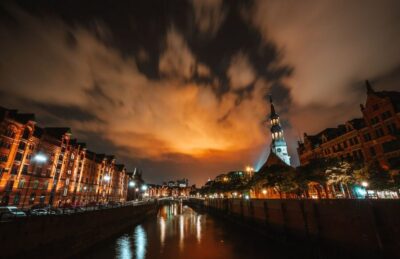


Browse the lists this tour appears in