
Reviewed · HAMBURG TOURS
Dialog im Dunkeln (Dialogue in the Dark)
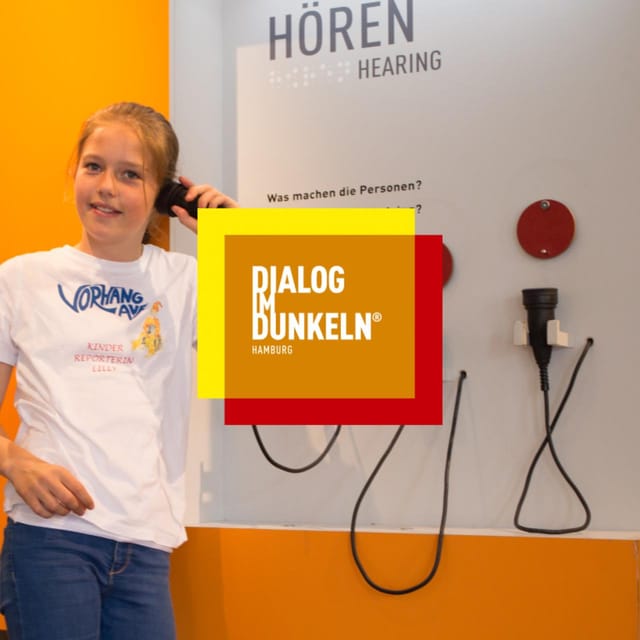
Walking through a city without seeing a thing is the heart of Dialog im Dunkeln in Hamburg. A blind or visually impaired guide leads you through everyday settings while you use a cane, your ears, hands, and nose to find your way. It is part practical challenge, part lesson in how quickly assumptions can fall away.
I like the small group size, limited to eight people, because you get room to ask questions and work through the odd moments together. I also like the Dark Bar at the end, where a drink and an open chat help you sort out what just happened. The main drawback is simple: complete darkness can feel uncomfortable, especially if you dislike enclosed spaces or losing control of your surroundings.
In This Review
- Key points to know before you go
- Why total darkness changes an ordinary walk
- Getting used to the first few minutes
- Walking through a park without seeing it
- Crossing a city street by sound
- Buying something with no visual clues
- Listening, touching, and smelling your way forward
- The Dark Bar and the conversation afterward
- Is $28 a fair price?
- Who should book this Hamburg activity?
- Booking details that affect your day
- My verdict: book it if you want more than a museum visit
- FAQ
- Where does Dialog im Dunkeln take place?
- How long does the experience last?
- Is the tour conducted in English?
- How many people are in each group?
- Who leads the tour?
- What will I do during the tour?
- Is the Dark Bar included?
- What should I bring?
- Can I take flash photographs?
Key points to know before you go
- A blind guide leads the entire tour, giving you instructions and helping the group move safely through the dark.
- Everyday scenes become puzzles, including a park walk, a city street crossing, and the act of buying something.
- Your senses change quickly, with sound, touch, smell, and balance taking over from sight.
- Groups are limited to eight, creating a more personal setting than a large museum tour.
- The Dark Bar closes the visit, with time to share impressions and ask the guide questions over a drink.
- Comfortable shoes matter, and flash photography is not allowed.
Why total darkness changes an ordinary walk
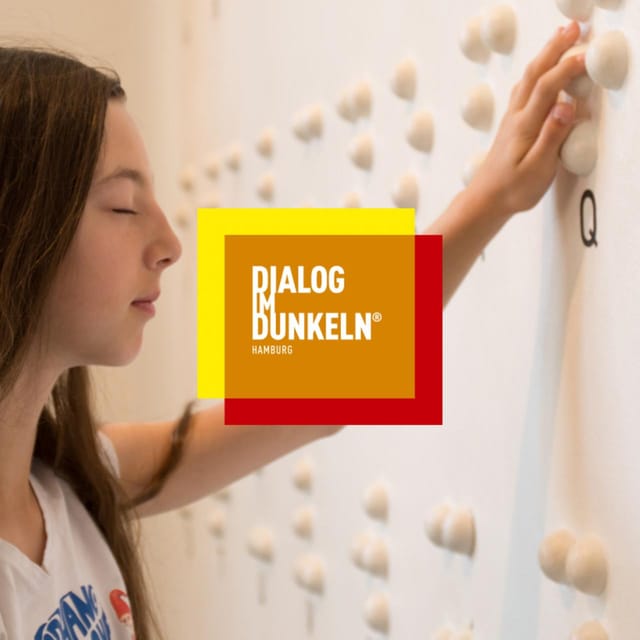
Dialog im Dunkeln does not ask you to look at displays about blindness. It removes sight altogether and puts you inside a carefully guided activity. That difference matters. You are not simply learning facts. You are trying to move, listen, communicate, and make decisions without the sense you usually trust most.
The tour lasts about 60 minutes. That is long enough for the first shock to fade and for your other senses to become more useful, but short enough that the format does not become exhausting for most people. You begin by exchanging your voucher at the ticket counter, then wait for your guide before entering the dark areas.
The guide is blind or visually impaired, so the person giving directions is also the person best placed to explain how the non-visual world works. Guides named in visitor feedback include Jeremy and Klaus, both praised for their friendly, helpful manner. The guide’s role is more than safety control. You can ask questions, test your assumptions, and listen to a first-hand perspective that a standard museum panel cannot provide.
The setting is not designed for you to explore alone. You move as a group, following instructions and staying connected to the guide. That arrangement can feel strange at first, but it gives the tour its purpose. You are learning to rely on communication instead of sight.
Other Hamburg days worth putting on the list:
- Hamburg: Sex and Crime in St. Pauli Tour for Ages 18+
★ 4.7 · 15,447 reviews - Hamburg: 1.5-Hour Harbor and Speicherstadt Day Cruise
★ 4.6 · 14,200 reviews - Hamburg: 90-Minute Evening Lights Harbor Cruise
★ 4.5 · 7,728 reviews
Getting used to the first few minutes
The opening moments may be the hardest. In ordinary life, even a dim room offers visual clues about where to step and how far away another person is. Here, those clues disappear. A cane becomes your main tool for checking the ground, while your ears help you judge distance and direction.
You may notice small sounds that normally vanish under the noise of daily life. Footsteps, voices, changes in the floor, and the scrape of a cane against a surface all become useful information. Touch also becomes more precise. A texture, shape, or edge can tell you something that your eyes would normally identify at once.
This is where the activity earns its price. You are not paying for a long list of sights. You are paying for a guided shift in how you interpret the world. The first few minutes can produce laughter, hesitation, and some uncertainty, but the guide keeps the group moving.
A small group helps here. With no more than eight participants, you can hear the instructions and take part without being lost in a crowd. The group also becomes part of the exercise. You need to communicate clearly, give others space, and accept that everyone will react differently.
Walking through a park without seeing it
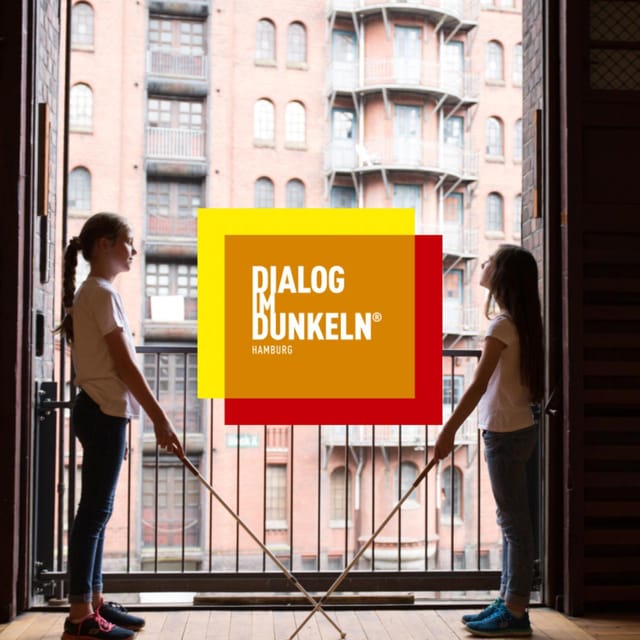
One part of the route represents a stroll through a park. You might feel gravel under your shoes and use its crunch to understand the surface beneath you. Without a view, a simple walk becomes a study in texture, balance, sound, and pace.
This section is useful because it shows how much information your feet normally ignore. You might first focus on where to place the cane. Then you may begin to notice whether the ground is smooth or rough, how your steps sound, and how the group’s movement changes around you.
The activity does not pretend that one hour can reproduce daily life without sight. It gives you a limited, controlled window into the problem of moving through spaces built around visual information. That distinction is important. You leave with greater empathy, but not with a claim that you now fully understand blindness.
For families, this can be a strong shared activity. One particularly useful reason to book is that it can help you think about how relatives with visual impairments manage ordinary tasks. It gives children and adults a common event to discuss afterward, though the complete darkness may not suit every young participant.
Crossing a city street by sound
The city street section raises the stakes. You hear what is happening around you and try to work out the setting without seeing traffic, buildings, or other visual signals. The guide’s instructions become especially important here.
You are not being sent into a real street. This is a safe, controlled part of the exhibition. Still, the exercise shows why sound awareness, timing, and communication matter so much when visual cues are unavailable.
I like this part because it turns a familiar action into a team task. You cannot simply glance left and right. You must listen, follow directions, and trust the process. It also challenges a common assumption that people without sight experience the world as a blank space. The world is still full of information. You are simply receiving it through different channels.
The lesson is not that hearing or touch magically replaces vision. Those senses give you clues, but interpreting them takes practice. You may feel clumsy at first. That is part of the point.
Same city, a completely different kind of day:
- Hamburg: 2-Hour XXL Port of Hamburg Cruise Tour
★ 4.7 · 6,979 reviews - Hamburg: Line A Sightseeing Hop-On Hop-Off Bus Tour
★ 4.6 · 6,958 reviews - Hamburg: Elbphilharmonie Plaza Guided Tour
★ 4.7 · 5,882 reviews - Hamburg: Hamburg Dungeon Admission Ticket
★ 4.7 · 5,745 reviews
Buying something with no visual clues
Another scene involves buying something. A simple purchase can suddenly require a series of questions. What is in front of you? Where should you reach? How do you identify an object? How do you handle money or communicate your choice?
The task brings humor into the tour, which keeps the experience from becoming too solemn. It also shows how many shops and products depend on labels, signs, colors, and displays. When those tools disappear, conversation and touch become central.
The guide helps you through the activity, but you still have to take part. You may find yourself asking for information you normally absorb at a glance. That small change can make you more aware of how often public spaces assume that everyone sees in the same way.
This is one of the better sections for groups of friends or families because people can compare how they approached the same problem. The activity does not turn disability into entertainment. Its humor comes from your own uncertainty and the shared effort to solve an everyday task respectfully.
Listening, touching, and smelling your way forward
The tour’s real subject is not darkness alone. It is attention. Once sight disappears, you need to listen closely, touch with care, and use smell when it offers a clue. Your brain begins sorting information differently.
You might discover that a familiar sound has more detail than you expected. You may become aware of the difference between a hard and soft surface, or of how a change in air and floor texture helps mark a new space. These details are small, but they build a practical sense of place.
The experience also gives the guide authority in a natural way. You are the one who has lost your usual advantage. The guide knows the route and understands the techniques needed to move through it. That reversal can challenge polite but mistaken ideas about disability.
I appreciate that the lesson comes through participation rather than a lecture. You are not asked to feel sorry for anyone. You are asked to cooperate, listen, and reconsider what independence can look like.
The Dark Bar and the conversation afterward
At the end, you return to a lit foyer and gather at the Dark Bar. Drinks are not included in the admission price, so plan to pay separately if you want one. The bar is more than a final stop. It gives the group a calm place to compare impressions and ask the guide questions.
This discussion may be the most personal part of the visit. You can talk about the moment you felt lost, the task that surprised you, or the sounds you noticed for the first time. The guide can respond from personal knowledge, and the conversation helps keep the activity grounded in real life rather than leaving it as a clever stunt.
The return to light can feel abrupt. Your eyes need a moment to adjust, and you may notice how quickly you reach for visual information again. That contrast is useful. It shows how deeply sight shapes your habits, even when you are not thinking about it.
If you are short on time, do not rush away as soon as the guided portion ends. The bar conversation is included in the design of the visit, and it helps turn a strange hour into a more lasting reflection.
Is $28 a fair price?
At about $28 per person, Dialog im Dunkeln costs more than a casual museum admission, but the comparison is not quite fair. You are paying for a guided, staff-led activity in purpose-built rooms, with a blind or visually impaired host and a very small group.
The value is strongest if you want a participatory cultural activity rather than a collection of objects to view. You move, listen, solve problems, and talk with the guide. For families, couples, and friends, the shared challenge can make the price worthwhile.
The value is weaker if you want a fast, self-directed attraction or a conventional sightseeing stop. The tour is only an hour, and you will not see Hamburg landmarks or historical exhibits. You also cannot wander at your own pace because the experience must be guided in complete darkness.
A drink at the Dark Bar costs extra. That is a minor addition, but it is worth knowing when planning your budget.
Who should book this Hamburg activity?
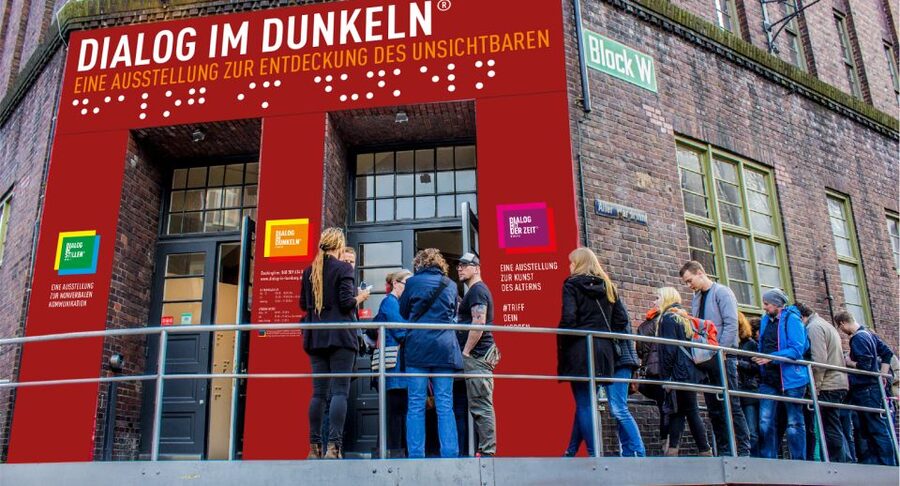
I would recommend it to anyone curious about perception, accessibility, and how people navigate daily life without sight. It is especially suited to families with older children, adults with relatives who have visual impairments, and groups looking for something more thoughtful than another walking tour.
It also works well in poor weather, since the main activity takes place indoors. English-language guiding is available, which makes it practical for international visitors.
You should think twice if darkness causes serious anxiety or if you dislike group activities. The guide makes the route safe, but the experience still asks you to give up visual control for an hour. Comfortable shoes are required, and flash photography is not allowed.
The tour can be fun, but fun is not its only goal. It asks you to notice how public life is arranged and how quickly a person can be judged by what others assume they cannot do. That makes it a strong choice for visitors who want their Hamburg sightseeing to include a social lesson.
Booking details that affect your day
The activity lasts one hour, with starting times shown when you check availability. You should arrive in time to exchange your voucher at the ticket counter before the tour begins.
The tour ends back at the same meeting point. Entrance to Dialoghaus Hamburg and the guided tour are included, while drinks are not.
You can cancel up to 24 hours in advance for a full refund, and the reserve now, pay later option can help if your Hamburg schedule is still changing. Those terms are useful, but the bigger planning issue is group size. Since places are limited to eight participants, popular starting times may be worth arranging ahead.
My verdict: book it if you want more than a museum visit
Book Dialog im Dunkeln if you want a focused, unusual hour that makes you work with your senses and think about accessibility in practical terms. The blind guide, small group, everyday tasks, and Dark Bar discussion give the visit a clear shape and genuine purpose.
Skip it if complete darkness sounds distressing or if you prefer sightseeing based on views and photographs. For everyone else, the $28 price is reasonable for a carefully guided activity that stays with you after the lights come back on.
FAQ
Where does Dialog im Dunkeln take place?
It takes place at Dialoghaus Hamburg in Hamburg, Germany.
How long does the experience last?
The guided experience lasts about 60 minutes.
Is the tour conducted in English?
Yes. English-language live guiding is available.
How many people are in each group?
The group is limited to no more than eight participants.
Who leads the tour?
A blind or visually impaired host leads the tour and guides you through the dark settings.
What will I do during the tour?
You will use a blind cane and your other senses to move through scenes based on daily life, such as a park, a city street, and a buying activity.
Is the Dark Bar included?
The Dark Bar visit is part of the experience, but drinks are not included in the price.
What should I bring?
Bring comfortable shoes.
Can I take flash photographs?
No. Flash photography is not allowed, and you cannot explore the exhibition on your own because it takes place in complete darkness.
Just added around Hamburg
- Hamburg: Historical Tour of the St. Pauli Sex Work District★ 4.4 · 215 reviews
- Hamburg: St. Pauli Food and Bier Tour★ 4.7 · 5 reviews
- Hamburg: Private Tour Red Light District Walking Tour★ 4.7 · 227 reviews
- St. Pauli Tour: Drag-Attack with Barbie Stupid & Lee Jackson★ 4.8 · 280 reviews
- St. Michael’s, Elbe Tunnel & Harbor 2-Hour Hamburg Tour★ 4.9 · 21 reviews
- Satt Pauli – der kulinarische Rundgang durch St. Pauli★ 4.8 · 12 reviews
- Hamburg: Safari tour in St. Pauli★ 4.9 · 11 reviews
- Hamburg: Reeperbahn Comedy Club★ 4.3 · 53 reviews
Hamburg Tours, compared.

1.5-Hour Harbor and Speicherstadt Day Cruise
Read our review →



Browse the lists this tour appears in