
Reviewed · GERMANY
Der Klassiker RAVENSBURGER STADTGESCHICHTE
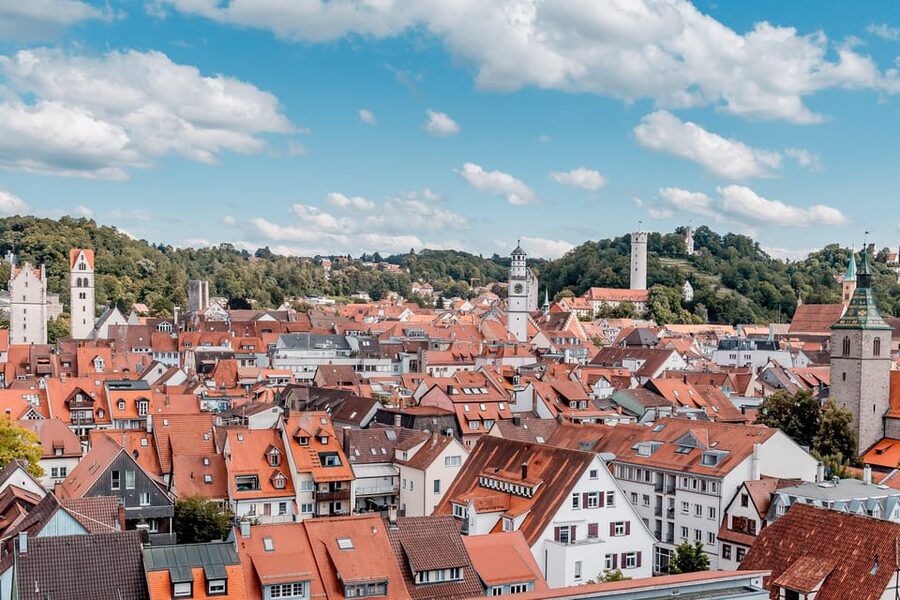
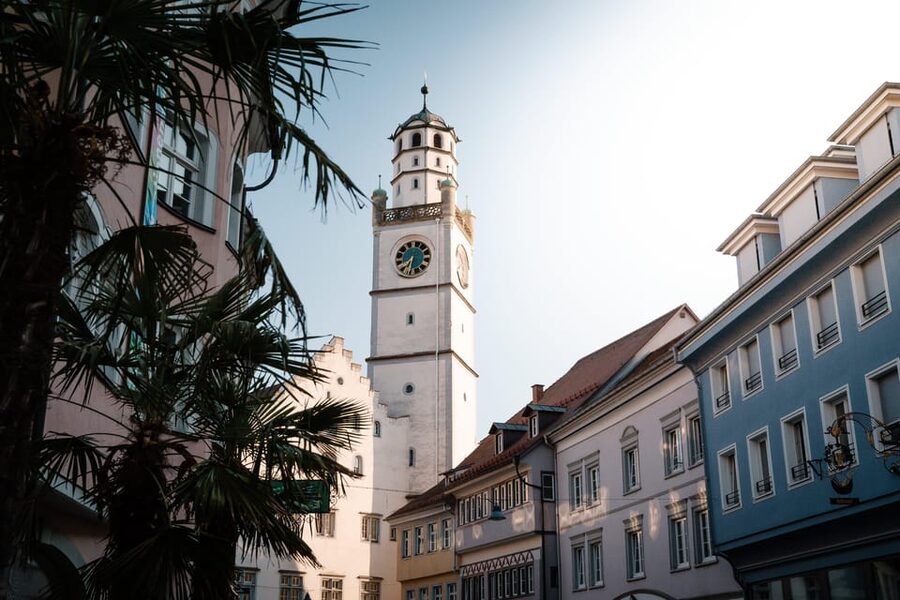
Ravensburg’s gates and towers give this 90-minute walk a clear sense of place. The route moves through an unusually well-preserved old town, from Marienplatz and Bachstrasse to Obertor, with the Humpis Quarter adding a look at medieval living spaces rather than just grand façades.
I like the way the tour links buildings to Ravensburg’s rise as an imperial city and trading center. I also like the guide-led pace: recent ratings praise the explanations, humor, and ability to react flexibly to what is happening around the group. The main consideration is language, since the tour is conducted in German only.
In This Review
- Key points
- Ravensburg’s towers tell the first part of the story
- Starting at the Lederhaus Tourist Information
- Marienplatz and Bachstrasse show Ravensburg at street level
- The town hall and Kornhaus add civic and commercial weight
- The Evangelical City Church brings a different layer
- The upper town leads to the Humpis Quarter
- Finishing at Obertor
- What the guide adds to the walk
- Is $14 a fair price?
- Who will get the most from this Ravensburg walk?
- Small practical points before you book
- Should you book Der Klassiker Ravensburger Stadtgeschichte?
- FAQ
- Where does the Ravensburg city history tour begin?
- Where does the tour finish?
- How long does the tour last?
- What language is the tour conducted in?
- How much does the tour cost?
- What places are included on the route?
- Does the tour include the Humpis Quarter Museum?
- Is the tour wheelchair accessible?
- Can I cancel the booking?
Key points
- Medieval Ravensburg in 90 minutes: A compact introduction to the city’s main eras, streets, squares, and landmarks.
- A route through the old town: Begin at the Tourist Information in the Lederhaus and finish at Obertor.
- The Humpis Quarter: See medieval living quarters within Ravensburg’s museum district.
- A city shaped by trade: Learn how Ravensburg became a major center around Lake Constance.
- Strong guide-led experience: Ratings highlight humor, clear explanations, and flexible responses during the walk.
- Good value at $14: The price covers a full 90-minute guided tour and suits visitors who want orientation before exploring alone.
Ravensburg’s towers tell the first part of the story
Ravensburg is the sort of city best understood on foot. Its historic center still holds much of the shape that made it important in the late Middle Ages: tight streets, substantial civic buildings, market squares, and defensive towers that give the city its familiar profile.
The key idea here is not simply that Ravensburg has old buildings. It is that the old town shows how several parts of city life worked together. Trade brought money. Imperial status brought influence. Walls, gates, and towers helped define the city. Churches, public buildings, and merchant homes filled in the rest.
That makes this walk useful for first-time visitors. Instead of seeing isolated sights and wondering what connects them, you get a basic map of Ravensburg’s development. The guide introduces the city’s beginnings, its most important periods, its notable sights, and its place today.
The tour takes place in Baden-Württemberg, in southern Germany, and focuses entirely on Ravensburg’s old town. You do not need transport between stops. The value is in the sequence: each street and building adds another piece to the city’s story.
Other Germany days worth putting on the list:
- Berlin: Reichstag, Dome and Government District Guided Tour
★ 4.7 · 18,288 reviews - Berlin: 1-Hour City Tour by Boat with Guaranteed Seating
★ 4.3 · 16,993 reviews - Hamburg: Sex and Crime in St. Pauli Tour for Ages 18+
★ 4.7 · 15,447 reviews
Starting at the Lederhaus Tourist Information
The meeting point is the front entrance of the Tourist Information in the Lederhaus. This gives you a practical place to begin, since the route starts centrally and quickly moves into Ravensburg’s historic core.
A meeting point at the tourist office is especially handy if you have just arrived and need your bearings. You can begin the walk without first trying to locate an obscure monument or side street. From there, the guide leads the group into the Altstadt.
The experience lasts 1.5 hours, or 90 minutes. That is enough time for a proper introduction without taking up half a day. You can fit it into a morning or afternoon, then return to the places that caught your attention.
The pace should suit anyone who prefers a focused city walk rather than a long historical lecture. The available feedback gives the guide credit for keeping the tour lively, informative, humorous, and responsive to the situation. That matters in an old town, where a rigid speech can quickly feel flat.
Since the tour is in German, you should be comfortable following spoken German to get the most from the explanations. The product information does not list other language options.
Marienplatz and Bachstrasse show Ravensburg at street level
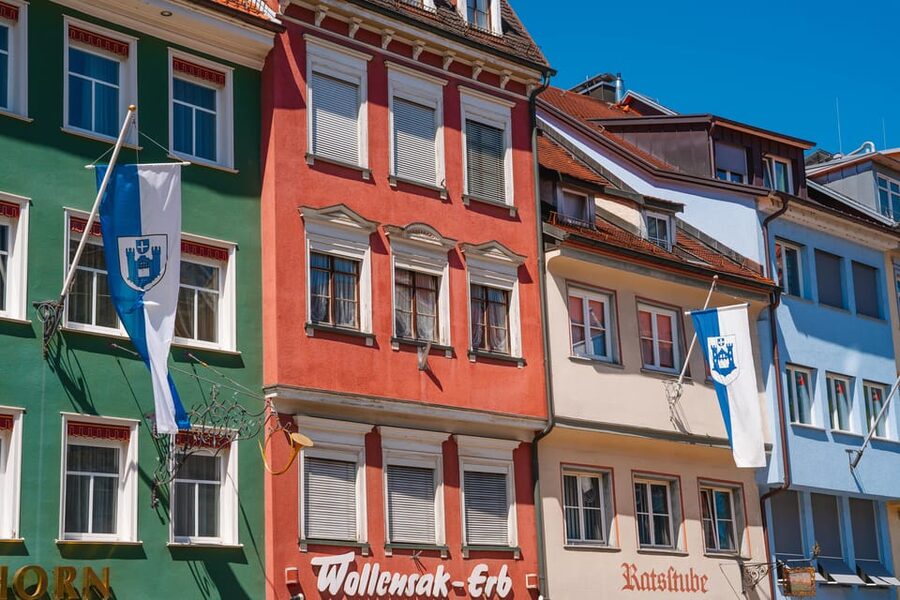
Marienplatz is one of the early stops and helps establish the scale of Ravensburg’s center. A square like this is more than a scenic place for photographs. It gives you a sense of how public life, movement, and commerce fit into the medieval city.
From there, the route includes Bachstrasse. Streets such as this are important because they show the old town as a connected district, not just a collection of grand monuments. The interest comes from looking at the whole setting: the line of the street, the age of the buildings, and the way the route carries you from one part of the center to another.
I find this kind of walking particularly useful in a city with a preserved historic core. You can look at façades on your own, but a guide helps explain why a street matters and how it relates to the city’s larger story.
The tour is also a good choice if you have limited time in Ravensburg. You will not see every museum or enter every historic building in 90 minutes, but you will cover several key areas and leave with a workable plan for further exploring.
The town hall and Kornhaus add civic and commercial weight
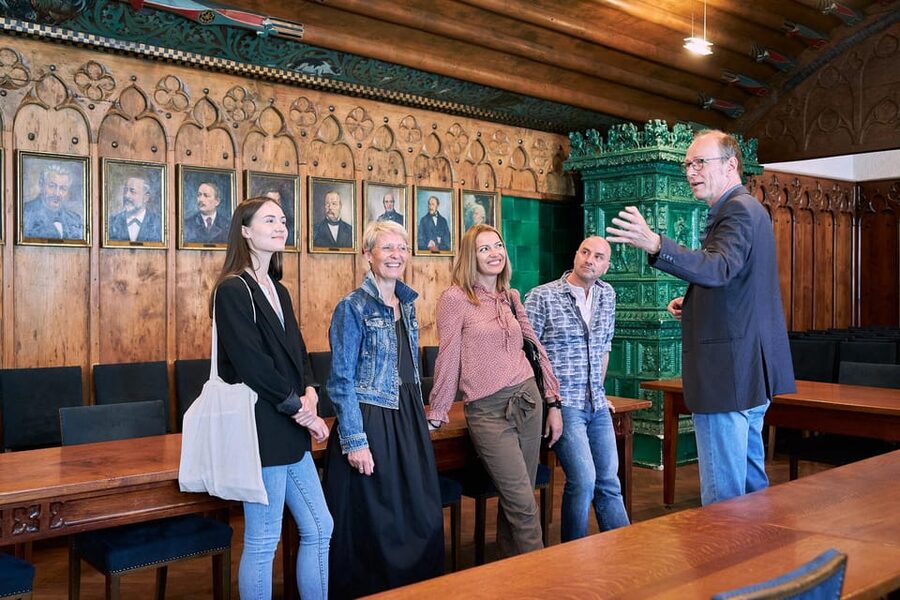
The town hall is another named stop. Its place in the route reflects Ravensburg’s civic importance, especially during the period when the city operated as an imperial city.
The phrase imperial city can sound abstract until you connect it to real buildings and public spaces. Here, it points to Ravensburg’s political status and the role that status played in the city’s growth. The guide’s job is to turn that background into something you can connect with as you stand in the old town.
The Kornhaus brings a different angle. Its name points to grain and storage, which fits the practical side of a trading city. Ravensburg’s medieval importance was not built only on impressive façades. It depended on goods, markets, movement, and the public structures needed to support urban life.
This is one of the tour’s strengths: it covers both the grand story and the everyday machinery behind it. You get the story of Ravensburg as a center of trade around Lake Constance, while the stops keep the discussion tied to actual places.
The information supplied does not promise entry into the town hall or Kornhaus. You should expect to see and discuss these landmarks as part of the walking route, not assume that the tour includes interior visits.
Same city, a completely different kind of day:
- Hamburg: 1.5-Hour Harbor and Speicherstadt Day Cruise
★ 4.6 · 14,200 reviews - From Munich: Neuschwanstein & Linderhof Castle Full-Day Trip
★ 4.5 · 12,494 reviews - Dresden: Semperoper Tickets and Guided Tour
★ 4.7 · 12,102 reviews - Berlin: Boat Tour Along the River Spree
★ 4.4 · 11,252 reviews
The Evangelical City Church brings a different layer
The Evangelical City Church is included among the major stops. Its presence broadens the tour beyond trade and defense, giving the walk a religious and architectural point of reference.
Churches often help visitors read the shape of an old European city. They can mark a central area, reflect changes in local society, and show how important institutions shared space with markets and government. The guide places this church within the wider story of Ravensburg rather than treating it as a stand-alone photo stop.
Again, the stated experience does not guarantee an interior visit. The useful expectation is a guided look at the church as part of the old town, with its place explained alongside the surrounding streets and buildings.
For you, that means the tour works best as a city-history overview. If your main goal is detailed church art or an extended architectural study, you may want to allow separate time after the walk.
The upper town leads to the Humpis Quarter
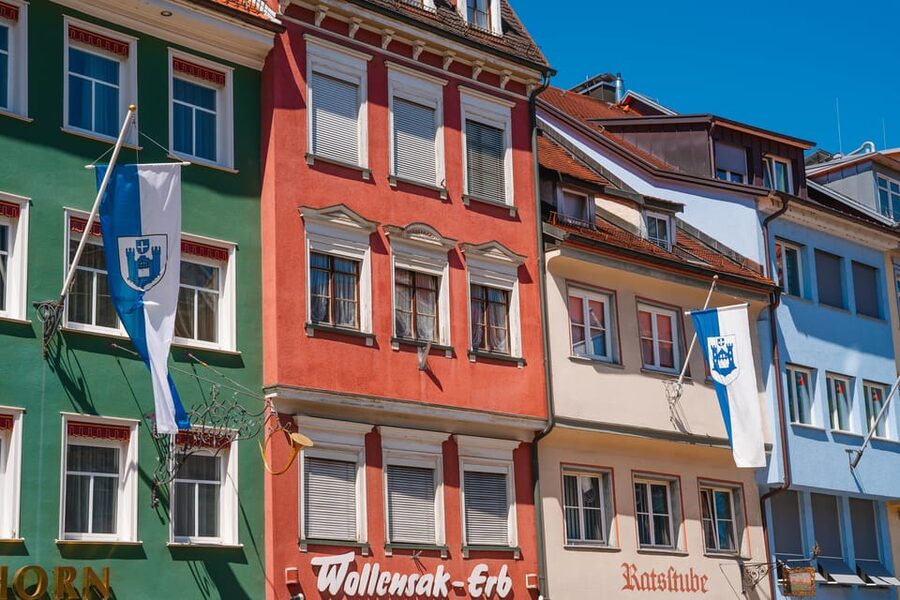
The route continues into the upper town and the museum district. This part of the walk is especially important because it includes the Humpis Quarter Museum and its medieval living quarters.
The Humpis Quarter helps make the past more tangible. Towers and public buildings tell you about the city’s power and organization. Living quarters show how ordinary urban space was arranged and used. That contrast gives the tour a more human scale.
The available information identifies the Humpis Quarter as a highlight, but it does not specify how long the group spends inside or which rooms are entered. Plan on learning about the museum district and seeing its medieval residential setting as part of the guided route. If you want a long museum visit, check the opening details separately and return on your own.
I particularly like this stop for visitors who find political history too distant. The Humpis Quarter offers a way to picture domestic life within the same city that produced merchants, civic leaders, and major trading connections.
Finishing at Obertor
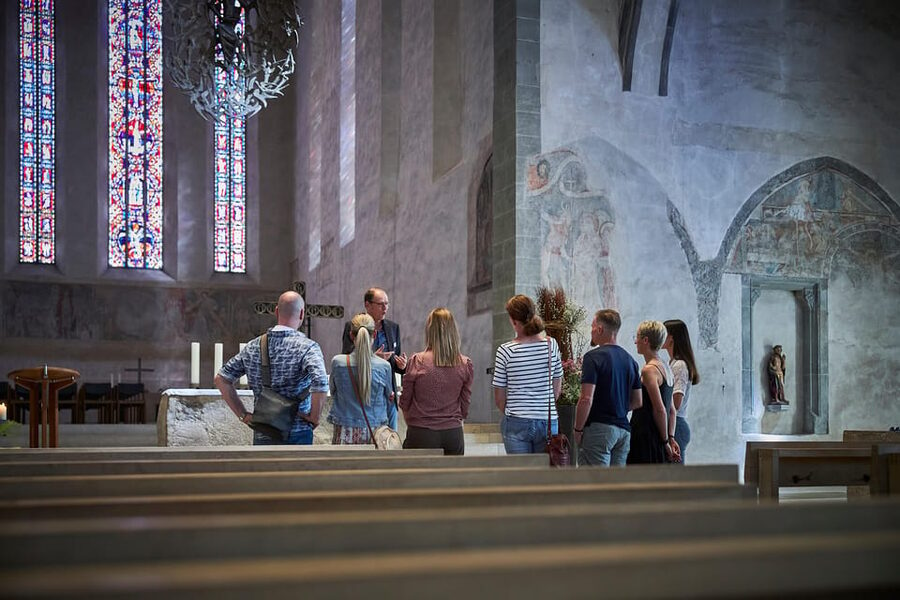
The walk ends at Obertor, one of Ravensburg’s notable gates. Ending here gives the route a satisfying physical shape. You begin near the central tourist office, move through the old town and upper town, and finish at a defensive landmark that helps explain how the city was once entered and protected.
The gates and towers are among Ravensburg’s most recognizable features. They also make the city easy to navigate after the tour. Once you understand where the upper town and major routes sit, you can explore with more confidence.
Obertor is also a useful finish because you are not returned to the starting point. If you have plans near the upper town or museum district, that may be convenient. If you need to collect luggage or continue from the Tourist Information, allow time to walk back.
The route is wheelchair accessible according to the activity information. Still, a historic old town can include uneven paving, slopes, or narrow passages, and the details of the exact route are not provided. If you need specific access information, confirm it before booking.
What the guide adds to the walk
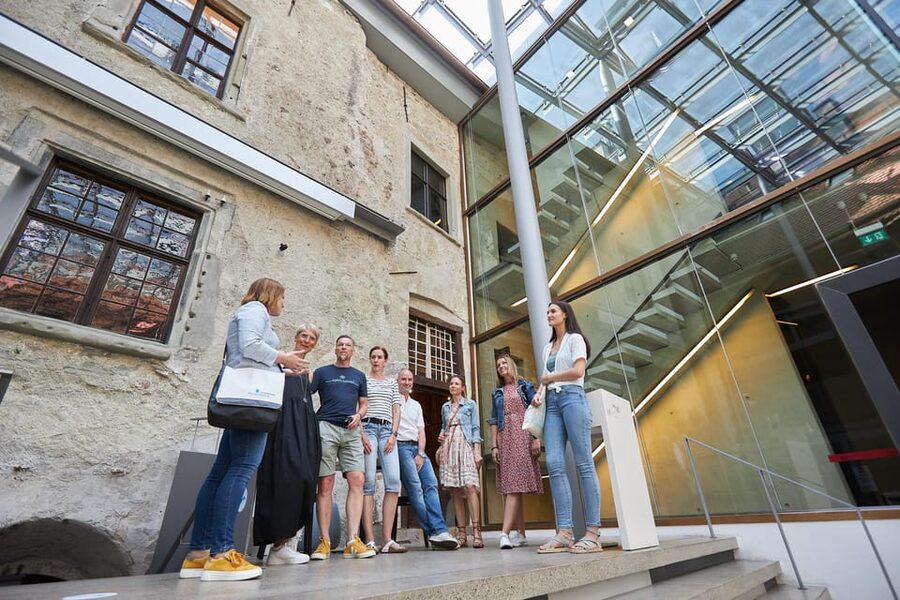
The guide is the main difference between this experience and a self-guided stroll. Ravensburg’s streets are appealing on their own, but a guide gives you context at the moment you need it.
The strongest praise focuses on three qualities: the tour is entertaining, the information helps place the city in context, and the guide uses humor without turning the history into a performance. One rating also highlights flexibility when circumstances changed during the walk.
That last point is practical. A city tour takes place in a real town, not a sealed museum. People cross the route, noise can interrupt, and a stop may need to shift slightly. A guide who can adjust while keeping the story clear makes the 90 minutes feel more natural.
No guide names are provided, so you should not book expecting a particular named guide. The important detail is that the experience uses a live German-speaking guide rather than an audio recording or printed route.
The rating is 4.8 from 22 ratings. That is a strong signal, though the number is not huge. The praise is also consistent in the areas that matter most for a walking tour: clear information, humor, an enjoyable pace, and a guide who responds well in the moment.
Is $14 a fair price?
At $14 per person, this is a sensible price for a 90-minute guided introduction to a historic city. You are paying for a live guide, a planned route, and the interpretation that connects Ravensburg’s sights to its political and trading past.
The value is strongest if you are new to Ravensburg or have only a short stay. A good orientation walk can save you from wandering past important buildings without knowing why they matter. It also helps you decide which areas deserve a second look.
The price is less compelling if you want a long museum visit, an in-depth architectural seminar, or a tour in a language other than German. The experience is a broad city introduction, not a specialist course.
No separate admission is listed for the tour, and the included service is the 90-minute city walk with a guide. The information does not say that museum entry or interior access to every named building is included, so treat those as outside the basic promise.
Who will get the most from this Ravensburg walk?
I would recommend it most strongly to first-time visitors, history-minded walkers, and anyone who wants a quick introduction before exploring alone. It also suits people who enjoy learning through streets and buildings instead of sitting in a classroom.
The tour should work well for couples, solo visitors, and families with older children who can follow a German-language explanation. Its 90-minute length is manageable, and the humor noted in the ratings may help keep younger participants interested.
German speakers have the clear advantage. If you understand only a little German, you may still enjoy the towers, streets, and squares, but much of the tour’s value comes through spoken explanation.
You should also consider your mobility needs. The experience is listed as wheelchair accessible, which is useful, but the exact surface conditions and route details are not supplied. Ask ahead if you require precise information about paving, inclines, or access to the museum district.
Small practical points before you book
Check the available starting times, since the tour schedule can vary. Arrive at the front entrance of the Tourist Information in the Lederhaus rather than heading directly to a landmark in the old town.
Wear comfortable walking shoes. The distance is not described, but the experience covers several historic areas over 90 minutes, and old-town streets may not be as smooth as modern pavements.
Plan your follow-up stops before you finish. Because the route ends at Obertor, you may want to visit the Humpis Quarter or upper town afterward, if opening times suit your plans. You can also use the tour to mark places for a quieter return visit.
Booking remains fairly flexible: you can cancel up to 24 hours before the start for a full refund, and the reserve-now, pay-later option lets you hold a place without paying immediately. Those terms are useful if your wider Germany plans are still shifting.
Should you book Der Klassiker Ravensburger Stadtgeschichte?
Book it if you want a short, affordable German-language introduction to one of southern Germany’s best-preserved historic centers. The combination of gates, towers, civic buildings, trading history, and medieval living quarters gives the walk more substance than a simple photo tour.
I would skip it only if you need an English-language guide, a long interior museum visit, or highly specialized architectural detail. For everyone else, $14 buys a well-shaped route, a useful first look at Ravensburg, and the chance to hear the city explained with information and humor. That is a good deal for 90 minutes.
FAQ
Where does the Ravensburg city history tour begin?
The tour begins at the front entrance of the Tourist Information in the Lederhaus.
Where does the tour finish?
The walk finishes at Obertor Ravensburg.
How long does the tour last?
The guided city tour lasts 1.5 hours, or 90 minutes.
What language is the tour conducted in?
The live tour guide speaks German. German is the only language listed for the activity.
How much does the tour cost?
The stated price is $14 per person.
What places are included on the route?
The route includes Ravensburg’s old town, Marienplatz, Bachstrasse, the town hall, the Kornhaus, the Evangelical City Church, the upper town, and the museum district around the Humpis Quarter.
Does the tour include the Humpis Quarter Museum?
The Humpis Quarter Museum and its medieval living quarters are included as a highlight of the route. The supplied details do not specify the length of any interior visit or guarantee entry to every museum area.
Is the tour wheelchair accessible?
Yes. The activity is listed as wheelchair accessible.
Can I cancel the booking?
Yes. You can cancel up to 24 hours in advance for a full refund. You can also reserve now and pay later.
Just added around Germany
- e-Scavenger hunt Aachen: Explore the city at your own pace★ 4.0 · 13 reviews
- Private photo tour in Cologne★ 5.0 · 9 reviews
- Private walking tour of Cologne’s old town★ 5.0 · 28 reviews
- Roman Cologne: A Self-Guided Audio Tour★ 4.0 · 15 reviews
- Public brewhouse tour in English★ 5.0 · 94 reviews
- Köln Night PubCrawl: 4 Venues, Welcome Shots + Club Entry★ 3.5 · 4 reviews
- Kölsch and Brewhouse Tour (18 and up)★ 5.0 · 5 reviews
- Private-Group Bike Tour of Cologne with Guide★ 5.0 · 20 reviews