Reviewed · BONN TOURS
Bonn: Former Government District Private Tour
Bonn’s former government district is a compact lesson in postwar Germany. In 90 minutes, you walk from Museum Koenig past old government buildings, Adenauer’s monument, the UN Campus, and the small Bundesbüdchen, once a familiar corner shop near the political heart of the city.
I like the private format, which lets your group focus on the questions that matter to you. I also like the route’s mix of grand buildings and small details, especially the original-looking Bundesbüdchen at the end. The main drawback is simple: almost the entire tour takes place outdoors, and the guide speaks German only.
If you enjoy political history, architecture, and the story of how Bonn became the capital of West Germany, this is a neat way to get your bearings. The tour is not designed for children under 16, and the brisk 90-minute schedule leaves little time for long stops inside museums or buildings.
In This Review
- Key points to know before booking
- Why Bonn’s former capital district deserves a closer look
- Starting at Museum Koenig
- Adenauerallee and the residences of power
- Konrad Adenauer at Bundeskanzlerplatz
- From the press office toward the UN Campus
- Quay Bonn-Bundeshaus and the Plenarsaal
- The Bundesbüdchen provides a small, human ending
- What the private format adds
- Who will enjoy this walk most
- What this tour does not include
- Timing, weather, and practical planning
- Should you book the Bonn former government district tour?
- FAQ
- Where does the tour begin?
- How long does the experience last?
- What is the price?
- Is the tour private?
- What language does the guide speak?
- Is the tour wheelchair accessible?
- Can children join the tour?
- Do you enter the buildings along the route?
- Which major sights can you see?
- Can you cancel for a refund?
Key points to know before booking
- Museum Koenig begins the story: You get a short look into its bright foyer, then continue outside.
- Adenauer’s monument is a central stop: The Bundeskanzlerplatz offers a useful point for understanding West Germany’s early leadership.
- Several major buildings are viewed from outside: Villa Hammerschmidt, Palais Schaumburg, the former Federal Chancellery, and Plenarsaal are mainly pass-by sights.
- The UN Campus gives the walk a modern edge: You also see the Langer Eugen and Post Tower, two tall reminders of Bonn’s later role.
- The Bundesbüdchen supplies the human touch: This small corner kiosk is a cheerful finish after the formal government quarter.
- It is private, short, and German-speaking: The price is $117 for up to two people, with free cancellation up to 24 hours before departure.
Why Bonn’s former capital district deserves a closer look
Bonn is often treated as a quiet alternative to Cologne, but its government quarter tells a major German story. From 1949 until German reunification, Bonn served as the capital of West Germany. The buildings along this route reflect that period of cautious democracy, foreign policy, press briefings, and parliamentary work.
You are not simply walking past offices. You are tracing the physical setting of the Bonn Republic, the name often used for West Germany’s political era before the government moved to Berlin. The route helps explain how a modest city became the seat of national power.
I find this kind of tour useful because the district can look scattered when you explore it alone. A private guide connects the buildings, monuments, and viewpoints into one readable story. You get a sense of where the chancellor worked, where the press gathered, where parliament met, and how the area later changed after the capital moved.
The tour is especially useful if you have only a short time in Bonn. It does not attempt to cover every museum or political site in detail. Instead, it gives you a clear framework, then lets you decide if you want to return to places such as the House of History on your own.
A few more Bonn trips to weigh up
- Bonn: Private City Highlights Walking Tour
★ 4.9 · 35 reviews - Bonn: Private Guided Walking Tour
★ 4.3 · 15 reviews - Bonn : Private Walking Tour With A Guide ( Private Tour )
★ 4.5 · 9 reviews
Starting at Museum Koenig
Meet your guide in front of Museum Koenig. This natural starting point gives the walk a strong visual opening, since the museum’s architecture and foyer provide the first link to Bonn’s public institutions.
You spend roughly 20 minutes around the museum, with a brief look into the luminous entrance hall. That indoor glimpse is limited, so you should not book this experience expecting a museum visit or a full indoor tour. The museum is a setting and a historical marker here, not the main attraction.
The route then returns outside for a short sightseeing segment. From the museum, you head toward Adenauerallee, one of Bonn’s important central avenues. The first part of the walk sets up the geography of the old government district without asking you to cover a large distance.
Comfortable clothes are the only stated packing advice, but that matters. The tour moves on foot and remains outside for most of its length. Bonn weather can change quickly, and the tour continues even in unpleasant conditions, so a rain jacket and sensible shoes would be practical choices.
Adenauerallee and the residences of power
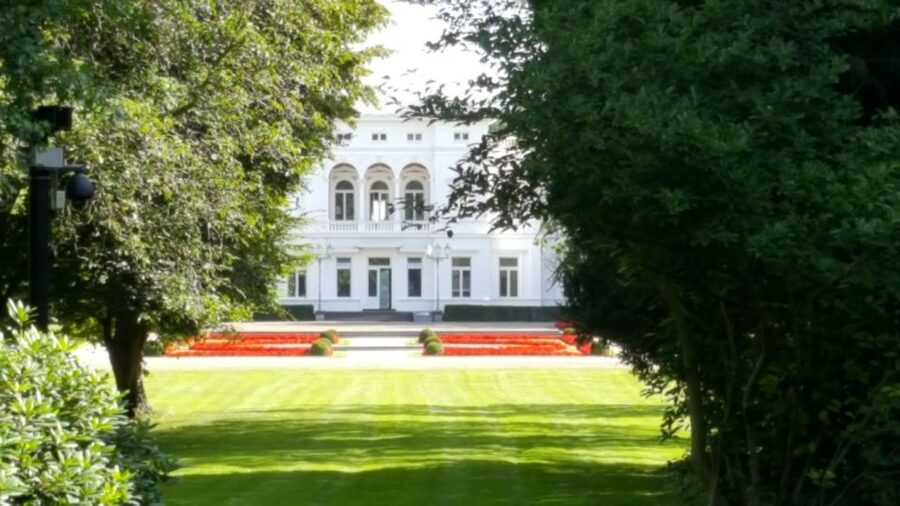
The walk along Adenauerallee brings you toward the grand residences and official buildings connected with the West German government. You pass Villa Hammerschmidt, a notable official residence, and Palais Schaumburg, another important address from Bonn’s capital years.
These are pass-by stops rather than full interior visits. I would set your expectations accordingly. You will hear why the buildings matter and see them in their urban setting, but you should not expect to enter rooms or examine exhibitions inside.
That outdoor approach has a benefit. You see the buildings as Bonn residents and political staff saw them, positioned along roads and lawns rather than isolated behind museum glass. It also keeps the tour moving, which matters when the entire experience lasts only an hour and a half.
The former Federal Chancellery is also part of the broader story, though the route presents it from a distance. This is a useful reminder that Bonn’s political center was not one single monument. It was a working district made up of offices, residences, meeting places, press facilities, and ceremonial spaces.
Konrad Adenauer at Bundeskanzlerplatz
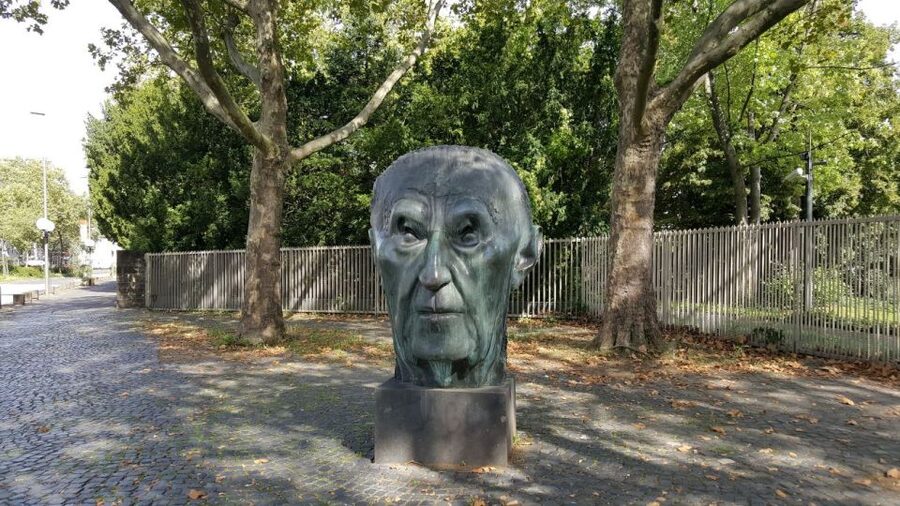
The Konrad Adenauer monument at Bundeskanzlerplatz is one of the main stops. The guide spends about 15 minutes here, making it one of the longer pauses on the route.
Adenauer was West Germany’s first chancellor, and his monument gives the guide a natural way to discuss the country’s early postwar direction. This is where the tour shifts from buildings to people. You are looking at a public tribute to a leader closely tied to the creation of the Bonn Republic.
I like this stop because monuments can be easy to pass without context. The guide’s explanation gives the sculpture a political setting and helps you understand why Adenauer’s presence matters in this particular part of the city.
The square also helps orient you. From here, the route moves toward the former parliamentary and international quarter. If you have questions about the early chancellors, the move from Bonn to Berlin, or the role of the old government district, this is a good moment to ask them.
Same city, a completely different kind of day:
- Bonn: 24-Hour Hop-On Hop-Off Sightseeing Bus Ticket
★ 4.5 · 454 reviews - From Bonn: Rhine River to Linz Sightseeing Boat Tour
★ 4.5 · 358 reviews - Bonn: 1.5-Hour River Cruise on the Rhine
★ 4.5 · 109 reviews - Bonn: Evening Sightseeing Cruise on the Rhine River
★ 4.5 · 78 reviews
From the press office toward the UN Campus
The walk then turns toward the area of the former Federal Press Office and continues in the direction of today’s United Nations Plaza. This section connects domestic politics with the public face of government.
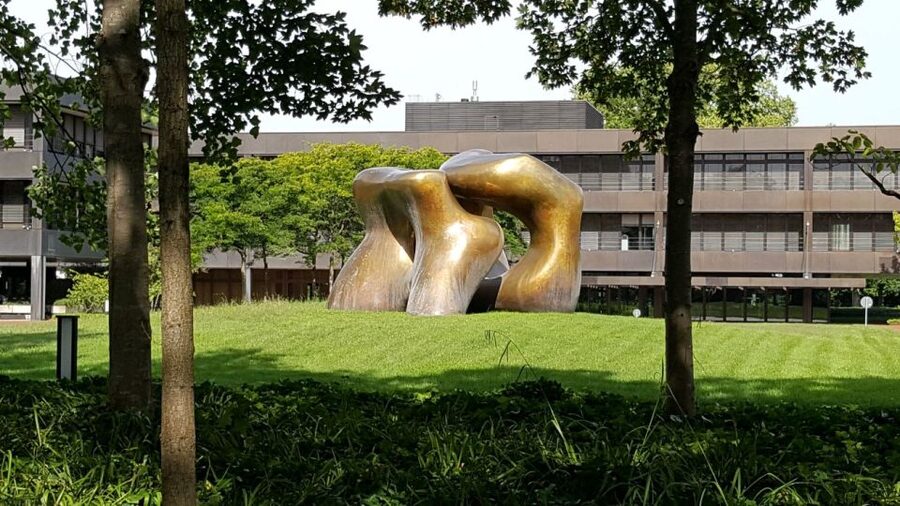
The route includes a viewpoint where you can look toward several recognizable parts of Bonn’s political skyline. The House of History is among the notable sights, along with the Langer Eugen and the Post Tower.
The Langer Eugen is particularly useful for understanding Bonn’s changing identity. Its tall profile recalls the period when national lawmakers and ministries worked here, while the Post Tower points to the city’s later role after the federal government moved away.
You see these buildings from outside and at a distance, so the value comes from the guide’s explanation and the overall view rather than close architectural inspection. Bring your attention to the skyline and the way newer towers sit beside the older government quarter.
This is also one of the better sections for photographs, although no dedicated photo stop is promised. If you want pictures, keep your camera ready as you walk instead of assuming you will have a long pause.
Quay Bonn-Bundeshaus and the Plenarsaal
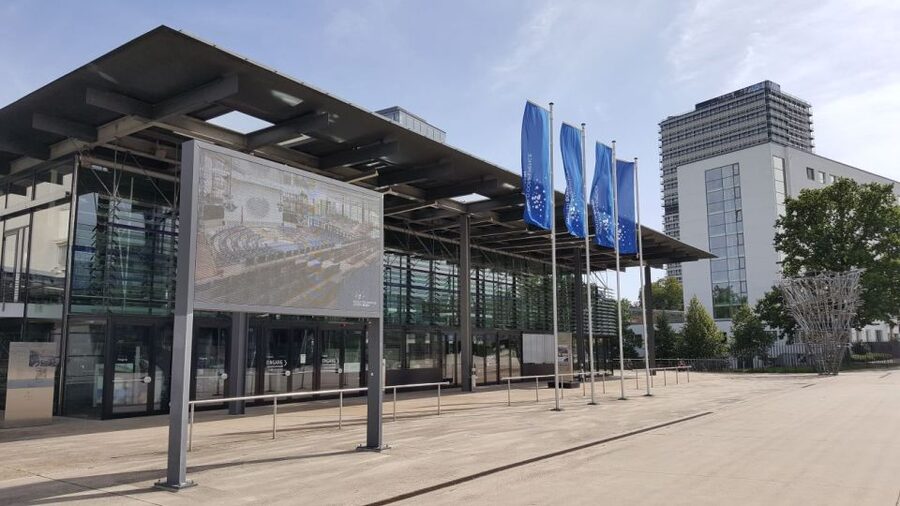
The route continues past Quay Bonn-Bundeshaus and then the Plenarsaal, with around eight minutes allocated to each section. These stops bring you closer to the institutions where parliamentary business took place.
The Plenarsaal is important because it represents the practical side of the Bonn Republic. The monuments and official residences show ceremony and leadership. The parliamentary hall points to debate, legislation, and the day-to-day work of government.
Again, this is an exterior-focused experience. You should not expect to sit inside the hall or receive a full building tour. The guide helps you identify the site and explains its place in Bonn’s political development.
For me, this part gives the walk its strongest sense of sequence. You begin with the museum and early government setting, pass the chancellor’s world, see the press and international quarter, then reach the parliamentary center. In a short time, the route explains how the district functioned as a whole.
The Bundesbüdchen provides a small, human ending
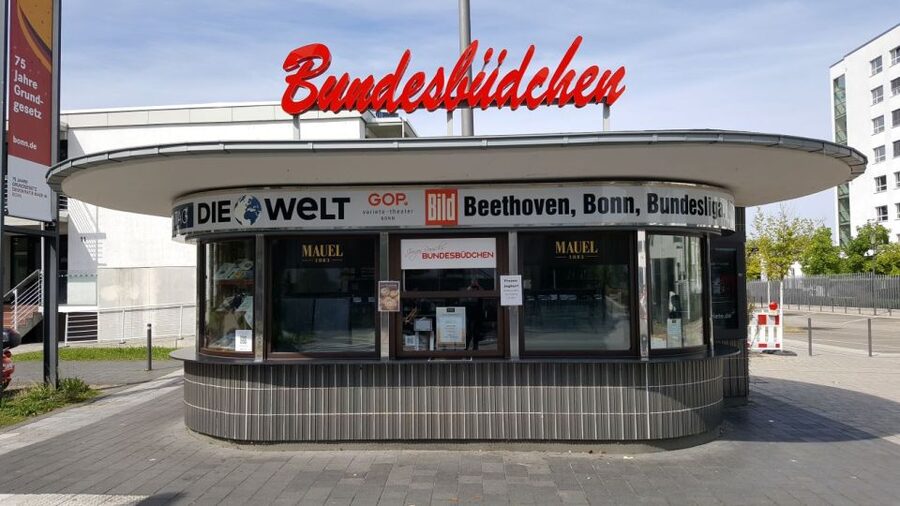
The final main stop is the Bundesbüdchen, a small corner shop that marks the end of the walk. You spend about six minutes here, enough time for the guide to explain why this modest structure matters.
After a route filled with official residences, monuments, ministries, and parliamentary buildings, the kiosk offers a lighter finish. It reminds you that a government district is not only made up of grand architecture. People also need somewhere to buy a snack, newspaper, or everyday item while working nearby.
That contrast is one of the tour’s best touches. The Bundesbüdchen is less formal than the rest of the route, and the experience ends on a friendly note rather than with another imposing institution.
The published route then lists a 10-minute subway segment back to Museum Koenig. Confirm the exact return arrangement and meeting instructions when you book, especially if you need to retrieve a car or continue to another Bonn sight immediately afterward.
What the private format adds
The tour costs $117 per group of up to two people. For two people, that works out to $58.50 each, which is reasonable if you value a dedicated guide and want to ask questions without sharing the time with a larger group.
For one person, the same price is a bigger commitment. I would choose it alone if the Bonn Republic is a major interest, if you need a German-language guide, or if you want a tightly focused introduction rather than a general city walk.
The private setup also gives you more control over the conversation. You can ask about Adenauer, the former capital, the government’s move to Berlin, or the changing skyline. The guide can spend more time on the subjects you find useful, although the 90-minute length still limits how far the discussion can go.
The strongest praise for this experience centers on the guide’s humor, learning, and ability to make the subject easy to follow. One German-speaking participant described the tour as highly educational, entertaining, and quick-moving. Another highlighted the guide’s humor while learning a great deal about postwar Germany.
That combination matters. Political history can become a list of dates and offices. A guide who adds humor and clear explanation can make the old government quarter easier to remember.
Who will enjoy this walk most
I would recommend the tour to adults who already have some interest in German history, politics, architecture, or the Cold War period. It also works well for someone who has arrived in Bonn and wants the old capital explained before visiting other cultural sites.
The tour is not suitable for children under 16, according to the activity rules. The material is aimed at an older audience, and the subject calls for attention to political and historical detail.
You should also be comfortable listening in German. The live guide language is German, and no other language is listed. If you do not understand German well, you may miss much of the value, since the explanations are the heart of the experience.
The route is wheelchair accessible, which makes it a practical option for many people with mobility needs. Even so, the experience remains mostly outdoors and includes walking between several points, so it is worth considering your comfort with the distance and weather.
What this tour does not include
The tour does not include a full Museum Koenig visit. You only receive a brief look into the foyer, so plan a separate museum visit if you want exhibitions or more time inside.
It also does not promise entry to Villa Hammerschmidt, Palais Schaumburg, the former Federal Chancellery, the Plenarsaal, or other government buildings. Most of these are viewed from outside or from a distance.
That limitation is not a flaw if you want orientation. It becomes a drawback if your main goal is interior architecture or museum collections. I would choose a longer specialist tour for that purpose.
You also need to keep the scale in mind. Ninety minutes is enough for a clear introduction, not a complete study of Bonn’s capital years. The route gives you the names, locations, and basic connections. You may still want more time afterward at the House of History or other Bonn institutions, but those visits are not part of this activity.
Timing, weather, and practical planning
The walk covers several short sections, with stops ranging from a few minutes to about 20 minutes. The pace should feel manageable for most people who are comfortable walking, but you will not have long breaks between sights.
Because the experience is mainly outdoors, weather should guide your decision. Bring comfortable clothing and plan for conditions that may be less than pleasant. The tour can still work in poor weather, but the route will feel less enjoyable if you are cold, wet, or wearing unsuitable shoes.
The meeting point is in front of Museum Koenig. Check the available starting times when booking, since the tour does not have one fixed departure time listed here.
You can cancel up to 24 hours before the start for a full refund, and the reserve-now, pay-later option keeps your plans flexible. Those terms are useful if your Bonn schedule may change.
Should you book the Bonn former government district tour?
Book it if you want a short, private introduction to Bonn’s political past, especially with a German-speaking guide who can explain the meaning behind the buildings rather than simply point them out.
I would choose this tour for its focused route, private format, and strong balance between major landmarks and the small Bundesbüdchen. I would skip it if you need an English-language experience, want extensive indoor access, or prefer a relaxed walk with plenty of time at each stop.
At $117 for up to two people, the value is strongest for a pair with a real interest in postwar Germany. You finish with a usable map of the old capital district, a clearer sense of Adenauer’s importance, and enough context to explore Bonn’s museums and government quarter with more purpose.
FAQ
Where does the tour begin?
The meeting point is in front of Museum Koenig in Bonn.
How long does the experience last?
The walking tour lasts 90 minutes, or one and a half hours.
What is the price?
The price is $117 for a private group of up to two people.
Is the tour private?
Yes. The experience is exclusive to you and your group.
What language does the guide speak?
The live tour guide speaks German.
Is the tour wheelchair accessible?
Yes, the activity is listed as wheelchair accessible.
Can children join the tour?
The tour is not suitable for children under 16.
Do you enter the buildings along the route?
The only indoor glimpse listed is a brief look into the foyer of Museum Koenig. The other main sights are viewed from outside or at a distance.
Which major sights can you see?
The route includes Museum Koenig, Villa Hammerschmidt, Palais Schaumburg, the Konrad Adenauer monument, the former government district, the Plenarsaal, the UN Campus area, the Langer Eugen, the Post Tower, and the Bundesbüdchen.
Can you cancel for a refund?
Yes. You can cancel up to 24 hours in advance for a full refund.
Just added around Bonn
- Bonn Scavenger Hunt and Sights Self-Guided Tour★ 4.0 · 17 reviews
- Bean to Bar Chocolate Mini Tasting in Bonn★ 5.0 · 8 reviews
- Panorama tour between Bonn and Königswinter★ 4.7 · 63 reviews
- RhineRiverBoatTour from Bonn to Königswinter with Live Guide★ 4.3 · 13 reviews
- Bonn: Sunset Boat Tour on the Rhine★ 4.7 · 11 reviews
- Bonn Regio WelcomeCard with Guidebook★ 4.3 · 15 reviews
- Bonn: Private Guided Walking Tour★ 4.3 · 15 reviews
- Bonn : Private Walking Tour With A Guide ( Private Tour )★ 4.5 · 9 reviews