
Reviewed · GERMANY
Berlin: Entry to Alte Nationalgalerie
Berlin’s Alte Nationalgalerie brings together some of the most important art of 19th-century Germany inside one of Museum Island’s grandest buildings. You’ll move from Goethe-era Romanticism and solemn marble sculpture to French Impressionism and early Modernity, with Friedrich’s The Monk by the Sea and Menzel’s Eisenwalzwerk among the major draws.
I like the clear sweep through several art movements, and I like having an audio guide included for a self-guided visit. The $14 price is fair for a major Berlin museum, especially if you want Impressionist painting without committing to a large museum complex. The main caution is that rooms or floors can close, so a favorite section may not be available when you arrive.
In This Review
- Key points
- Why the Alte Nationalgalerie belongs on your Museum Island plan
- Begin with the building and the sculpture
- Follow German art from Classicism to Romanticism
- See the 19th century change before your eyes
- Make time for Manet, Monet, and Renoir
- Continue toward early Modernity and the Secession years
- How to use the audio guide without losing your own view
- Timing, access, and what to carry
- Is $14 good value for this Berlin museum?
- Who should book the Alte Nationalgalerie?
- Should you book it?
- FAQ
- Where is the Alte Nationalgalerie?
- What does the ticket include?
- Does the ticket include other Museum Island museums?
- How long is the ticket valid?
- Do I need to enter at a specific time?
- Can I skip the ticket line?
- Is the museum wheelchair accessible?
- Can I bring a backpack?
- Is transportation included?
- Can I cancel for a refund?
Key points
- See Friedrich’s The Monk by the Sea, one of the key paintings of German Romanticism.
- Compare French Impressionists including Manet, Monet, and Renoir.
- Find Menzel’s Eisenwalzwerk, a powerful image of industrial labor and modern Germany.
- Look for Shadow’s marble tomb, made for Count Alexander von der Mark in 1790.
- Use the included audio guide to add context without booking a private tour.
- Allow for changing access, since a floor or gallery may occasionally be closed.
Why the Alte Nationalgalerie belongs on your Museum Island plan
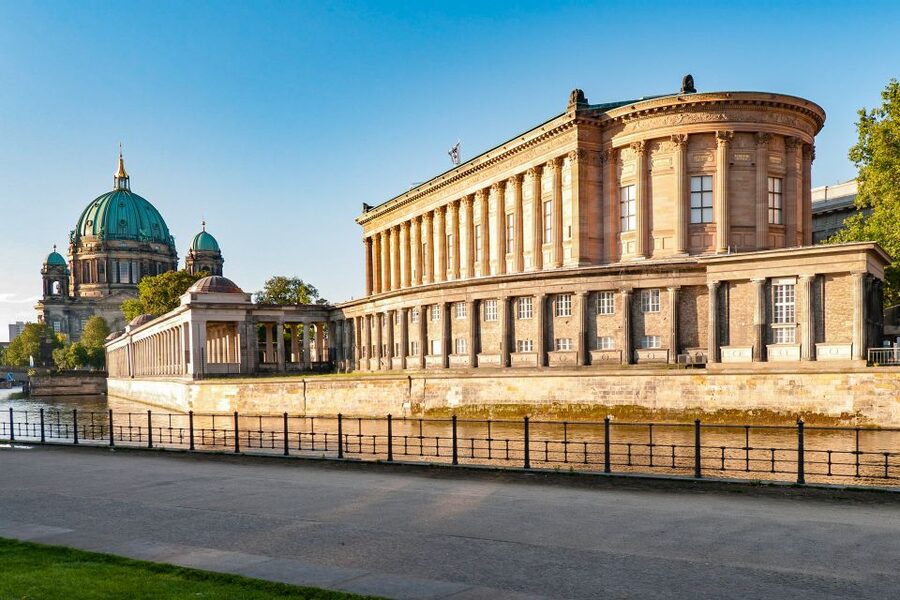
The Alte Nationalgalerie is one of the five museums on Berlin’s Museum Island, a UNESCO World Heritage Site on the Spree. Its name means Old National Gallery, but the building does not feel like a dusty storehouse. It was designed as a grand home for art and science, with a formal exterior and an interior suited to a long, chronological look at European painting and sculpture.
The idea goes back to Friedrich Wilhelm IV, who imagined a museum devoted to art and learning. The collection took shape from the donation of banker Joachim Heinrich Wilhelm Wagener, whose holdings included paintings from the Düsseldorf school and Belgian history painters. The National Gallery opened in 1876 as the third museum on the island.
That background helps explain the museum’s character. This is not one narrow exhibition about a single painter. It is a view of the 19th century as German patrons and museum planners understood it, from idealized Classicism through Romantic feeling, middle-class Biedermeier interiors, industrial subjects, French Impressionism, and the first steps toward modern art.
I especially like this kind of museum when you want a history of ideas told through pictures. You can watch artists shift from myth and poetic nature toward ordinary life, visible brushwork, city culture, and changing social roles.
Other Germany days worth putting on the list:
- Berlin: Reichstag, Dome and Government District Guided Tour
★ 4.7 · 18,288 reviews - Berlin: 1-Hour City Tour by Boat with Guaranteed Seating
★ 4.3 · 16,993 reviews - Hamburg: Sex and Crime in St. Pauli Tour for Ages 18+
★ 4.7 · 15,447 reviews
Begin with the building and the sculpture
Start at the visitor entrance on Bodestraße. Your timed ticket gives you skip-the-ticket-line access, but you should enter within 15 minutes of the booked time. That small window matters, so do not treat the reservation as an all-day arrival pass.
The building itself sets a serious tone. Wide stairs, classical forms, and large rooms make the museum feel ceremonial. Take a moment to look around before rushing toward the famous paintings. The setting is part of the experience, particularly if you have already visited the more modern interiors of Berlin’s other museums.
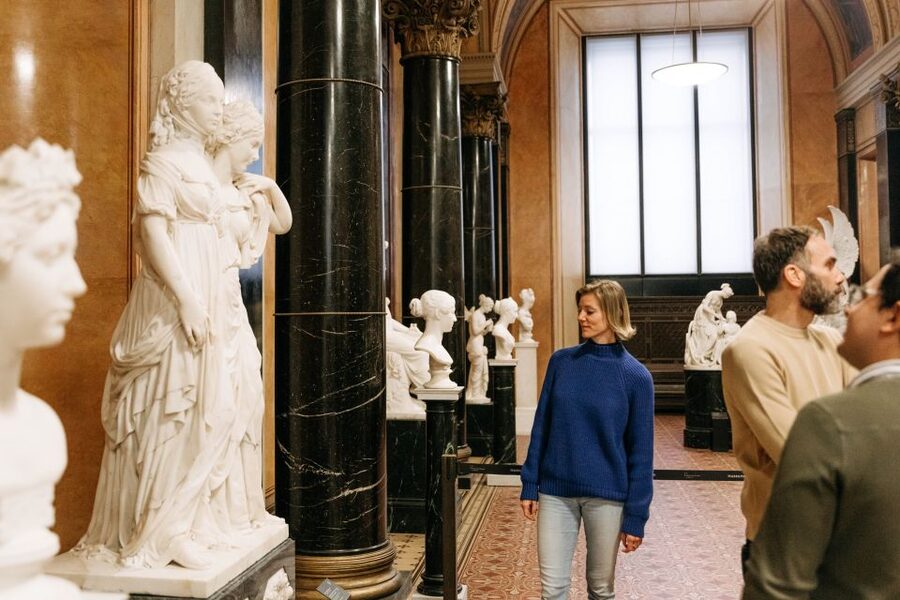
Sculpture provides one of the early pleasures. Look for Shadow’s marble tomb for Count Alexander von der Mark, made in 1790. It is a striking work of late 18th-century sculpture, and its presence gives you an important starting point before the 19th-century galleries take over.
The Sleeping Beauty is another memorable sculpture. Its appeal is immediate, but it also shows how the museum places three-dimensional works alongside paintings rather than treating sculpture as a side attraction. You can move between polished marble, controlled classical forms, and the more personal emotion of Romantic painting.
Follow German art from Classicism to Romanticism
The German Romantic rooms are likely to be the emotional center of your visit. Here, nature is not just scenery. It becomes a place for solitude, mystery, faith, and private thought.
Caspar David Friedrich’s The Monk by the Sea is the essential stop. A tiny solitary figure faces a broad, spare expanse of water and sky. The painting gives you very little narrative, yet it creates a powerful sense of scale and uncertainty. You are not being asked to admire a pretty view. You are being asked to consider a person confronting something far larger than himself.
Friedrich’s Gothic Cathedral at the Water offers a different kind of Romantic mood. Its architecture rises out of the setting with an almost dreamlike presence. Look for the way buildings and nature share the same quiet, suspended atmosphere.
These paintings reward slow looking. The audio guide can help you place them in their period, but you should also give yourself a minute without narration. Friedrich’s paintings work through silence. If you listen only to facts, you may miss the stillness that makes them memorable.
The so-called Group of Princesses adds a more human and social note. The picture presents aristocratic sitters with care and ceremony, and it helps show how portraiture could signal family, status, and public identity. After the solitude of Friedrich, the shift is useful. You move from the individual facing nature to people being seen by society.
See the 19th century change before your eyes
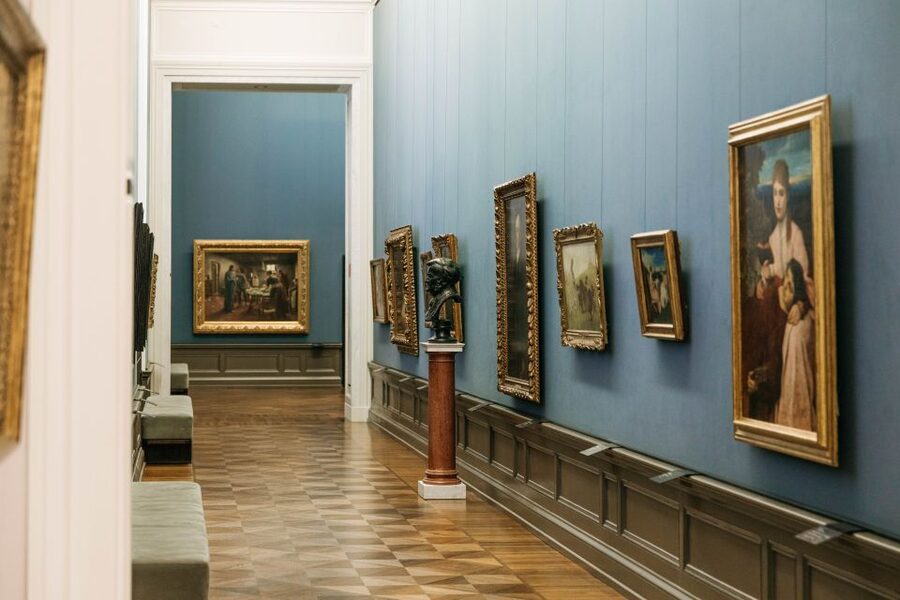
The museum’s value comes from the movement between styles. Classicism favors order and ideal form. Romanticism turns inward and looks toward emotion and nature. Biedermeier art brings attention to domestic life and a more settled middle-class world.
Then the mood changes again. Industrial subjects and modern city life enter the picture. Adolf Menzel’s Eisenwalzwerk is one of the major works to seek out. The subject is a rolling mill, with workers surrounded by heat, machinery, and hard physical labor. It is a strong counterpoint to paintings that present history or nature as noble and untouched.
Menzel’s painting matters because it shows modern work as worthy of serious art. The factory is not a decorative background. Its noise, danger, and energy become the subject. You can spend time looking at the workers and the equipment, asking how much the painting celebrates industry and how much it records its cost.
This is where the Alte Nationalgalerie becomes more than a parade of famous names. You see a society changing its sense of what deserves to be painted. Kings, saints, ruins, and mythological figures remain, but workers, factories, families, and city life gain ground.
Same city, a completely different kind of day:
- Hamburg: 1.5-Hour Harbor and Speicherstadt Day Cruise
★ 4.6 · 14,200 reviews - From Munich: Neuschwanstein & Linderhof Castle Full-Day Trip
★ 4.5 · 12,494 reviews - Dresden: Semperoper Tickets and Guided Tour
★ 4.7 · 12,102 reviews - Berlin: Boat Tour Along the River Spree
★ 4.4 · 11,252 reviews
Make time for Manet, Monet, and Renoir
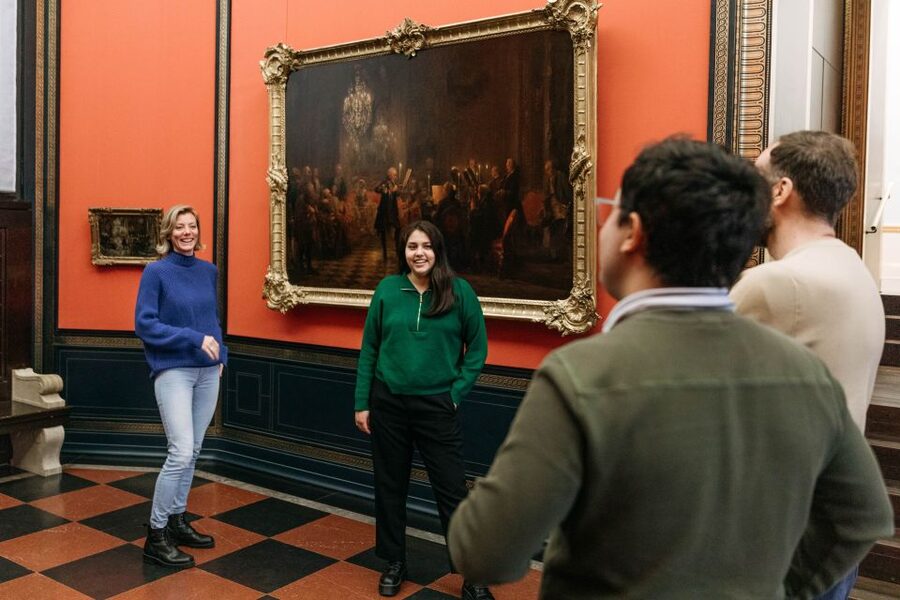
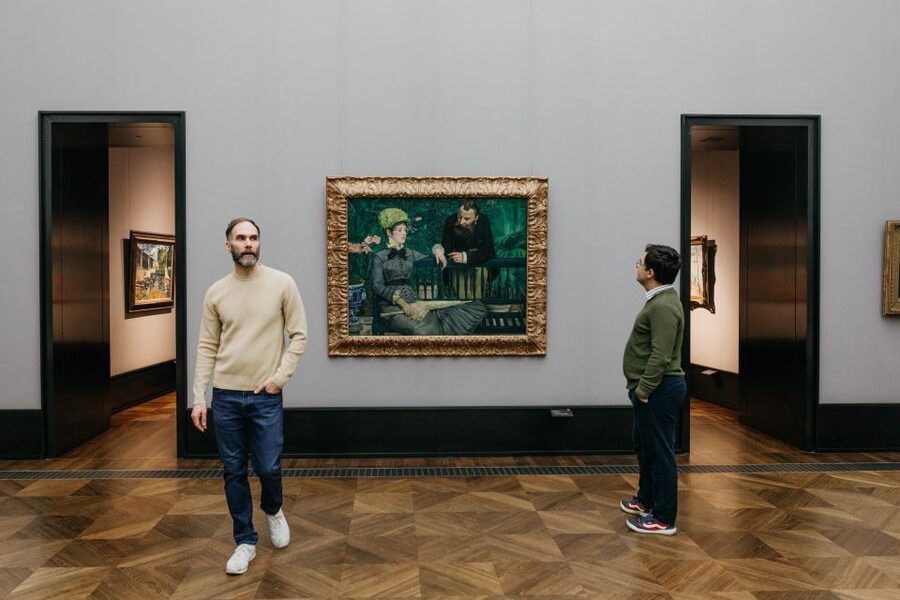
The French Impressionist paintings are a major reason many people choose this museum. You can see works by Édouard Manet, Claude Monet, and Auguste Renoir, each helping to explain why late 19th-century painting felt so new.
Impressionism asks you to look at light, atmosphere, and the act of seeing. The brushwork may seem loose compared with the finished surfaces of earlier academic painting. Step back and let the image come together. Then move closer to notice how individual marks create the larger scene.
Manet often feels more direct and modern, with figures and subjects that resist the polished conventions of official art. Monet draws attention to changing light and visual sensation. Renoir brings a softer social warmth to many of his scenes. The museum gives you a useful chance to compare these artists in one visit rather than seeing each in isolation.
This section is also where practical planning matters most. At least one visit had the Impressionist floor closed, despite that section being a main reason for choosing the museum. Access can change, and the ticket does not guarantee that every gallery will be open. If Manet, Monet, or Renoir is your priority, check the current museum information shortly before your visit and keep your expectations flexible.
When the rooms are open, allow more time than you think you need. Impressionist galleries can look quick at first because the paintings seem easy to read. They are better when you return to a few works and compare edges, shadows, and brush marks.
Continue toward early Modernity and the Secession years
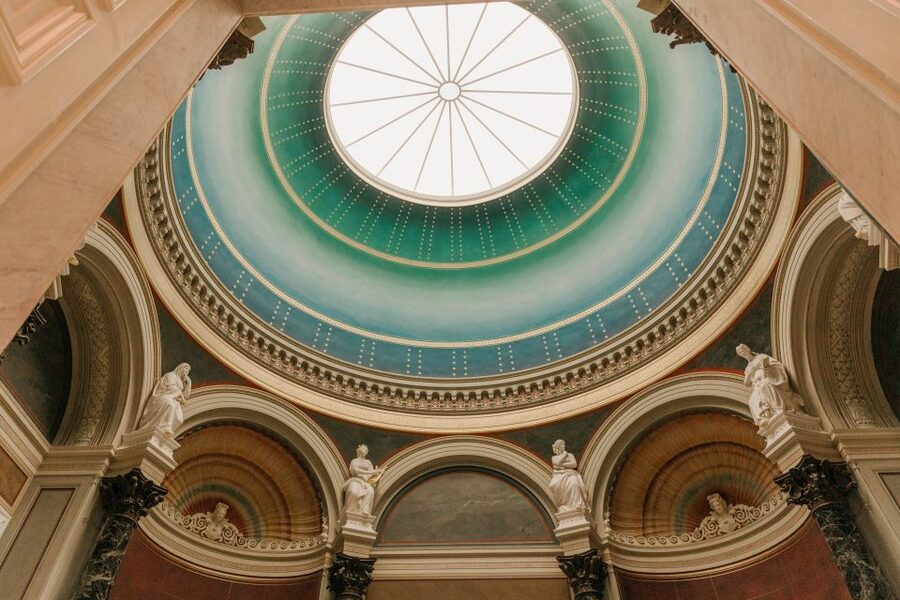
The later rooms lead toward early Modernity and the era of the Secession, roughly from 1880 to 1920. This section broadens the story beyond the better-known French names.
Works connected with Max Liebermann, Franz von Stuck, and Gustav Klimt can bring a sharper, more decorative, and sometimes more psychologically charged mood. Paintings, drawings, and sculpture show how artists moved away from older academic rules and searched for new ways to present the body, the city, private life, and the imagination.
This period is worth seeing as a transition rather than a final stop. The museum does not take you all the way through modern art, but it shows the pressure building against older conventions. You may find that a painting from the 1890s feels closer to the 20th century than to the Romantic rooms you saw earlier.
One especially enjoyable detail is the presentation of self-portraits near the end of the visit. They work almost like closing credits, bringing the artists back into view as individuals. A series of exhibition posters adds another human touch. These posters show how art was presented to the public at the time, not only what artists put on canvas.
How to use the audio guide without losing your own view
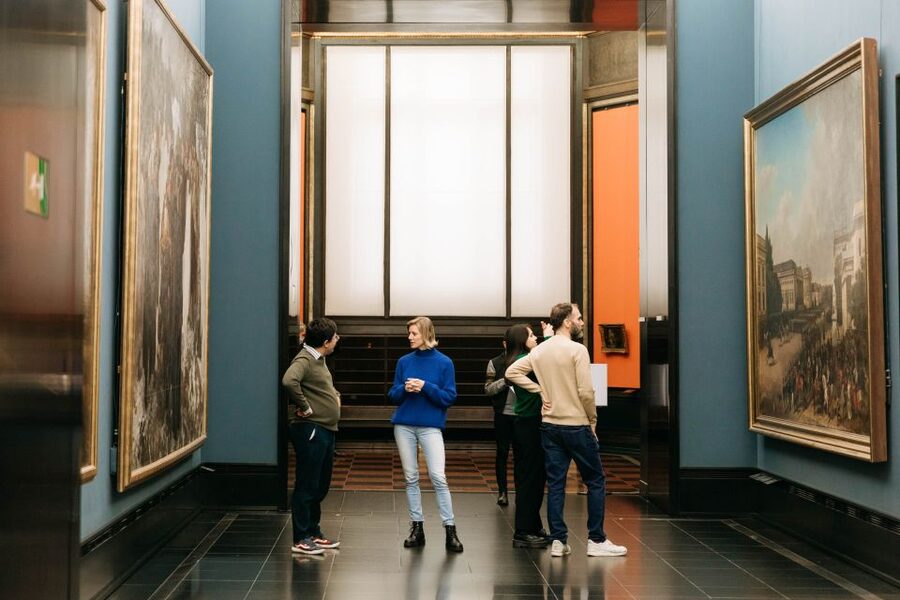
Your ticket includes an audio guide, which makes this a straightforward museum visit even without a booked guide. No guide name is provided because this is not a live guided tour. You set your own pace and decide which works deserve ten minutes and which deserve ten seconds.
I suggest using the audio guide selectively. Start with the major works, then pause it when a painting catches your attention. The best museum experience is not a race through every recorded stop. Use the commentary for context, then look quietly.
The guide is especially useful for works where the subject is not obvious, such as the industrial scenes, portraits, and pieces connected with the Secession. It can also help you understand why a particular painting was important in its period rather than simply telling you its title and date.
Families can also benefit from the museum’s exhibition talks and guided programs for children and adults, when available. The supplied information does not give a fixed schedule, so check what is offered on the day rather than planning around a particular talk.
Timing, access, and what to carry
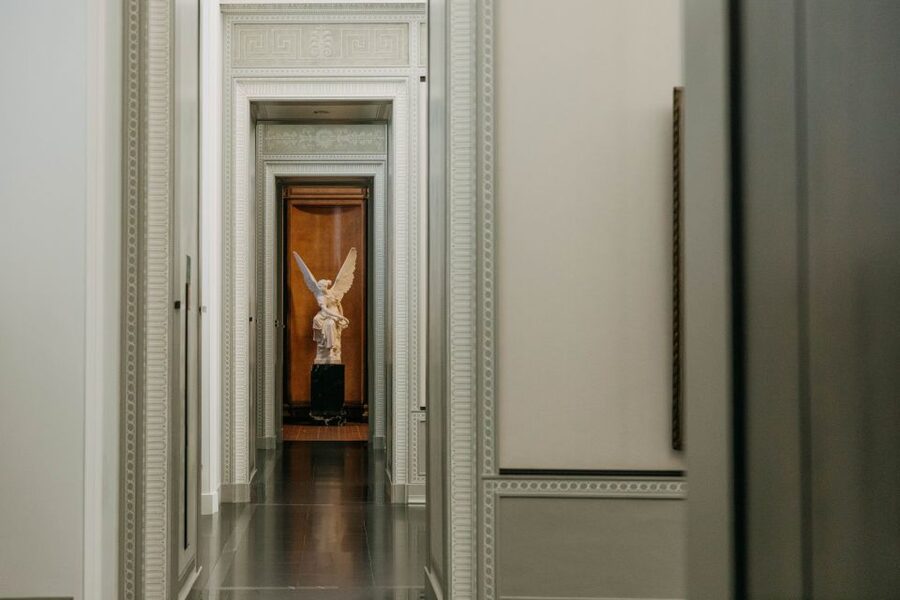
The ticket is valid for one day, with entry tied to a booked timeslot. You should arrive in time to enter within 15 minutes of that slot. After entering, you can take the time you need during the museum’s available visiting period, but the activity does not include transportation or admission to the other museums on Museum Island.
Backpacks are not allowed. This is easy to overlook in Berlin, where you may be carrying a day bag with water, a camera, or extra layers. Plan to travel light and check the museum’s current cloakroom arrangements if you need to store anything.
The entire building is wheelchair accessible. That is useful in a historic museum where stairs and older floor plans can otherwise complicate a visit. The ticket itself is for the Alte Nationalgalerie only, so do not assume it covers the Bode Museum, Pergamon Museum, Neues Museum, or any other nearby institution.
The ticket is non-refundable. Since gallery access can change and the arrival window is short, book when your Berlin schedule is reasonably firm. If you are building a full Museum Island day, leave room for a change of plan rather than stacking several timed entries too closely.
Is $14 good value for this Berlin museum?
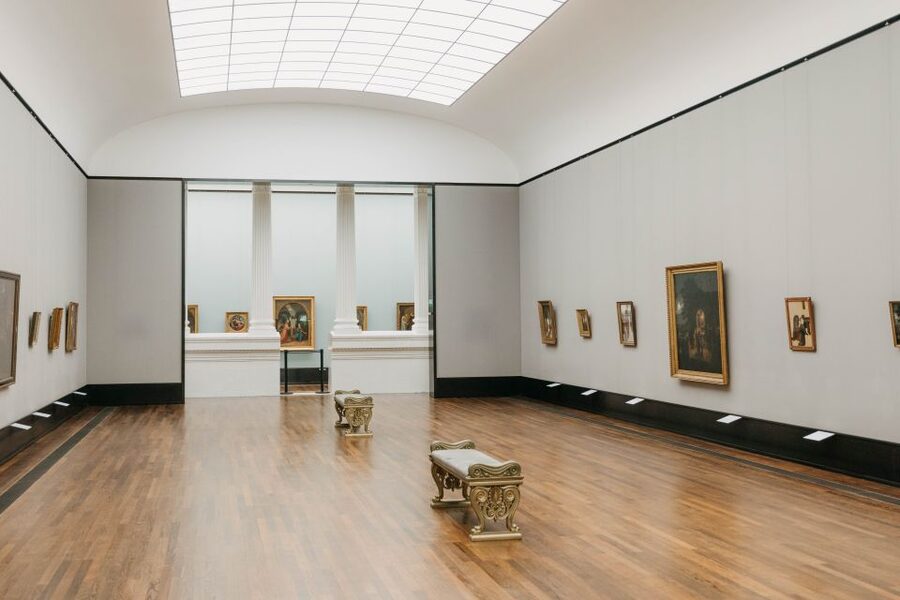
At $14 per person, this is a sensible price for a major collection in the center of Berlin. You get entry to a UNESCO-listed museum site, access to German art across several movements, skip-the-ticket-line entry, and an audio guide.
The value is strongest if you already know you want 19th-century art. This is not a general Berlin sightseeing ticket, and it does not include other museums. You are paying for one focused collection, not a whole day of island-wide admissions.
I also like that the ticket lets you choose your own pace. A short visit can cover the best-known works, while an art lover can spend much longer with the paintings, drawings, and sculpture. That flexibility makes the price easier to justify.
The main risk is incomplete access. A closed floor can change the visit, especially if Impressionism is your main goal. The museum remains worthwhile for Friedrich, Menzel, sculpture, and the wider story of German art, but you should check current conditions before committing a non-refundable booking.
Who should book the Alte Nationalgalerie?
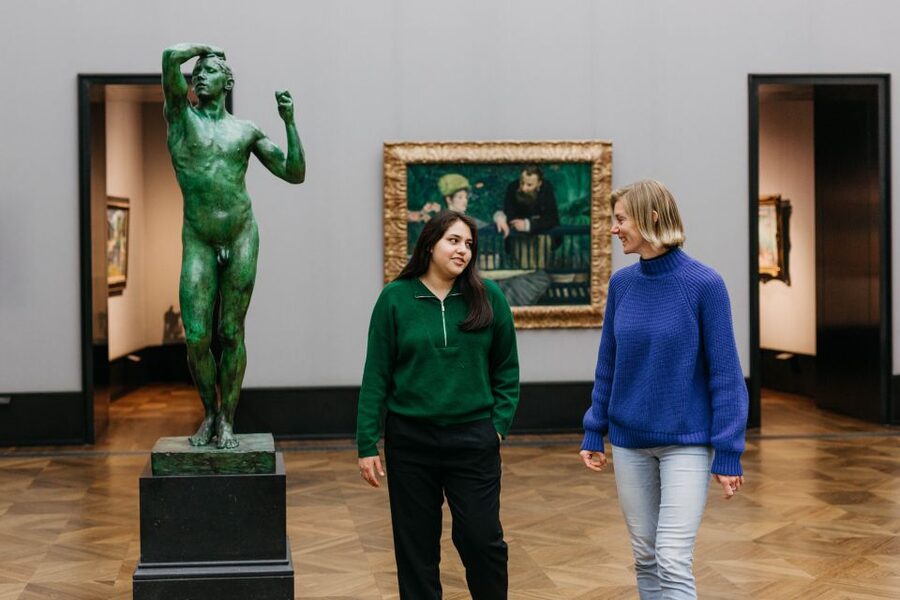
I would choose this experience if you enjoy:
- German Romanticism, especially Friedrich
- French Impressionism by Manet, Monet, and Renoir
- Sculpture as well as painting
- A museum arranged around changing artistic movements
- Self-guided visits with an audio guide
- Seeing how industrial and modern subjects entered serious art
You may want another Berlin activity if you prefer contemporary art, a live guide, or a ticket that covers several museums. The Alte Nationalgalerie is focused on the 19th century and early Modernity. That focus is its strength, but it may feel narrow if you want a broad survey of European art from ancient times to today.
Should you book it?
Book the Alte Nationalgalerie if Friedrich’s The Monk by the Sea, Menzel’s Eisenwalzwerk, French Impressionism, or late 19th-century art is high on your Berlin list. The $14 admission, included audio guide, and central Museum Island location make it an easy choice for an art-focused morning or afternoon.
Before paying, check that the rooms you most want to see are open. If they are, this is one of Berlin’s most rewarding single-museum visits. If a key floor is closed, you can still find excellent sculpture, Romantic painting, portraits, and industrial art, but the decision becomes less automatic.
FAQ
Where is the Alte Nationalgalerie?
The museum is at Bodestraße, 10178 Berlin, on Museum Island.
What does the ticket include?
The ticket includes entry to the Alte Nationalgalerie and an audio guide.
Does the ticket include other Museum Island museums?
No. Tickets to other museums on the island are not included.
How long is the ticket valid?
The ticket is valid for one day.
Do I need to enter at a specific time?
Yes. You should enter within 15 minutes of the booked timeslot.
Can I skip the ticket line?
Yes. Skip-the-ticket-line entry is included.
Is the museum wheelchair accessible?
Yes. The entire building is wheelchair accessible.
Can I bring a backpack?
No. Backpacks are not allowed.
Is transportation included?
No. You arrange your own transportation to the museum.
Can I cancel for a refund?
No. This activity is non-refundable.
Just added around Germany
- e-Scavenger hunt Aachen: Explore the city at your own pace★ 4.0 · 13 reviews
- Private photo tour in Cologne★ 5.0 · 9 reviews
- Private walking tour of Cologne’s old town★ 5.0 · 28 reviews
- Roman Cologne: A Self-Guided Audio Tour★ 4.0 · 15 reviews
- Public brewhouse tour in English★ 5.0 · 94 reviews
- Kölsch and Brewhouse Tour (18 and up)★ 5.0 · 5 reviews
- Private-Group Bike Tour of Cologne with Guide★ 5.0 · 20 reviews
- Köln Night PubCrawl: 4 Venues, Welcome Shots + Club Entry★ 3.5 · 4 reviews