
Reviewed · CASTLE & PALACE TOURS
Augustusburg Castle: Guided tour
Augustusburg Castle’s best surprise is underground: its well house contains Saxony’s second-deepest well and an old driving galley, a human-powered machine that helped supply this hilltop fortress. I also like the Cranach altar, which shows Elector August, Anna, and their children, and the tour’s modest $9 price.
You’ll also see the electoral chambers in the Lindenhaus and hear how court life worked inside a 16th-century Renaissance castle. The main drawback is that the tour is offered in German only, and one recent visitor found the guide’s repeated warnings about touching objects distracting, even while praising his answers and subject knowledge.
In This Review
- Key points to know before you book
- Why Augustusburg Castle makes a strong first stop
- The Lindenhaus and the world of Elector August
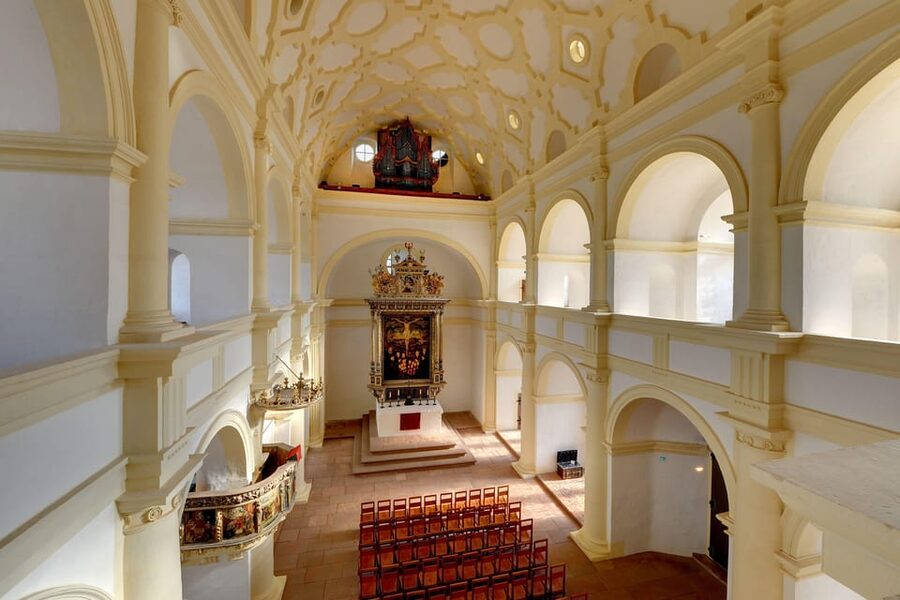
- The castle church and Cranach’s family portrait
- The well house and Saxony’s second-deepest well
- A one-hour route with a clear focus
- What the $9 fee really buys you
- Who will enjoy this castle tour most
- Practical advice for making the hour count
- Should you book the Augustusburg Castle guided tour?
- FAQ
- How much does the Augustusburg Castle guided tour cost?
- How long does the guided tour last?
- What language is the tour in?
- Where do you meet for the tour?
- What areas are included?
- Is museum admission included?
- Are parking, meals, or drinks included?
- Can you cancel the tour for a refund?
Key points to know before you book
- The well house is a major highlight: See Saxony’s second-deepest well and its oldest preserved driving galley.
- The Cranach altar is unusually personal: It shows the electoral couple and their children, not just a formal religious scene.
- The route focuses on three areas: The Lindenhaus chambers, castle church, and well house.
- The tour lasts one hour: That makes it easy to fit into a broader visit to Augustusburg Castle.
- The guide speaks German: Multimedia features add visual support, but the live explanation is not offered in other languages.
- The $9 fee covers the guided areas only: Museums and exhibitions require a separate entry ticket.
Why Augustusburg Castle makes a strong first stop
Augustusburg Castle rises above the Zschopau Valley on the edge of the Ore Mountains. Elector August of Saxony ordered this huge Renaissance complex more than 450 years ago, turning the hilltop site into a clear statement of political power.
That setting gives the one-hour tour its basic appeal. You are not simply walking through decorated rooms. You are seeing how a ruler used architecture, art, water engineering, and court ceremony to make his authority visible.
I would use this tour as an introduction to the castle. It gives you a clear framework before you decide how much time to spend on the other museums and exhibitions. The route is compact, but it reaches the rooms and structures that best explain how the castle worked.
The published price is $9 per person, which is good value if you want context rather than a quick look at empty rooms. The fee covers a personal guide and access to the Lindenhaus, castle church, and well house. It does not include meals, drinks, parking, or admission to the castle’s separate museums and exhibitions.
That last point matters. If you plan to see every collection on the grounds, budget for additional admission. If you mainly want the castle’s central story and its most distinctive sights, the guided hour may be enough.
More castle & palace tours in Germany:
- From Munich: Neuschwanstein & Linderhof Castle Full-Day Trip
★ 4.5 · 12,494 reviews - Neuschwanstein & Linderhof Castle-Fairytale Day Tour from Munich
★ 4.5 · 7,275 reviews - Neuschwanstein Castle Tour from Munich
★ 4.5 · 5,117 reviews
The Lindenhaus and the world of Elector August
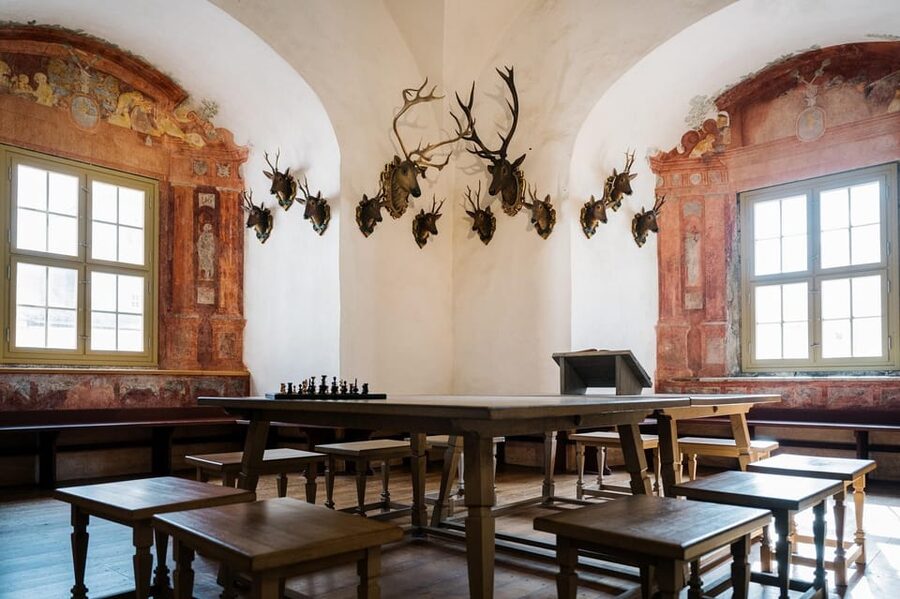
The tour begins with the Lindenhaus and its electoral chambers. Here, the guide explains how Augustusburg Castle took shape and describes daily life for the electoral family.
The rooms matter because they connect the grand building to ordinary court routines. A fortress-palace can feel remote when you only admire its walls. The chambers bring the story down to the level of rooms, family life, and court business.
You can expect the guide to focus on the electoral couple, August and Anna, and the way their household operated. The supplied information does not identify individual guides by name, so you should not expect a particular named presenter when booking. What is clear is that the tour includes a live German-speaking guide rather than a self-guided audio route.
The quality of the live delivery can shape the hour. Jörg praised a guide for giving detailed information in a clear and calm way. Another visitor found a young guide too authoritarian because he repeatedly reminded the group not to touch things. That criticism is useful: the tour takes place in historic interiors, so careful behavior is expected, but the tone may vary depending on who leads the visit.
If you understand German, this section should give you the most direct look at court life. If you do not, the visual setting and multimedia elements may still help, but you will miss much of the spoken detail.
The castle church and Cranach’s family portrait
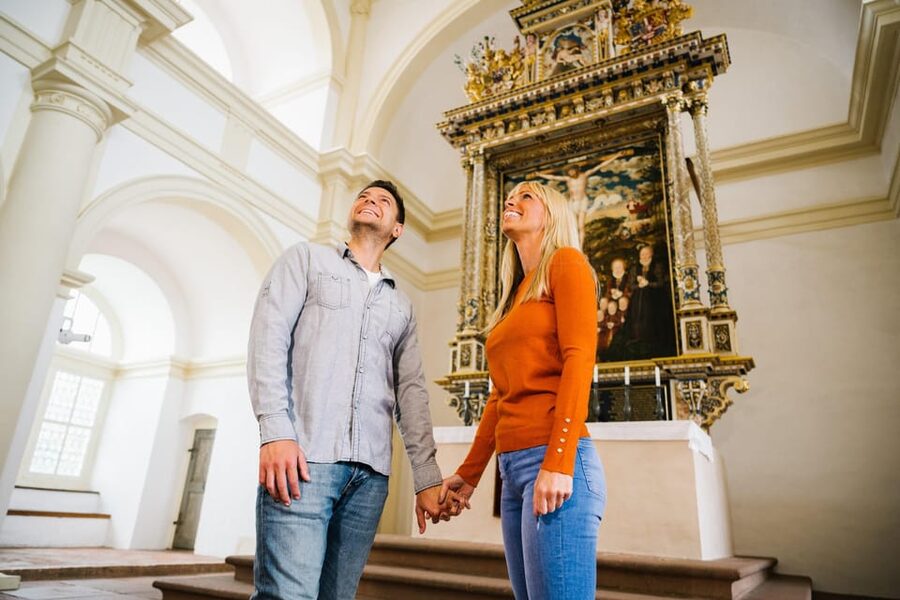
The castle church contains the tour’s most important work of art, an altarpiece painted by Lucas Cranach the Younger.
Its unusual feature is the surviving portrait of Elector August, Anna, and their children. This makes the altar more than a religious object. It also presents the ruling family and places them inside the spiritual setting of their own castle.
I like this stop because it shows how art served several purposes at once. The altar expressed faith, but it also recorded family identity and political status. Seeing the electoral couple with their children gives you a more personal image of the people behind the grand building.
The work is described as a precious European-level art object, but you do not need to be an art specialist to appreciate its value. Look for the family members and consider what it meant to preserve a ruler’s household in a church used within the castle.
The guide can explain the altar’s place in the castle story, while multimedia features add another layer. The provided information does not specify exactly what the multimedia includes, so you should treat it as supporting material rather than a promised interactive show.
This stop may be brief, but it rewards attention. If you rush through the church, you could miss the central reason the altar is so important: it is the only surviving portrait of this electoral family together on the altarpiece.
The well house and Saxony’s second-deepest well
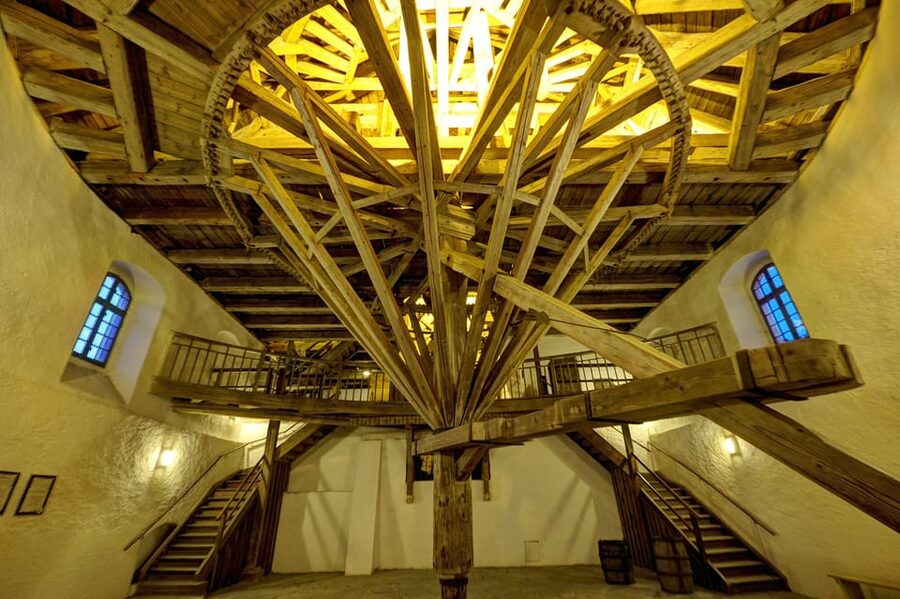
The final part of the tour heads to the fountain house, also described as the well house. This is where Augustusburg’s practical side comes into view.
The castle sits more than 500 meters above sea level, so securing water was a serious engineering task. The well helped supply the castle, and its depth gives you a sense of the work required to maintain life at this elevated site.
The well is identified as the second deepest in Saxony. That fact is impressive, but the useful point is what it tells you about the castle. A grand residence could not function on ceremony alone. It needed reliable water, and the well house was part of that essential system.
The well house also contains the oldest preserved driving galley in Saxony. This was a water-lifting machine powered by people walking inside or operating the mechanism. It is an excellent companion to the well itself because you see both the problem and the equipment designed to solve it.
I find this part especially valuable for visitors who enjoy engineering, practical history, or the less polished side of palace life. The electoral chambers show status. The church shows belief and family image. The well house shows labor and logistics.
The tour description calls the driving galley a masterpiece of water supply. That does not mean the visit turns into a long technical lecture, but the guide can place the machine in the larger story of keeping a hilltop court supplied.
A few more Germany trips to weigh up
- Berlin: Reichstag, Dome and Government District Guided Tour
★ 4.7 · 18,288 reviews - Dresden: Semperoper Tickets and Guided Tour
★ 4.7 · 12,102 reviews - Berlin: Government District around the Reichstag Guided Tour
★ 4.7 · 8,447 reviews - Hamburg: Elbphilharmonie Plaza Guided Tour
★ 4.7 · 5,882 reviews
A one-hour route with a clear focus
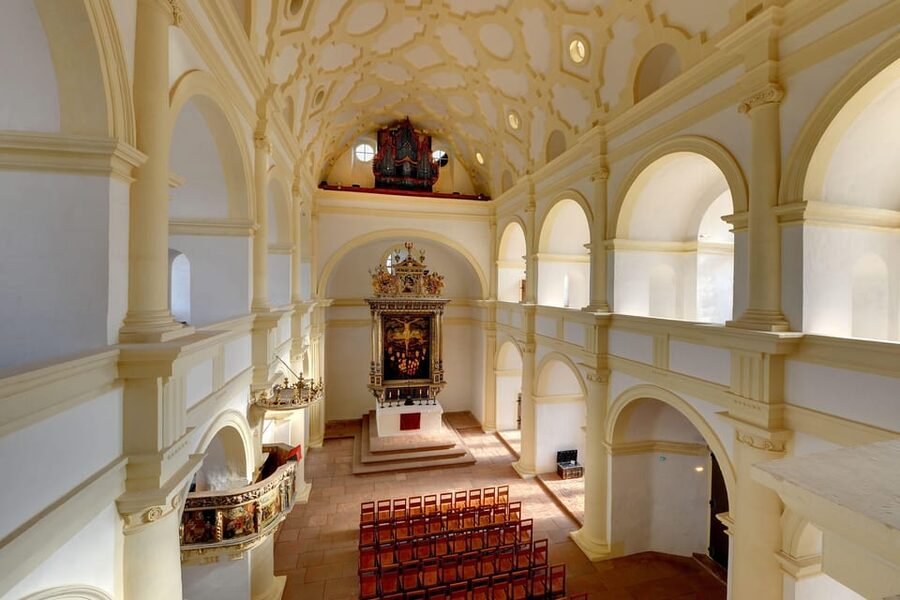
The experience lasts one hour, which is a useful length for a castle visit. You get a guided overview without committing half a day to a single indoor tour.
The route has a logical shape:
- The Lindenhaus introduces the castle and the electoral household.
- The castle church shifts attention to art, faith, and the ruling family.
- The well house finishes with engineering and daily supply.
That order moves from people and rooms to public image, then to the hidden systems that made the castle possible. It is a better structure than a random walk through disconnected interiors.
You should meet at the main entrance. The tour lets you skip the ticket line, which can save time if the castle is busy. Starting times vary, so check availability before you settle your day around it.
The tour does not promise a particular group size. Because a live guide leads the route, the pace may depend on the size and makeup of the group. A detailed question-and-answer style worked well for one visitor, while another found the guide’s strict reminders irritating. If you value a relaxed conversational style, keep that possible variation in mind.
The tour is conducted in German. This is the most important practical consideration for international visitors. Multimedia elements may offer visual help, but no English-speaking guide is listed. If you do not understand German, you may want to treat the tour as an architectural and visual introduction rather than expect full historical detail.
What the $9 fee really buys you
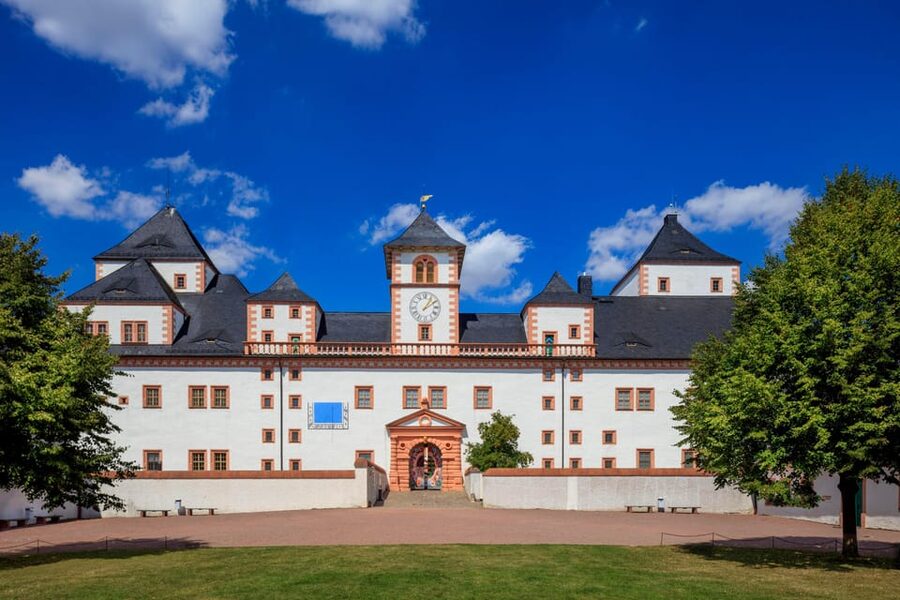
At $9 per person, the tour is inexpensive compared with many guided castle experiences. The value comes from access to areas that make the building understandable, especially the electoral chambers and the well house.
A self-guided visit can show you the castle’s appearance. A guide adds the reason behind the rooms, the family portrait, and the water system. That extra context is what makes the fee worthwhile.
Still, $9 does not cover everything at Augustusburg Castle. Museums and exhibitions have separate entry fees, and parking is also excluded. Meals and drinks are not part of the tour either.
I would book the guided hour if you want a focused explanation of the castle’s core sights. I would be less enthusiastic if your main goal is a full museum day and you are trying to keep every admission under one ticket. In that case, check the combined cost before booking.
The published rating is 3.4 from 10 ratings. That is a small sample, and the written feedback is mixed. The strongest praise centers on detailed explanations, calm delivery, and a friendly guide. The main negative point concerns presentation style, not the castle itself or the amount of historical material.
Who will enjoy this castle tour most
This experience suits you if you like historic buildings with a clear human story. The electoral chambers offer court life, the church offers art and family portraiture, and the well house adds an unusual technical feature.
It is also a good fit for:
- Visitors with only one hour to spare
- German-speaking adults and families
- People interested in Renaissance architecture
- Art lovers who want to see a Cranach altarpiece
- Anyone curious about historic water systems
- Visitors who want a guided introduction before exploring exhibitions
Families may appreciate the well house and driving galley because the machinery gives the visit a practical hook. Children who are less interested in portraits may connect more easily with the idea of raising water from a very deep well.
Art-focused visitors should give the castle church enough attention. The altar is not merely a decorative stop, and the family portrait adds a rare personal record of the electoral household.
This may be a weaker choice for someone who needs an English tour or prefers to explore completely alone. It may also disappoint if you expect the $9 booking to include every museum and exhibition in the castle complex.
Practical advice for making the hour count
Arrive at the main entrance with enough time to find the meeting point. The activity begins there, and the tour follows a fixed one-hour schedule.
If you understand German, listen closely in the Lindenhaus, where the guide explains both the building process and court life. In the church, focus on the electoral family shown on the Cranach altar. At the well house, look beyond the depth statistic and pay attention to how the driving galley helped solve the castle’s water problem.
Do not plan a meal or drink as part of the experience. Those are not included, and the provided details do not specify refreshments during the hour.
You can cancel up to 24 hours before the start for a full refund. The reserve-now-and-pay-later option also lets you hold a place without paying immediately, which is useful when your route through northern Germany is still changing.
The tour is not the same as admission to the castle’s full museum program. Think of it as a guided core route. Afterward, you can decide if the separate exhibitions deserve more of your time and money.
Should you book the Augustusburg Castle guided tour?
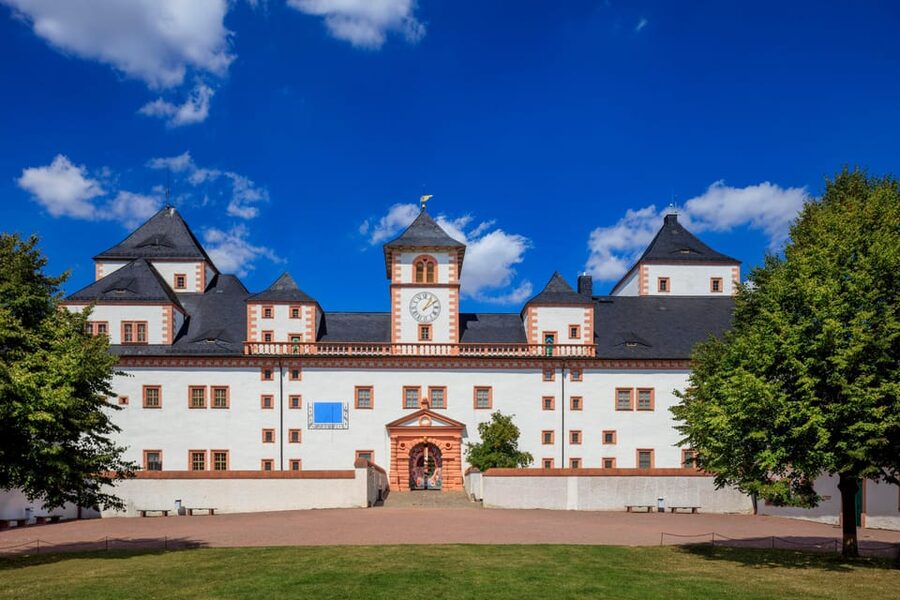
I would book it if you want the castle explained through three strong subjects: the electoral family, Cranach’s altar, and the water system. At $9, the price is fair, and the one-hour format is easy to fit into a day.
Book with more caution if you do not speak German, since the live guide is German only. Also keep the separate museum fees and parking cost in your budget.
The tour’s main strengths are its unusual well house, the rare family portrait, and the calm, detailed delivery possible with a good guide. The experience is less certain if you are sensitive to a strict museum style, but the castle itself gives the hour plenty to work with. For a short, focused introduction to Augustusburg, I think it is a sensible purchase.
FAQ
How much does the Augustusburg Castle guided tour cost?
The tour costs $9 per person.
How long does the guided tour last?
The guided tour lasts one hour.
What language is the tour in?
The live tour guide speaks German. No other guide language is listed.
Where do you meet for the tour?
You meet at the main entrance of Augustusburg Castle.
What areas are included?
The tour includes the Lindenhaus with the electoral chambers, the castle church with the Cranach altar, and the well house with Saxony’s second-deepest well.
Is museum admission included?
No. Entry to the castle’s museums and exhibitions is not included in the guided tour price.
Are parking, meals, or drinks included?
No. Parking fees, meals, and beverages are not included.
Can you cancel the tour for a refund?
Yes. You can cancel up to 24 hours in advance for a full refund. You can also reserve now and pay later.
Just added around Germany
- Aachen old town tour – GERMAN (public)★ 5.0 · 24 reviews
- Aachen Private Walking Tour With A Professional Guide★ 5.0 · 11 reviews
- Cologne Highlights: Exclusive Private Tour★ 5.0 · 5 reviews
- Bremen Private Walking Tour With A Professional Guide★ 5.0 · 7 reviews
- Private Walking Tour through the Fascinating Bremen’s City Center★ 5.0 · 5 reviews
- Explore Cologne’s best Street Art Quarter★ 4.5 · 4 reviews
- Bremen Exploration Private Game and City Tour on your Phone★ 4.5 · 7 reviews
- e-Scavenger hunt Bremen: Explore the city at your own pace★ 4.0 · 24 reviews
Castle & Palace Tours, compared.


Neuschwanstein & Linderhof Castle-Fairytale Day Tour from Munich
Read our review →


Premium Neuschwanstein Castle and Linderhof VIP Tour from Munich
Read our review →


Sanssouci Palace and Prussian Palaces Entry Ticket
Read our review →Browse the lists this tour appears in