
Reviewed · GERMANY
About Vikings, kings and cheeky monks (Medieval Schleswig)
Schleswig’s story comes alive in the places that still shape the town today: the cathedral, the old harbor, the Holm fishing quarter, and St. John’s Monastery. This 90-minute walking tour links them into one clear tale, from early medieval trade on the Schlei to the Danish kings who gave Schleswig political weight.
I like the route for two reasons. First, it shows you more than a single grand church, moving from monuments to ordinary homes and fishing traditions. Second, the German-speaking guide can adjust the walk to questions, a useful touch for small groups. The main drawback is that the cathedral is viewed from outside unless you pay extra for an interior visit, and the history-heavy format may not hold every child’s attention.
In This Review
- Key points to know
- Starting at Rathausmarkt in the heart of Schleswig
- Reading Schleswig through its medieval past
- The cathedral and the power of Danish kings
- Walking the picturesque old town
- Holm, where fishing rights shaped daily life
- The harbor and the Schlei’s changing role
- St. John’s Monastery and the cheeky monks
- What the guide style means for your visit
- Is $17 a good value?
- Who should book this Schleswig walking tour?
- Should you book it?
- FAQ
- How long does the Schleswig walking tour last?
- Where does the tour meet?
- Is the inside of Schleswig Cathedral included?
- What language is the tour offered in?
- Is the tour wheelchair accessible?
- How much does the tour cost?
- Does the tour include St. John’s Monastery?
- Can I cancel the booking?
Key points to know
- Schleswig’s cathedral is an exterior stop: Interior entry is not included and depends on the time of day.
- Holm adds local character: The former fishing settlement brings the Schlei, fishing rights, and old town life into focus.
- The tour connects Viking-era trade with Danish rule: You learn why Schleswig once mattered far beyond northern Germany.
- St. John’s Monastery has a mischievous final chapter: The walk ends with the question of why some monks had a poor reputation.
- The format is easy to fit into a day: It lasts 1.5 hours, starts at Rathausmarkt, and is wheelchair accessible.
- It is best for history-minded adults and families with older children: One assessment found it less suitable for young children.
Starting at Rathausmarkt in the heart of Schleswig
Your walk begins at Rathausmarkt, in front of the Alte Apotheke. This is a practical meeting point because you start in the center of Schleswig rather than spending time reaching a distant attraction.
The tour is led in German, so you will get the most from it if you are comfortable following a spoken German explanation. The experience is built around a live guide rather than an audio device, which leaves room for questions and for the guide to respond to the interests of your group.
That flexibility matters here. Schleswig’s story is not just a string of dates. It involves trade routes, royal power, religious life, fishing rights, and the changing role of the Schlei. A guide can explain how those pieces fit together in a way that a plaque or map rarely manages.
The meeting point also puts you close to the town’s everyday side. You are not being dropped at a single major sight and hurried through it. Instead, the route begins with the public center and then moves into the older quarters, giving you a useful sense of how the town is laid out.
Other Germany days worth putting on the list:
- Berlin: Reichstag, Dome and Government District Guided Tour
★ 4.7 · 18,288 reviews - Berlin: 1-Hour City Tour by Boat with Guaranteed Seating
★ 4.3 · 16,993 reviews - Hamburg: Sex and Crime in St. Pauli Tour for Ages 18+
★ 4.7 · 15,447 reviews
Reading Schleswig through its medieval past
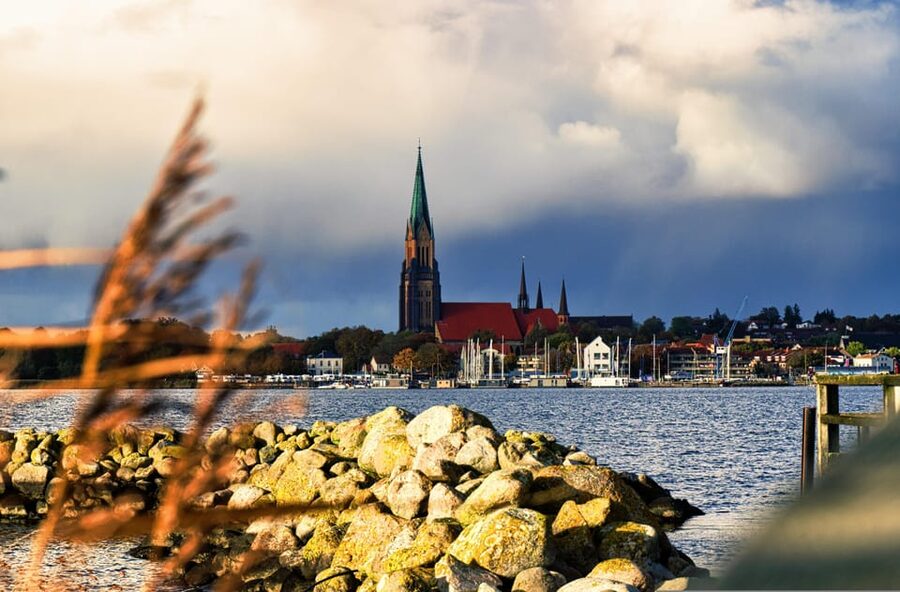
The central question of the walk is why Schleswig once held such an important place in northern Europe, and why that position later faded. In the early Middle Ages, the Schlei was a busy shipping route, and Schleswig was a trading town with activity concentrated around the harbor.
That setting gives the tour a useful Viking-era frame. You are not simply told that Schleswig was old. You are shown how water, commerce, and political power helped shape it.
The tour then follows the town through its medieval period. You hear about the changes that affected Schleswig when it lost some of its former importance in the trade network. The supplied information does not give a single simple cause, and that is part of the appeal: the walk asks what changed in the town and how those changes appeared in its buildings and neighborhoods.
I like this approach because it treats history as a question of cause and effect. The old town is not just a pretty backdrop. Its appearance reflects the town’s earlier success, later changes, and long connection to Danish rule.
The cathedral and the power of Danish kings
Schleswig Cathedral is one of the key sights on the route, but this experience includes an exterior visit only. That limitation is important to understand before booking. If you want to see the inside, an interior tour may be arranged for an additional charge, depending on the time of day.
Even from outside, the cathedral gives the guide a strong place to explain Schleswig’s religious and political role. The walk asks what importance the city and the cathedral held for Danish kings. That question shifts the church from a simple architectural stop to a marker of royal authority and regional influence.
The cathedral section will suit you if you enjoy context more than a rapid checklist of facts. You will be asked to consider why such a major church was built here and how its presence connected Schleswig to wider power networks.
The tradeoff is clear. If the cathedral interior is your main reason for visiting Schleswig, this is not the right ticket by itself. You would need to check whether an inside visit is available and pay the added fee. If you mainly want an informed look at the building and its place in the town’s story, the outdoor stop works well.
Walking the picturesque old town
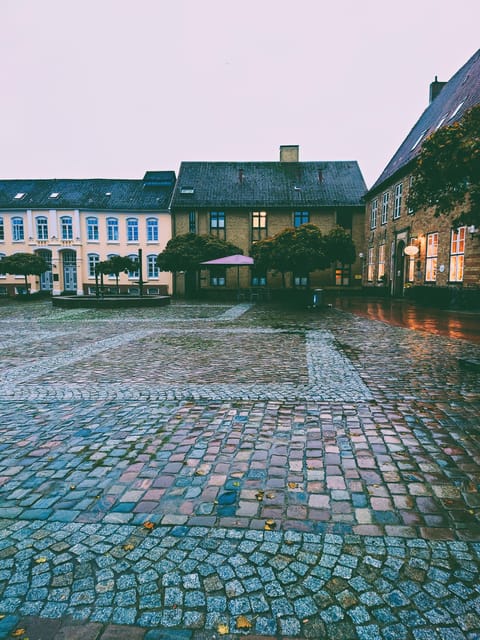
From the cathedral area, the route continues through Schleswig’s old town. The appeal here lies in the connection between the streets and the history you have just heard.
A good city walk lets you pause over details that are easy to miss when you explore alone. In Schleswig, the old town provides the setting for understanding how medieval growth and later change affected the town’s shape. The guide points out places that reflect the city’s former size and importance, as well as landmarks that remain familiar parts of Schleswig today.
I appreciate that the tour does not treat the old town as a decorative interlude. It is part of the argument. The buildings and streets help explain how Schleswig moved from a major trading center toward the quieter town you see now.
The pace should also appeal to anyone who prefers a moderate introduction rather than a full-day history program. In 1.5 hours, the walk covers several connected areas without asking you to set aside an entire morning or afternoon. You should still wear comfortable shoes, since the experience is a walking tour through the town, though the supplied information does not specify the exact surface or route length.
Same city, a completely different kind of day:
- Hamburg: 1.5-Hour Harbor and Speicherstadt Day Cruise
★ 4.6 · 14,200 reviews - From Munich: Neuschwanstein & Linderhof Castle Full-Day Trip
★ 4.5 · 12,494 reviews - Dresden: Semperoper Tickets and Guided Tour
★ 4.7 · 12,102 reviews - Berlin: Boat Tour Along the River Spree
★ 4.4 · 11,252 reviews
Holm, where fishing rights shaped daily life
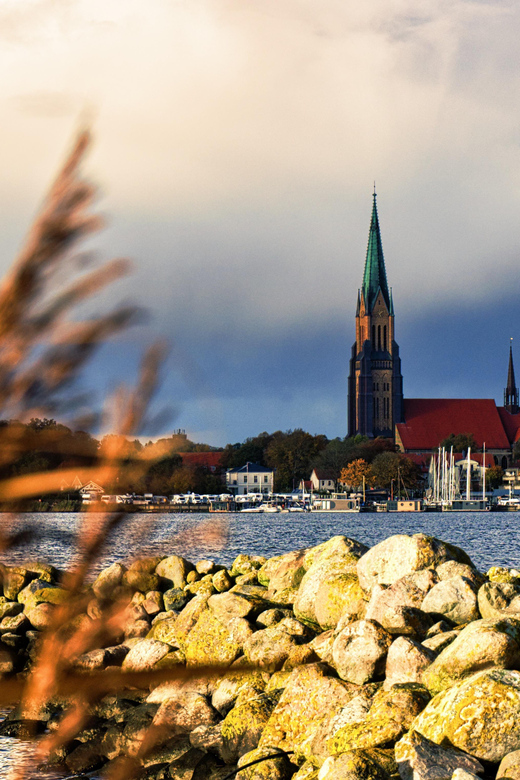
The Holm fishing settlement is the most distinctive part of the route. This quarter brings you closer to the people who worked on the Schlei, rather than focusing only on kings and church leaders.
Here, the guide explains the old special rights held by Holm’s fishermen. Those rights were confirmed again by the Schleibrief issued by King Christian I of Denmark in 1480. That detail gives the settlement a direct link to royal power, but it also keeps the story grounded in work, food, and local control.
The Schlei is central to understanding Holm. The waterway supported shipping and trade in the early Middle Ages, but it also supported smaller fishing communities. The walk helps you see how the same water could matter to merchants, rulers, and families earning a living from it.
For me, this is one of the tour’s strongest choices. A visit limited to the cathedral would tell you about official Schleswig. Holm gives you a better sense of local Schleswig, where old rights had practical meaning.
The quarter is also likely to be one of the more photogenic sections of the walk, thanks to its historic character and connection to the water. Still, do not book this expecting a working fishing excursion or a hands-on demonstration. The focus is on the settlement’s story and the rights of its fishermen.
The harbor and the Schlei’s changing role
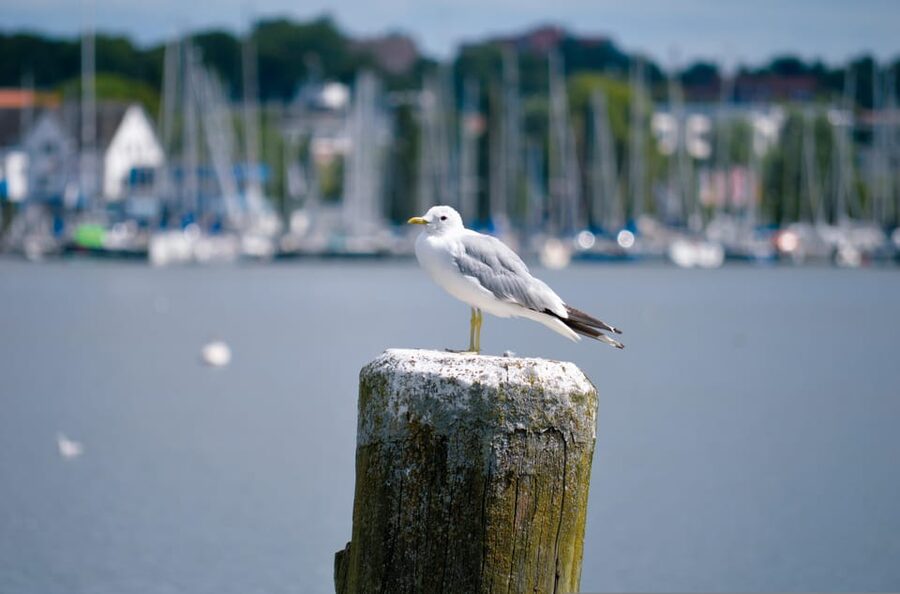
The city harbor helps connect the old trading story with the town you see now. In the early Middle Ages, the harbor district was a place of active commerce, supported by the Schlei’s role as a well-used shipping route.
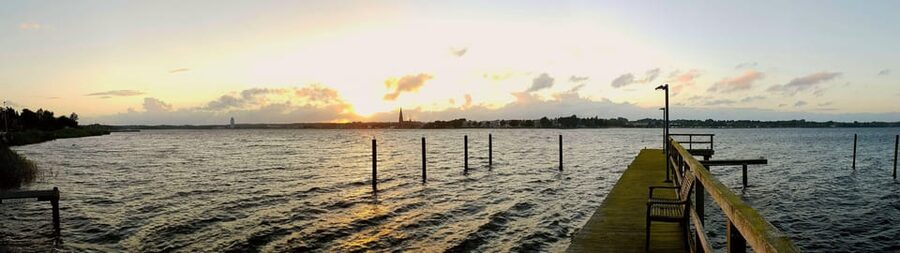
Today, the harbor offers a calmer setting, with the cozy feel promised by the tour’s Nordic theme. The German word hygge is used here in the sense of warmth, calm, and simple enjoyment of place. It is not a separate activity or meal, but a mood that shapes the walk.
This harbor stop gives the guide another chance to explain why Schleswig lost its leading position in the trade network. You can compare the harbor’s current atmosphere with its earlier role as an important point on the Schlei.
That contrast is valuable. Many historic towns present their past as a permanent success story. This route also deals with decline and change. Schleswig mattered greatly, then its position shifted, and the town adapted.
You should keep your expectations realistic. The experience does not promise a boat ride, harbor cruise, or extended waterfront time. The harbor is part of the walking route and the historical explanation, not a separate water-based attraction.
St. John’s Monastery and the cheeky monks
The walk includes St. John’s Monastery, described as the best-preserved medieval monastery in Schleswig-Holstein. It provides a fitting change of tone after the commercial and royal themes earlier in the route.
The monastery adds a quieter religious setting, but the tour does not present monastic life as entirely solemn. Its final question asks why not all Schleswig monks had a good reputation. That cheeky angle gives the walk some humor and keeps the closing section from feeling like a dry list of religious facts.
I like this ending because it gives the experience personality. The title’s reference to cheeky monks is not just decoration. It signals that the guide aims to mix serious history with human stories and a little mischief.
You should not expect a long inside visit or a specialist examination of medieval religious architecture unless the guide’s schedule includes more time. The information provided describes St. John’s as part of the walking route, with the group returning to the starting point afterward.
The return to Rathausmarkt also makes the tour easy to combine with the rest of a day in Schleswig. You finish where you began, rather than needing to arrange transport back across town.
What the guide style means for your visit
The experience has a 4.9 rating from 11 listed assessments, with repeated praise for clear information, an entertaining approach, and a friendly guide who responds to questions. One participant specifically noted that the guide adapted to the group’s interests and worked those requests into the planned route.
That is the quality I would value most here. Schleswig has enough separate subjects to make an unstructured explanation feel scattered. A good guide needs to connect the cathedral, harbor, Holm, and monastery into one story. The feedback points to that happening well.
The tour is in German only. This is not a minor detail. If you do not understand German well, you may enjoy the sights but miss the main value, which is the spoken explanation tying them together.
The tone appears to be both informative and approachable. Several assessments describe the tour as entertaining as well as educational. That balance is useful in a small historic town, where too much formal detail could make the walk feel like a lecture.
There is one important counterpoint. One assessment rated the experience highly for its educational content but did not recommend it for children. The activity information says it can suit families and groups, so I would read that as a question of age and interest rather than a strict rule. Older children who enjoy stories about kings, monks, and medieval towns may do well. Young children may find a 90-minute history walk slow.
Is $17 a good value?
At $17 per person, this is a modestly priced way to get an organized introduction to Schleswig. You are paying for a live guide, a connected route through several important parts of town, and explanations that would be hard to assemble quickly on your own.
The value is strongest if you are visiting Schleswig for the first time. The tour gives you a framework for later independent exploring. After hearing how Holm relates to the Schlei, or why the cathedral mattered to Danish kings, you can return to the places with more purpose.
The price is less compelling if you want entry tickets to major interiors or a broad range of attractions included. The cathedral interior is not part of the base cost, and there is no mention of museum admission, food, transport, or a boat ride.
That is not a problem if you see this as a town orientation walk. It is a limitation if you expect a packaged sightseeing ticket.
The reserve-now, pay-later option also gives you some planning flexibility, and free cancellation is available up to 24 hours before the start for a full refund. Check the available starting times when booking, since the precise schedule is not fixed in the information provided.
Who should book this Schleswig walking tour?
I would choose this tour if you enjoy local history told through real places. The mix is especially good for anyone curious about medieval trade, Danish connections, church power, and the way a waterfront community lived.
It also suits visitors who want a calm, manageable introduction to Schleswig rather than a packed sightseeing program. The route includes several different settings, but the total duration remains only 1.5 hours.
Groups may benefit from the guide’s willingness to respond to questions. The experience is also listed as wheelchair accessible, which makes it a practical option for many visitors, though the exact route details are not supplied.
I would think twice if you need English or another language, since the live tour is offered in German. I would also choose something else if your priority is cathedral interiors, museum collections, or a boat trip.
Should you book it?
Book this tour if you want to understand why Schleswig’s cathedral, harbor, Holm settlement, and monastery belong in the same story. At $17, it offers good value for a short, guided introduction, especially when the guide is able to adapt the walk to your questions.
Skip it if you mainly want independent wandering or cannot follow German. Families should judge their children’s patience honestly. For adults, older children, and history-minded groups, the route offers a pleasant mix of royal drama, fishing rights, old streets, and slightly naughty monks.
FAQ
How long does the Schleswig walking tour last?
The tour lasts 1.5 hours.
Where does the tour meet?
The meeting point is Rathausmarkt, in the heart of Schleswig, in front of the Alte Apotheke.
Is the inside of Schleswig Cathedral included?
No. The standard experience includes an exterior visit to Schleswig Cathedral. An interior tour may be available for an additional charge, depending on the time of day.
What language is the tour offered in?
The live guided tour is offered in German.
Is the tour wheelchair accessible?
Yes, the activity is listed as wheelchair accessible.
How much does the tour cost?
The listed price is $17 per person.
Does the tour include St. John’s Monastery?
Yes. The route visits St. John’s Monastery, described as the best-preserved medieval monastery in Schleswig-Holstein.
Can I cancel the booking?
Yes. You can cancel up to 24 hours in advance for a full refund. A reserve-now, pay-later option is also available.
Just added around Germany
- City tour and castle tour with green vaults, parade rooms and much more★ 5.0 · 16 reviews
- Stadtrallye Dresden Altstadt★ 4.5 · 3 reviews
- City tour Dresden Neustadt – Wilhelminian style and creative industries★ 5.0 · 7 reviews
- Big Sightseeing Tour in Dresden with Liveguide★ 4.5 · 55 reviews
- Module 2: Castle tour with new green vaults, parade rooms and much more★ 5.0 · 47 reviews
- City Tour and Guided Tour in the New Green Vault – Program C – The Festive★ 5.0 · 11 reviews
- Hassle-free Bohemian & Saxon Switzerland Trip from Dresden★ 5.0 · 134 reviews
- Bohemian and Saxon Switzerland All inlusive trip – Fantasy Tour★ 5.0 · 42 reviews